
The Power of SMART Digital Classroom CSR Programs
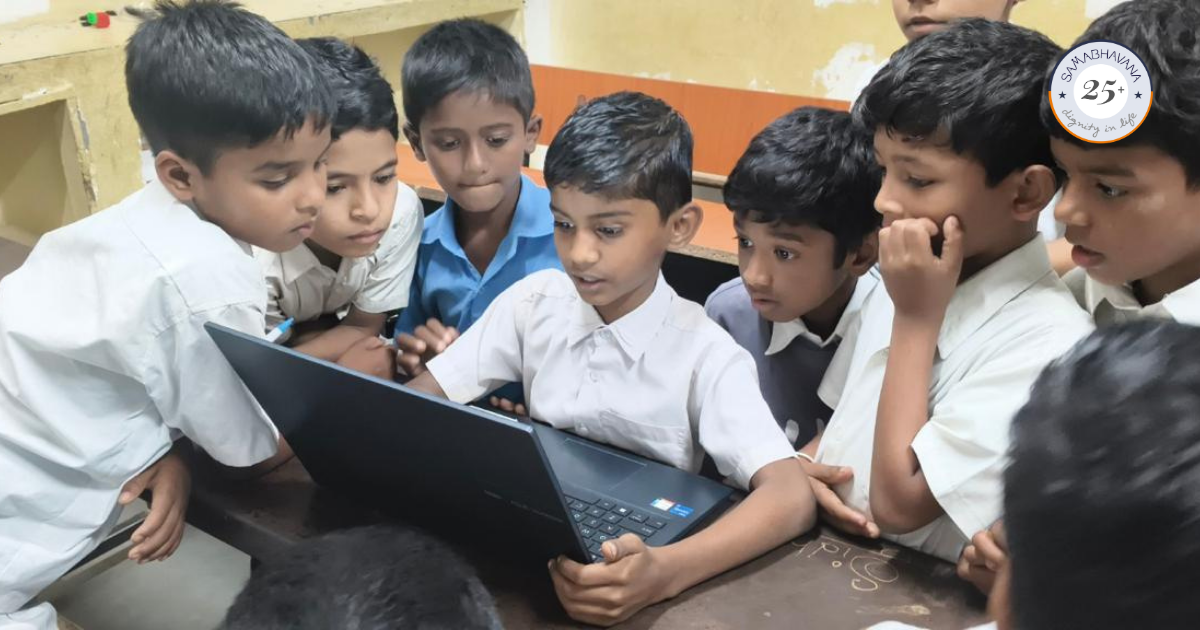
Picture a government school in rural India. Forty children squeezed onto wooden benches, sharing textbooks, learning from a blackboard with half the chalk missing. Their teacher — talented, committed, overworked — is doing the best she can with what she has. Two hundred kilometres away, a private school student is watching a 3D animation of the human circulatory system on an interactive panel, asking follow-up questions to an AI-powered learning assistant.
This is India’s education divide- which needs to be addressed.
The good news is that India’s corporate sector is doing something about it. SMART digital classroom CSR programs are rapidly becoming one of the most impactful — and most in-demand — education CSR projects in India to Sambhavana’s own corporate partners like Suzuki Motorcycles and Worley are channeling their CSR budgets into transforming government schools through technology, teacher training, and digital learning infrastructure.
In this article, we will walk you through exactly what SMART digital classroom CSR programs are, why they matter, what the research says about their impact, and how your company can design and implement one that creates real, measurable, lasting change — not just a room full of equipment that nobody knows how to use.
What Is a SMART Digital Classroom CSR Program?
A SMART digital classroom CSR program is a structured corporate social responsibility initiative that funds the installation, training, and ongoing support of technology-enabled learning environments in underserved government schools.
The acronym SMART — Specific, Measurable, Achievable, Relevant, and Time-bound — is intentional. The best digital classroom CSR projects are not one-time donations of hardware. They are end-to-end programmes that combine infrastructure, content, teacher development, and impact monitoring into a single, coherent intervention.
At the most basic level, a SMART digital classroom typically includes an interactive flat panel or smartboard, a projector or LED screen, curriculum-aligned digital content in regional languages, a computer or tablet station for the teacher, and in many cases, an offline content server for schools in areas with inconsistent internet connectivity.
But the hardware is only the beginning. What separates a well-designed digital classroom CSR project from an expensive equipment donation is the ecosystem built around it — trained teachers who know how to use the technology, curriculum-aligned content that makes lessons genuinely more engaging, and a monitoring system that tracks student outcomes over time.
Samabhavana, which has delivered SMART digital classroom CSR programs for corporate partners including Suzuki Motorcycles (India) Private Limited across locations in Gurugram and Haryana & Worley in Navi Mumbai- Maharashtra, approaches every digital classroom intervention as a holistic transformation — not just a technology installation, but a shift in how learning happens in that community.
Why Rural Schools in India Need SMART Digital Classrooms
India has over 11 lakh elementary schools — one of the largest government school systems in the world. Yet the gap between what a child learns in an urban private school and what a child learns in a rural government school remains stark, persistent, and deeply consequential.
The challenges facing rural schools are well-documented. Limited infrastructure — crumbling classrooms, unreliable electricity, no libraries. There is a shortage of qualified and trained teachers, particularly in STEM subjects. Low digital literacy among both students and educators. High dropout rates driven by a combination of socioeconomic pressure and disengagement from a teaching method that has not changed in decades.
The data on what digital classroom CSR programs can do about this is compelling. According to a UNESCO report, investing in teacher professional development — a core component of every strong SMART classroom programme — can increase student achievement by 12%. Research from the Centre for Social Impact and Philanthropy shows that NGOs with proven sector-specific expertise are 50% more effective at meeting corporate CSR goals. There is field evidence from various CSR programmes — consistently shows improved student engagement, attendance, and academic performance after implementation.
The reason is straightforward. Children who have been taught through rote memorization and blackboard instruction for their entire school life respond viscerally to animated, visual, interactive content. Abstract concepts that were previously impossible to teach in under-resourced classrooms — the water cycle, chemical reactions, geometric proofs, historical events — suddenly become accessible, engaging, and memorable.
This is what SMART digital classroom CSR programs are actually delivering. Not gadgets. Not novelty. A fundamentally better learning experience for children who deserve it.
The Key Components of SMART Digital Classroom CSR Program
Not all digital classroom CSR projects are created equal. Companies that achieve measurable impact from their education CSR programmes share a consistent approach — one that goes well beyond procuring hardware and calling it done.
Here are the five components that define an effective SMART digital classroom CSR program:
1. Infrastructure Assessment Before Installation
Before a single piece of equipment is purchased, a credible NGO implementation partner conducts a thorough assessment of the school’s existing infrastructure. Is there reliable electricity? If not, a power backup system is part of the project scope. Is the classroom structurally suitable for a smartboard installation? Is the school’s leadership engaged and supportive? These questions matter because the most common reason digital classroom CSR projects fail is not lack of funding — it is lack of groundwork.
2. Curriculum-Aligned, Regionally Relevant Digital Content
The content loaded onto a SMART classroom system must align with the specific state board curriculum — not generic national content, and certainly not content designed for urban learners. The best programmes include materials in the regional language, animations that reflect local contexts, and interactive modules that give students the ability to learn at their own pace. Access to only 11% of rural children through digitized education before large-scale CSR programmes began was largely a content problem, not just a connectivity problem.
3. Comprehensive Teacher Training
A smartboard gathering dust because no one was trained to use it is one of the most common — and most frustrating — outcomes of poorly designed digital classroom CSR programs. Effective programmes invest as heavily in teacher development as in hardware installation. This means structured training sessions before the classroom goes live, refresher workshops throughout the year, and ongoing support from the implementation partner’s field team.
4. Community and Parent Engagement
Digital classrooms do not transform schools in isolation. They work when the broader community understands and values them. Community-driven literacy programmes have been shown to reduce dropout rates by up to 15% in villages. Effective SMART classroom CSR programs include community engagement components — parent orientation sessions, local leader involvement, and regular impact updates shared openly with the community.
5. Monitoring, Evaluation, and Impact Reporting
For a CSR manager, this is the component that makes everything else accountable. A well-designed digital classroom CSR project includes a monitoring framework established before implementation begins — baseline data on student attendance, academic performance, and teacher engagement, tracked against post-implementation outcomes at regular intervals.
How SMART Digital Classroom CSR Programs Align with Section 135
For CSR managers working within the compliance framework of Section 135 of the Companies Act 2013, SMART digital classroom CSR programs fall clearly within Schedule VII’s permissible activities — specifically under the categories of promotion of education and rural development projects.
This matters because some companies still approach education CSR as a supplementary activity rather than a primary investment. The reality is that education CSR is one of the most strategically sound investments a company can make under Section 135 — combining measurable community impact, strong brand visibility, clear compliance credentials, and alignment with India’s national development priorities under the National Education Policy 2020.
The NEP 2020 specifically emphasizes STEM education, digital literacy, and the integration of technology into government schools. SMART digital classroom CSR programs are precisely the kind of private-sector intervention the government is actively encouraging to complement its own investment in school infrastructure. When Samabhavana has delivered digital classroom programmes for partners like Suzuki Motorcycles & Worley, the alignment with both corporate CSR mandates and national education policy has made the partnership straightforward to structure, implement, and report.
A classroom that did not exist before your CSR programme is now full of children learning. That is the kind of impact that shows clearly in every documentation format, from field visit reports to impact assessment frameworks.
Samabhavana’s Approach to SMART Digital Classroom CSR
Samabhavana has been delivering education CSR programmes for corporate and PSU partners for over 25 years. Our approach to SMART digital classroom CSR is built on the same principles that have guided all our work — genuine community engagement, full compliance and transparency, and a commitment to outcomes rather than outputs.
We work with corporate partners designing programmes that fit their specific CSR mandate, geography, and reporting requirements. This begins with a thorough school selection and community assessment process, moves through infrastructure installation and teacher training, and includes ongoing monitoring and quarterly impact reporting throughout the project duration.
Our digital classroom programmes have been delivered for partners including Suzuki Motorcycles India Private Limited in Gurugram, Haryana & Worley in Navi Mumbai- Maharashtra — where SMART classroom installations were part of a broader CSR intervention that also included school renovation and health infrastructure support. The results in these communities have been consistent with national research findings: higher student engagement, improved attendance, more confident teachers, and parents who are actively invested in their children’s education for the first time.
As an NGO registered with Niti Aayog, holding valid 80G, 12A, and CSR1 certifications, with published audit reports and a formal capability statement, Samabhavana provides corporate partners with the compliance, confidence and implementation depth that education CSR programmes of this scale require.
How to Structure Your SMART Digital Classroom CSR Program
If your company is considering a digital classroom CSR project, here is a practical framework for getting it right.
Step 1 — Define your geography and scale. Start by identifying the region where you want to create impact — ideally within or near your operational footprint, consistent with the spirit of Section 135 guidelines. Decide on the number of schools and classrooms based on your available CSR budget, keeping in mind that quality of implementation matters more than quantity of installations.
Step 2 — Choose an experienced NGO implementation partner. This is the single most important decision you will make. Look for a partner with verified CSR1 registration, published audit reports, and a documented track record of education CSR delivery specifically — not just general community development work. Request references from previous corporate partners and ask to see impact data from past programmes.
Step 3 — Design the programme collaboratively. Work with your NGO partner to design a programme that fits your company’s Schedule VII categories, your reporting requirements, and the specific needs of the school communities you are targeting. A good NGO partner will not simply accept your brief and disappear — they will push back constructively where the design could be stronger.
Step 4 — Run a pilot before scaling. Start with two or three schools. Establish clear baseline metrics and agree on what success looks like at the end of the pilot period. Evaluate execution, community response, teacher adoption, and reporting quality before committing to a multi-school rollout.
Step 5 — Build sustainability from day one. The most common failure mode in digital classroom CSR programs is the sustainability gap — programmes that thrive during the CSR funding period and collapse when it ends. Sustainable programmes invest in teacher ownership of the technology, community governance of the classroom, and a maintenance plan that doesn’t depend entirely on corporate funding to function.
The Business Case for SMART Digital Classroom CSR
For CSR managers making the case to their boards and finance teams, the business case for investing in SMART digital classroom CSR programs is strong and multi-dimensional.
Education CSR delivers clean, verifiable expenditure that withstands audit scrutiny and fulfils Schedule VII requirements straightforwardly. From a brand standpoint, digital classroom programmes generate rich visual content — inaugurations, student testimonials, before-and-after classroom photography — that supports internal communications, ESG reporting, and external brand narrative simultaneously.
From a community relations standpoint, transforming a school into a community where your employees live and work builds goodwill that no advertising spend can replicate.
Research consistently shows that 77% of global consumers prefer brands with clear, credible CSR commitments. In the Indian context, where Education and Rural Development consistently rank among the top Schedule VII categories for CSR investment, a well-executed SMART digital classroom programme positions your company as a genuine stakeholder in India’s development story — not just a compliance box-ticker.
The investment required is also more accessible than many companies assume. A single, well-equipped SMART classroom in a government school — including hardware, content, teacher training, and first-year support — can be delivered effectively for between Rs 3 lakh and Rs 8 lakh depending on specifications and geography.
Frequently Asked Questions
Q1. What is a SMART digital classroom CSR program?
A SMART digital classroom CSR program is a structured corporate social responsibility initiative that funds the installation, teacher training, and ongoing support of technology-enabled learning environments in government schools, particularly in rural and underserved areas. It falls under Schedule VII of the Companies Act 2013 as an education and rural development CSR activity.
Q2. How much does a SMART digital classroom CSR project
cost? The cost of a digital classroom CSR project varies based on the specifications of the equipment, the location, and the scope of teacher training and community engagement included. A well-implemented single classroom typically ranges from Rs 3 lakh to Rs 8 lakh. Multi-school programmes often benefit from economies of scale. Your NGO implementation partner should provide a detailed project estimate with clear line items.
Q3. Which Schedule VII category do SMART digital classroom CSR programs fall under?
SMART digital classroom CSR programs fall primarily under Schedule VII Item II — promotion of education — and may also qualify under Item X — rural development projects — depending on the programme design and geography.
Q4. How do I measure the impact of a digital classroom CSR program?
Effective impact measurement begins with establishing baseline data before the programme launches — student attendance rates, academic performance scores, and teacher engagement indicators. Post-implementation data is collected at regular intervals — typically quarterly — and compared against the baseline.
Q5. Why should I work with an NGO implementation partner for my digital classroom CSR program?
Experienced NGO partners bring community access, teacher training expertise, regulatory compliance knowledge, and field monitoring capability that corporate teams cannot replicate in-house. Organisations with proven education CSR track records are 50% more effective at meeting corporate CSR goals than companies attempting direct implementation. An NGO with valid CSR1, 80G, and 12A certifications also ensures your expenditure is legally sound and MCA-compliant.
Q6. Can SMART digital classroom CSR programs work in areas with no internet connectivity?
Yes. Many leading digital classroom systems operate entirely offline, using pre-loaded curriculum-aligned content on local servers. This makes them highly suitable for rural and remote government schools where internet connectivity is unreliable or absent. When assessing your programme design, confirm with your NGO partner that the content system selected is appropriate for the connectivity conditions of your target schools.
Q7. How does Samabhavana approach SMART digital classroom CSR implementation?
Samabhavana’s approach combines school and community assessment, curriculum-aligned content selection, hardware installation, comprehensive teacher training, and ongoing monitoring and impact reporting. We work collaboratively with corporate partners from programme design through to final impact documentation, ensuring compliance with MCA reporting requirements and delivering outcomes that stand up to independent audit scrutiny. Our digital classroom programmes have been delivered for partners including Suzuki Motorcycles India across Gurugram and Haryana with documented community impact.
Conclusion
India’s rural children are not waiting for permission to learn. They are waiting for the tools that give them a fair chance.
SMART digital classroom CSR programs are one of the most direct, visible, and impactful ways a company can deploy its Section 135 CSR obligation — not as a compliance exercise, but as a genuine investment in the communities that share geography with your operations, your employees, and your brand.
The research is clear. The field evidence is consistent. And the implementation pathway — with the right NGO partner — is more straightforward than many CSR managers realise.
If your company is ready to explore a SMART digital classroom CSR program — whether a single pilot school or a multi-geography rollout — Samabhavana is ready to help you design it, deliver it, and document its impact with the rigour that your board, your auditors, and the communities you serve all deserve.
📞 022-45658306 📧 info@samabhavana.in 🌐 samabhavana.in