
Inside a Robotics CSR Project in Rural Schools
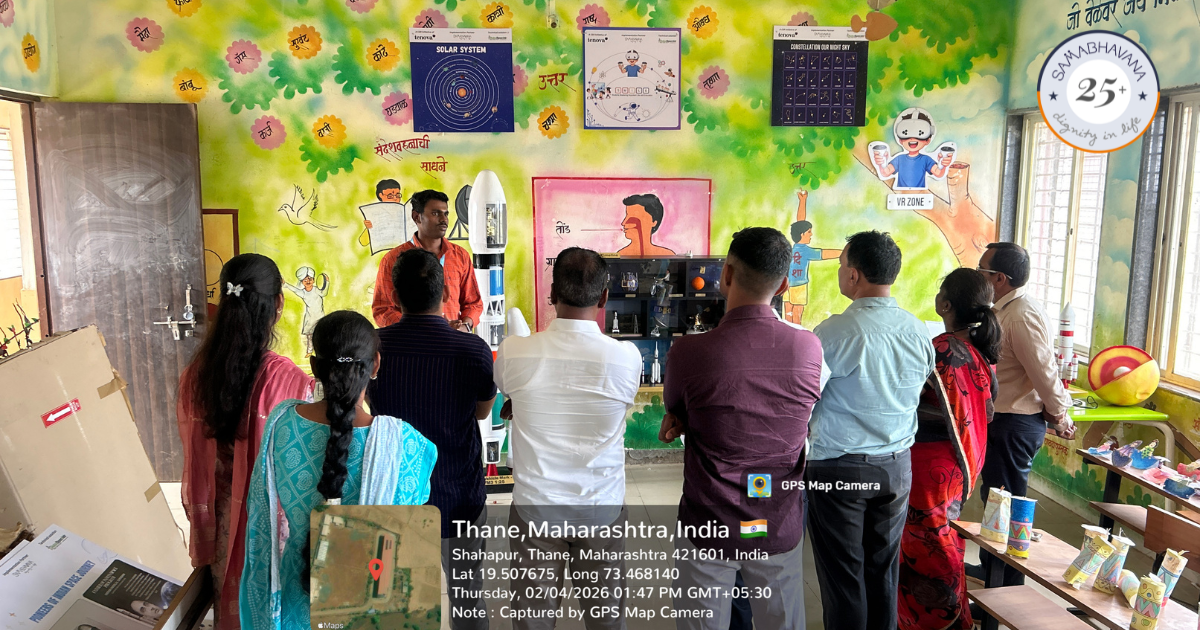
Picture a classroom in rural India. Forty children share a handful of textbooks. The blackboard is cracked. There is no computer lab, no science equipment, and certainly no exposure to the technologies reshaping the world outside their village.
Now picture the same classroom six months later — children huddled in groups, laughing as they programme a small robot to navigate a maze they built themselves. Their teacher, freshly trained, guides them with confidence. On the wall hangs a hand-drawn poster: “We are the engineers of tomorrow.”
This is not a scene from an advertisement. This is what a well-designed robotics CSR project actually looks like on the ground.
Across India, a quiet but powerful revolution is underway. Forward-thinking corporates, partnering with experienced NGOs and education organisations, are bringing robotics, coding, and STEM education into government schools in towns and villages that have never seen a functional computer lab. They are doing it not as charity, but as strategy — investing in the human capital that will define India’s future.
In this blog, we go inside what these robotics CSR projects look like, why they matter, and what it truly takes to make them work.
The Problem — Why Rural Schools Are Being Left Behind
India’s education story has two very different chapters. In urban private schools, children learn to code before they learn cursive. Robotics clubs, STEM labs, and AI workshops are becoming standard offerings. Meanwhile, in thousands of government schools spread across rural India, the reality is starkly different.
The numbers tell a sobering story. Rural India’s internet penetration stands at just 37%, compared to 67% in urban areas. Only 24.4% of schools across the country have smart classrooms. And the gap is even wider in government and rural institutions, where both infrastructure and device access lag far behind their urban counterparts.
The National Education Policy 2020 was a landmark step — it recognised the urgency of integrating technology into education and made STEM skill-building a national priority. But policy intent and ground reality are two different things.
Most rural children still do not have access to smartphones, tablets, or computers. Many of their teachers have never been trained in digital tools. The very infrastructure needed to make tech-enabled education possible — reliable electricity, internet connectivity, functional devices — is missing in large parts of rural India.
This is not just an education problem. It is an equity problem. When a child in a Mumbai private school learns robotics at age ten and a child in a rural government school never encounters a computer until adulthood — if at all — the gap between them compounds with every passing year. By the time both enter the workforce, one is equipped for the economy of tomorrow. The other is not.
This is the gap that robotics CSR projects are stepping in to close — and closing it is one of the most important investments a corporate can make.
What a Robotics CSR Project Actually Looks Like
So what does a robotics CSR project in a rural school actually involve? It is far more than donating a box of kits and walking away. The most impactful initiatives are structured, sustained, and deeply embedded in the school ecosystem.
The Infrastructure First
Before a single child touches a robot, the groundwork has to be laid. This means setting up a functional STEM or robotics lab — equipping the space with computers, robotics kits, coding software, and reliable power supply. In many rural schools, this alone is transformative. For students who have never seen a working computer lab, simply having one changes what they believe is possible for them.
The Curriculum
Effective robotics CSR programmes follow a structured learning path. At the foundational level, students learn basic coding using beginner-friendly platforms. As they progress, they move into hands-on robotics — building, programming, and testing machines that solve real problems. The best programmes align this curriculum with the NEP 2020 framework, making it relevant to national education goals and easier to integrate into the school’s existing timetable.
The Teacher
This is the piece most programmes get wrong. Giving children robots without training their teachers is like giving someone a car without teaching them to drive. Sustainable robotics CSR projects invest heavily in teacher training — equipping educators with the confidence, knowledge, and ongoing support to keep the programme running long after the implementing organisation has stepped back.
The Community
The most successful robotics CSR projects do not operate in isolation. They involve parents, local administrators, and community leaders — building a sense of shared ownership that keeps the momentum going. When a child comes home excited about the robot they built, and a parent sees it with their own eyes, the entire community’s relationship with education shifts.
Done right, a robotics CSR project does not just teach children to code. It teaches them to think, to collaborate, to fail and try again — skills that no textbook can fully deliver.
What Changes When Children Learn Robotics
The impact of a robotics CSR project cannot be measured only in the number of kits distributed or workshops conducted. The real change happens in the minds of children — and it ripples outward in ways that are difficult to quantify but impossible to ignore.
Confidence
Many children in rural government schools grow up believing that technology and innovation belong to someone else — someone from a city, someone from a wealthier family, someone who went to a better school. The moment a child successfully programmes a robot to complete a task, that belief shatters. The confidence that follows is not just academic. It is existential. They begin to see themselves as capable of participating in — and contributing to — a modern, technology-driven world.
Critical Thinking and Problem Solving
Robotics is not a passive subject. Every session requires children to define a problem, design a solution, test it, observe what goes wrong, and try again. This process — iterative, hands-on, failure-friendly — builds the kind of thinking that classrooms rarely teach. These are precisely the skills that employers, entrepreneurs, and innovators need most.
Reduced Dropout Rates
Engagement is one of the most powerful tools against school dropout. When children look forward to coming to school — when learning feels exciting rather than irrelevant — attendance improves. Several robotics education initiatives across India have reported measurably higher student engagement and attendance in schools where programmes have been introduced.
A Pipeline of Future Talent
At the national level, the stakes are even higher. India needs millions of skilled technology professionals over the coming decades. The talent to fill those roles exists in every village and district in the country. Robotics CSR projects are one of the most direct ways to identify, nurture, and channel that talent — creating a pipeline that benefits not just the children involved, but the entire economy.
Why Corporates Need NGO Partners to Deliver This
A robotics CSR project sounds exciting in a boardroom. Actually executing it in a rural school — navigating local dynamics, training teachers, sourcing appropriate curriculum, building community trust — is a different matter entirely.
This is where experienced NGO partners become indispensable.
They Know the Ground
An NGO that has been working in rural education for years understands things that no corporate team can learn from a distance. They know which schools are ready for a programme like this. They know the teachers who will champion it and the administrators who need to be brought on board. They understand the local language, the seasonal rhythms that affect school attendance, and the cultural sensitivities that determine whether a community embraces or resists an outside initiative.
They Bridge the Curriculum Gap
Not every robotics kit comes with a curriculum that works for a Class 6 student in a Marathi-medium school in rural Maharashtra. Effective NGO partners adapt content, translate materials, and contextualise learning in ways that make it genuinely accessible — not just technically available.
They Train and Sustain
The difference between a robotics CSR project that thrives and one that quietly fades after the first year almost always comes down to teacher training and follow-up support. NGOs embedded in communities provide the ongoing mentoring, troubleshooting, and encouragement that keeps both teachers and students engaged beyond the initial excitement.
They Ensure Accountability
For corporates, CSR accountability matters — both for regulatory compliance and for stakeholder communication. A strong NGO partner brings monitoring systems, impact documentation, and transparent reporting that allows corporates to demonstrate exactly what their investment has achieved.
In short, the corporate brings the vision and the resources. The NGO brings the relationships, the expertise, and the staying power. Together, they deliver something neither could achieve alone.
What Makes a Robotics CSR Project Truly Successful
Not all robotics CSR projects are created equal. Some create genuine, lasting transformation. Others produce impressive launch-day photographs and little else. The difference comes down to a handful of critical factors.
Long-Term Commitment
A one-day workshop or a single donation of equipment is not a programme — it is a gesture. Meaningful change in education takes time. The most impactful robotics CSR initiatives run for a minimum of three to five years, with structured milestones, regular reviews, and a clear plan for how the school will sustain the programme independently once the corporate engagement winds down.
Focus on Sustainability from Day One
Sustainability should not be an afterthought. It should be designed into the programme from the very beginning. This means training local teachers thoroughly enough that they become the programme’s long-term custodians. It means building relationships with district education authorities so the initiative gets integrated into school systems. It means creating student alumni communities that give back as mentors and advocates.
Measurable Outcomes Over Activities
The temptation in CSR is to count activities — workshops conducted, kits distributed, students reached. But these are outputs, not outcomes. A truly successful robotics CSR project measures whether students have actually built skills, whether teachers have genuinely been upskilled, whether attendance and engagement have improved, and whether the school can run the programme without external hand-holding.
The Right NGO Partner
As discussed, the implementing partner is everything. A credible, experienced NGO with a track record in education, strong community relationships, and robust reporting systems is the single most important factor in determining whether a robotics CSR project succeeds or stalls.
Frequently Asked Questions
Q1. What is a robotics CSR project and how does it work?
A robotics CSR project is a corporate-funded initiative that brings robotics, coding, and STEM education into schools — particularly government and rural schools — that would otherwise have no access to these resources. Typically, a corporate partners with an NGO or education organisation to set up labs, train teachers, deliver a structured curriculum, and monitor outcomes over a defined project period.
Q2. How much does it cost to set up a robotics CSR programme in a rural school?
Costs vary depending on the scale, duration, and level of infrastructure required. A basic robotics lab setup with curriculum and teacher training can range from ₹5 – 10 lakhs for a single school. Larger, multi-school programmes with sustained implementation and impact measurement will require proportionally higher investment. The key is to view it as a multi-year commitment rather than a one-time expenditure.
Q3. Does a robotics CSR project qualify under Schedule VII of the Companies Act?
Yes. Robotics and STEM education initiatives in schools fall squarely within the education and vocational skills categories under Schedule VII of the Companies Act, 2013 — making them fully eligible for CSR expenditure by qualifying companies.
Q4. How do we measure the impact of a robotics CSR project?
Impact can be measured across several dimensions — student skill assessments before and after the programme, teacher confidence surveys, attendance and engagement data, participation in robotics competitions, and long-term tracking of student academic and career outcomes. A good NGO partner will have robust monitoring and evaluation systems in place from day one.
Q5. Can girls participate equally in robotics CSR projects?
Absolutely — and they should be actively encouraged to do so. Some of the most inspiring outcomes from robotics education programmes in India have come from young girls in rural schools who had never previously been given access to technology. Dedicated initiatives like “Girls Who Build Robots” have demonstrated that when girls are given equal access and encouragement, they thrive.
Q6. How do we find the right NGO partner for a robotics CSR project?
Look for NGOs with a proven track record in education, specific experience in STEM or technology programmes, strong community relationships in your target geography, and transparent impact reporting. Verify their legal registrations, review past project documentation, and where possible, conduct a field visit before formalising the partnership.
Conclusion
Talent is everywhere. Opportunity is not.
That is the quiet injustice at the heart of India’s education divide — and it is one that the right CSR investment can begin to correct. When a child in a rural school builds their first robot, something shifts. Not just in what they know, but in what they believe about themselves and what is possible for their future.
Robotics CSR projects are not about giving children a fun after-school activity. They are about fundamentally expanding the horizons of what a child from any background, any geography, any economic circumstance can aspire to achieve. They are about building the engineers, the problem-solvers, the innovators that India will need in the decades ahead.
For corporates looking to make their CSR spending count — not just on paper, but in practice — investing in robotics and STEM education in rural schools is one of the highest-impact choices available. Choose the right NGO partner, commit for the long term, and measure what actually matters.
Because the child sitting in that rural classroom right now, with curiosity in their eyes and a robot in their hands, is not tomorrow’s charity case.
They are tomorrow’s innovators. They just needed the chance.