
How Children Quickly Adapt to Computers: Building Digital Confidence Through Smile Hub Programme
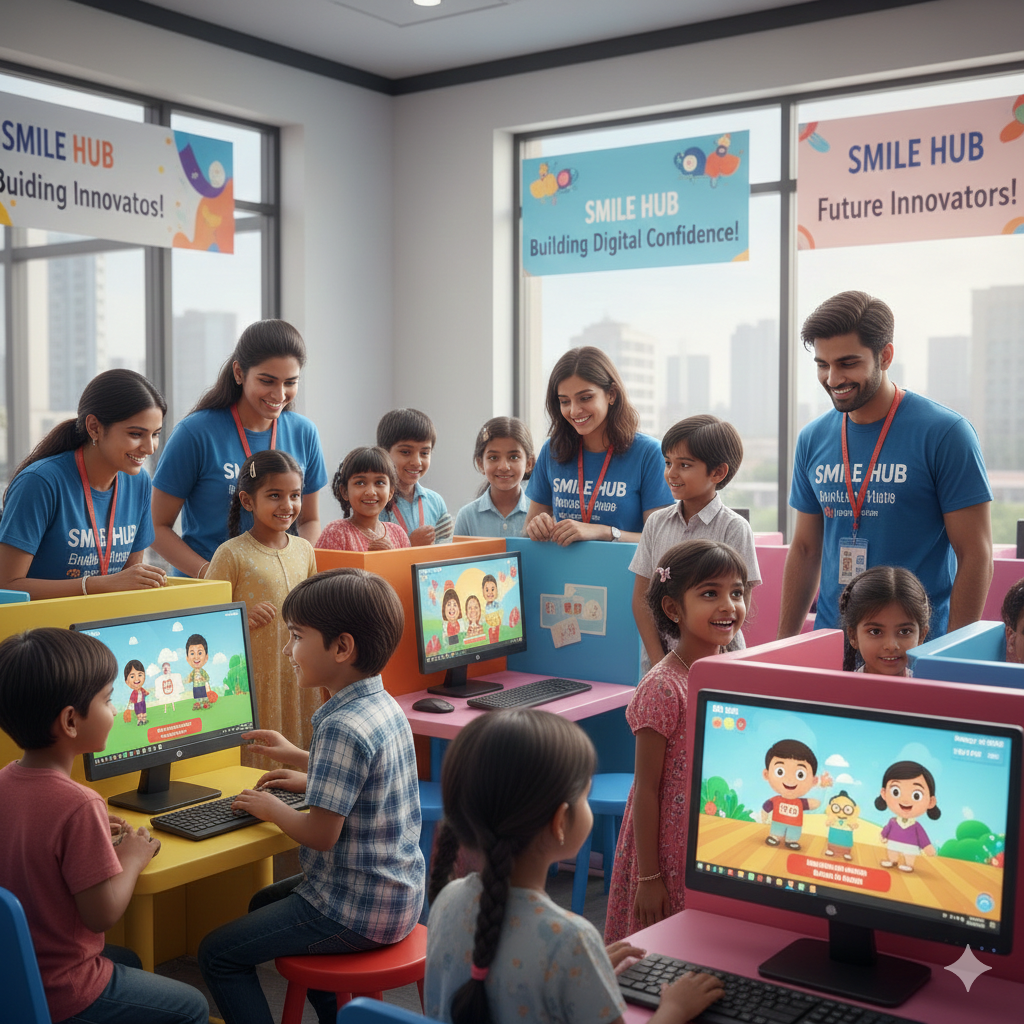
When children are first introduced to computers, learning begins with the simplest actions—typing their name, clicking icons, opening a file, or moving the mouse. These small steps may seem basic, but they mark the beginning of an important digital journey.
What often surprises teachers and parents is how quickly children move from basic computer skills to creating complete digital projects with confidence.
At Samabhavana, through initiatives like the Smile Hub Programme, children are given safe and supportive environments to explore computer literacy while building curiosity, creativity, and self-confidence.
👉 Learn more about Samabhavana’s initiatives here: https://samabhavana.in/
Why Early Computer Literacy Matters for Children
In today’s digital world, computer literacy is no longer optional—it is essential. According to global education research, digital skills improve problem-solving abilities, creativity, and academic performance.
Organizations like UNICEF emphasize the importance of digital learning in empowering children for future careers. (Source: https://www.unicef.org/education)
Early exposure to computers helps children:
- Develop confidence with technology
- Improve typing and communication skills
- Strengthen logical thinking
- Build creativity through digital projects
- Enhance problem-solving abilities
The First Steps: From Fear to Curiosity
Removing Fear from Learning
When children first use computers, many are cautious. They look to teachers before clicking and worry about making mistakes. However, once they understand that computers are tools for exploration—not something to fear—their progress accelerates.
At Samabhavana’s Smile Hub centres, educators focus on creating a non-judgmental learning environment. This approach helps children experiment freely and learn confidently.
How Small Actions Lead to Big Growth
- Typing their name becomes writing short paragraphs
- Clicking icons becomes navigating programs
- Opening files becomes saving and organizing their own projects
Step by step, children grow comfortable with digital tools.
How Children Learn Faster Than Expected
Unlike adults, children approach computers with natural curiosity. They are not limited by fear of failure. When encouraged to explore, they:
- Learn faster
- Retain skills longer
- Develop stronger digital confidence
The instant feedback computers provide—seeing words appear, images move, or projects take shape—makes learning exciting and memorable.
According to research shared by EdTech Review, hands-on digital learning significantly improves student engagement and retention. (Source: https://edtechreview.in/)
Project-Based Learning: Turning Skills into Creativity
Moving Beyond Basic Computer Lessons
As children improve their skills, they begin combining activities:
- Typing stories
- Creating posters
- Adjusting fonts and formatting
- Inserting images
- Organizing digital files
These activities build more than computer knowledge—they develop:
- Focus
- Planning skills
- Responsibility
- Creativity
Learning Through Real Projects
Project-based learning plays a major role in digital confidence. When children create presentations, digital drawings, or short documents, they are no longer practicing—they are creating something meaningful.
At Smile Hub centres, children use technology to:
- Tell stories
- Share ideas
- Express creativity
- Present information clearly
This makes learning both personal and enjoyable.
Digital Literacy in Indian Classrooms
In many Indian classrooms, education often focuses heavily on examinations. Computer literacy reintroduces creativity into learning.
Students combine:
- Language skills
- Visual design
- Structured presentation
- Digital tools
This integration prepares them for modern academic and professional environments.
The Government of India’s Digital India initiative also highlights the importance of digital skills in empowering youth. (Source: https://www.digitalindia.gov.in/)
The Role of Peer Learning and Confidence
One of the most powerful aspects of computer education is peer learning.
Children naturally:
- Help classmates solve small technical problems
- Share tips
- Work together on projects
This teamwork builds communication skills and boosts confidence.
Parents are often amazed when children begin teaching computer tools at home. In households with limited access to technology, this growth feels especially meaningful.
Beyond Computers: Life Skills Development
Digital learning develops abilities that extend far beyond screens.
Children improve:
- Problem-solving skills
- Organizational abilities
- Creative thinking
- Presentation confidence
- Communication skills
These skills support success across subjects and in everyday life.
Why Consistency Matters in Digital Education
Regular exposure to computers—even in short sessions—helps maintain progress. Consistency strengthens muscle memory, improves typing speed, and builds digital fluency.
Gaps in learning may slow development, but steady practice ensures long-term confidence.
Effective programs understand that every child learns at a different pace. Supportive environments allow students to grow together without pressure.
How Samabhavana’s Smile Hub Programme Makes a Difference
The Smile Hub Programme at Samabhavana focuses on making digital education:
- Accessible
- Engaging
- Safe
- Supportive
By combining foundational computer skills with creative digital projects, children experience rapid growth—from typing their names to designing full presentations.
Small steps lead to big confidence.
And when children see how quickly they learn, they begin believing in their own potential.
🔗 Discover more about Samabhavana’s mission and educational initiatives here: https://samabhavana.in/
Conclusion: Empowering Confident Digital Learners
Children have an incredible ability to adapt and grow when learning feels safe and encouraging. Their openness and curiosity allow them to master computer skills faster than expected.
Through structured digital literacy programs like the Smile Hub Programme, Samabhavana continues to empower children—one click, one project, and one confident learner at a time.