
From Classrooms to Innovation Hubs: The Power of SMILE Hub in Government Schools
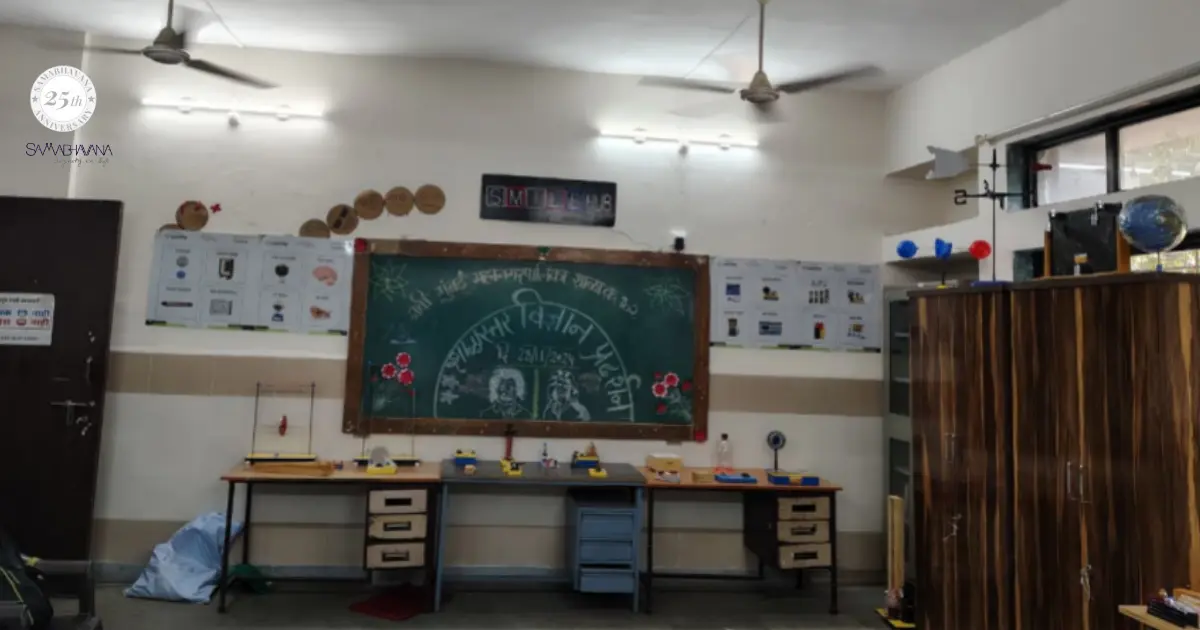
For many years, classrooms in government and underserved schools have been viewed only as spaces for basic instruction. Learning often meant listening, memorising, and repeating information. While this system delivered foundational knowledge, it left little room for creativity, experimentation, or skill-building.
At Samabhavana, we believe classrooms can be much more than that.
Through the SMILE Hub (Student Mastering Important Life Skills Education) initiative, classrooms are being transformed into innovation hubs—spaces where students explore, experiment, and actively participate in their learning journey.
Rethinking the Purpose of a Classroom
A classroom is not just four walls and a blackboard. It is where confidence is built, curiosity is shaped, and futures begin to take form. However, many government schools face challenges such as limited infrastructure, lack of digital tools, and minimal exposure to experiential learning.
SMILE Hub was designed to address these gaps in a practical and sustainable way.
Instead of adding isolated programs, Samabhavana introduced a 360° learning ecosystem that integrates technology, hands-on learning, and life skills within the existing school structure.
The result is not just upgraded classrooms—but empowered learning environments.
What Makes SMILE Hub an Innovation Hub
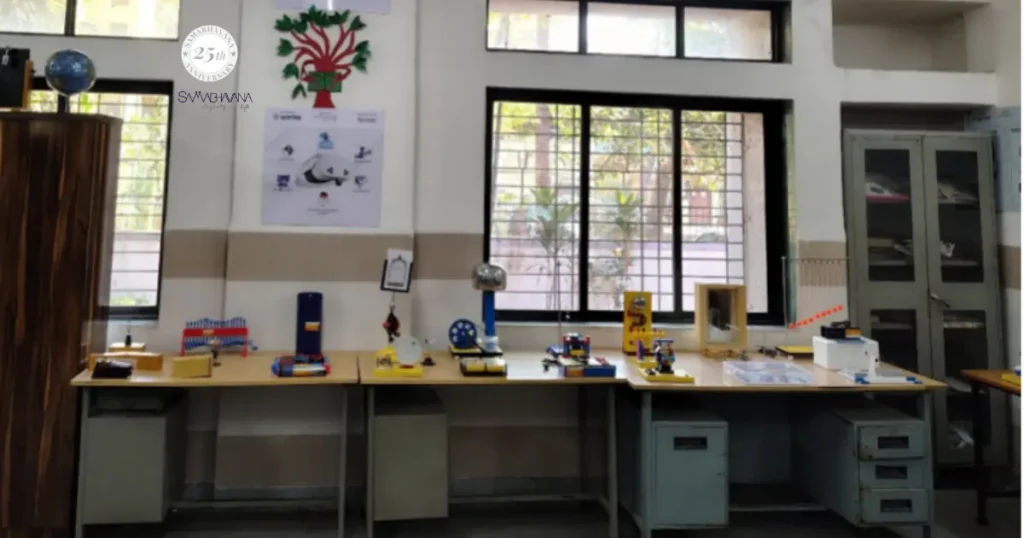
SMILE Hub is a one-stop learning solution that brings together multiple modes of education under one roof. It combines:
• Smart Digital Classrooms
• Computer and Digital Literacy Labs
• STEM Education
• Robotics, Artificial Intelligence (AI), and Internet of Things (IoT)
• Astronomy and Scientific Exploration
• Virtual Reality (VR) Based Experiential Learning
This integrated model aligns closely with the National Education Policy (NEP 2020), which encourages experiential learning, coding, AI exposure, and skill-based education from an early age.
Instead of learning concepts in isolation, students experience how subjects connect to the real world.
Smart Digital Classrooms: Making Learning Engaging
Smart classrooms form the foundation of the SMILE Hub model. Through digital content, visual aids, and interactive lessons, students understand concepts more clearly and retain information longer.
For teachers, smart classrooms reduce repetitive work and help explain complex ideas with ease. Lessons become structured, engaging, and inclusive.
Students who once struggled to stay attentive become active participants when learning is visual and interactive.
Digital Literacy: Building Essential Skills
Digital literacy is no longer optional. It is a basic life skill.
Through computer labs set up under SMILE Hub, students learn how to:
• Use computers confidently
• Type and create digital documents
• Understand basic internet usage and safety
• Work on simple digital projects
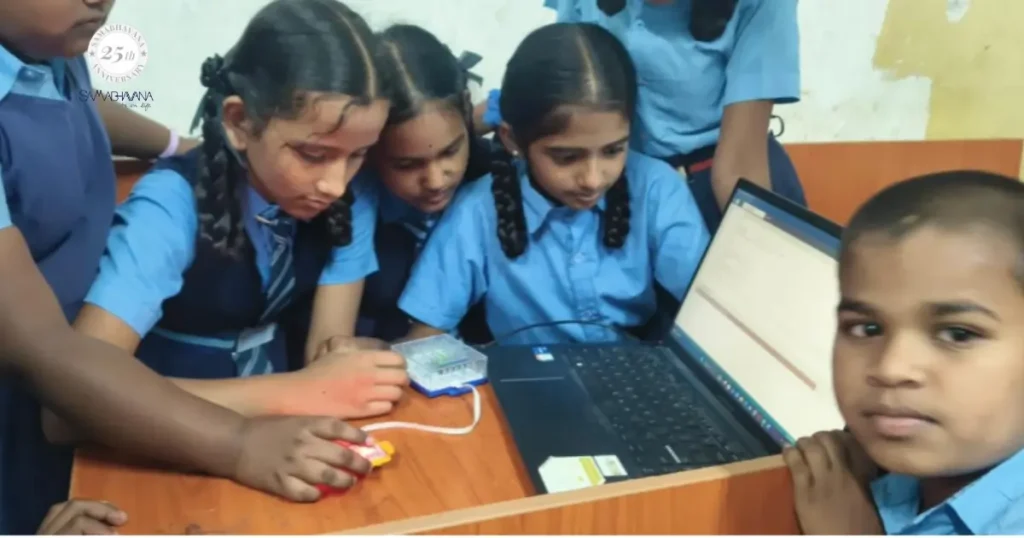
These skills prepare students not only for academics but also for future employment opportunities. For many children, this is their first meaningful interaction with technology.
Parents often share that children begin teaching family members what they learn at school—showing the ripple effect of digital education.
STEM, Robotics, AI, and IoT: Learning by Doing
One of the most powerful shifts brought by SMILE Hub is hands-on learning.
Instead of only reading about science and technology, students build models, assemble robotics kits, and explore how machines work. They learn by experimenting, making mistakes, and trying again.
Robotics, AI, and IoT sessions introduce future-ready concepts in simple, age-appropriate ways. Students learn how technology can solve everyday problems—from agriculture to energy to safety.
This practical exposure builds confidence and shows children that advanced learning is accessible to everyone, not just students in elite schools.
Astronomy and Experiential Learning
Astronomy sessions ignite wonder and curiosity. Through solar system models, sky observations, and discussions about planets and stars, students develop scientific thinking and patience.
Virtual Reality further enhances experiential learning. VR allows students to explore environments, understand abstract concepts visually, and connect learning to real-life contexts.
Learning becomes memorable and exciting rather than stressful.
Empowering Teachers Alongside Students
Innovation hubs are not only about students—they also support teachers.
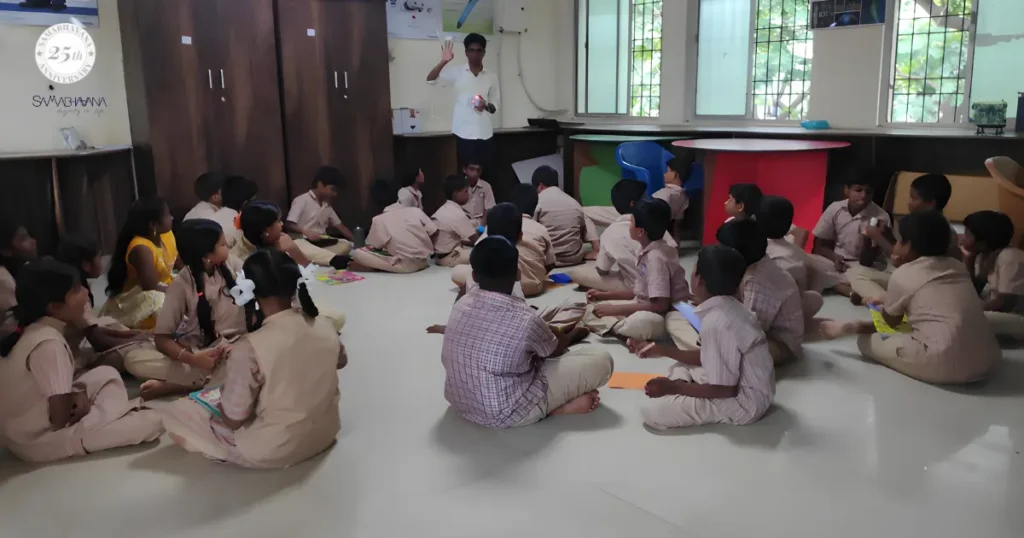
SMILE Hub provides teachers with tools, training, and resources that make teaching more effective and less exhausting. Teachers transition from being information providers to facilitators of learning.
This shift improves classroom engagement and teacher satisfaction.
Infrastructure That Supports Learning
Samabhavana understands that learning environments matter. SMILE Hub initiatives often go hand-in-hand with:
• Classroom renovation
• Improved lighting and seating
• Library enhancement
• Playground development
A well-maintained school creates a sense of dignity and motivation for both students and teachers.
Impact Beyond the Classroom
The transformation does not stop at school.
Students become more confident, curious, and expressive. Parents become more involved. Teachers feel supported. Communities begin to see schools as centres of opportunity rather than limitation.
SMILE Hub classrooms often become points of pride for entire communities.
Alignment with CSR Goals
SMILE Hub directly aligns with Section 135, Schedule VII of CSR in India, focusing on:
• Promoting education
• Digital literacy
• Skill development
• Inclusive learning environments
Corporate partnerships enable Samabhavana to scale SMILE Hubs, upgrade infrastructure, and reach more government schools across regions.
From Learning Spaces to Innovation Spaces
When classrooms evolve into innovation hubs, students stop asking,
“Will this come in the exam?”
They start asking,
“What can we build?”
“How does this work?”
“What if we try this?”
That shift changes everything.
Through SMILE Hub, Samabhavana is redefining what government school classrooms can become—spaces of creativity, confidence, and possibility.
Because when learning is engaging, inclusive, and hands-on, classrooms don’t just teach lessons.
They build futures.