
COMPUTER LITERACY
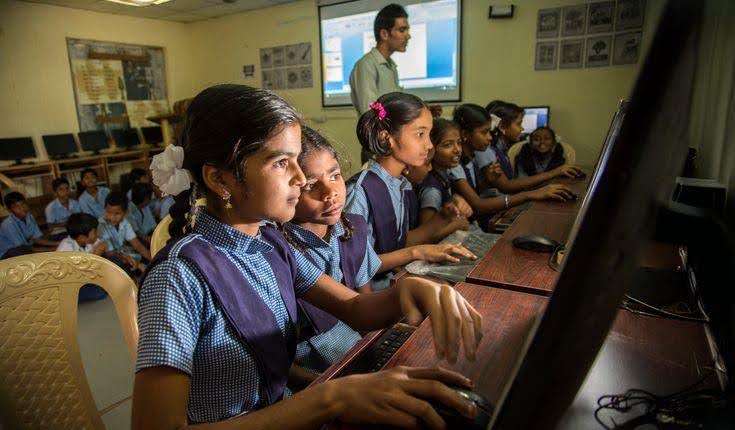
First Time Using a Computer: Big Smiles, Small Steps
The first time a child sits in front of a computer is often an unforgettable experience. Curiosity, reluctance, excitement, and occasionally terror are all present at once. Above the keyboard, fingers are hovering. The mouse doesn’t seem familiar. The possibilities they were unaware of appear on the screen. Despite its diminutive size, this moment has profound significance. It signifies the start of digital inclusivity.
When using a computer for the first time, speed and competence are not important. It has to do with confidence. Children in many Indian communities and schools are exposed to technology from an early age. They may learn about computers or observe adults using cell phones, but they have little direct access. For other people, their first opportunity to interact freely with technology is in a computer lab. Children’s self-perception is altered by this access.
Teachers frequently observe that kids initially approach computers with caution. They are concerned about “spoiling” the machine or hitting the incorrect key. This anxiety stems from a deeper conviction that technology is costly, brittle, and unsuitable for them. This concern is carefully addressed in computer literacy classes.
Software is not the subject of the first lecture. It has to do with assurance.
Children are patiently guided by teachers. They clarify that computers are not things to be afraid of, but rather instruments to be used. Kids are urged to take their time exploring. Small movements like opening a file, moving a cursor, and clicking a mouse gradually boost confidence.
Big smiles come on fast. When a child starts a software or types their name successfully, they feel proud. Even if these instances might appear insignificant, they signify advancement. Small triumphs boost confidence. These early computer encounters seem rejuvenating in Indian classrooms, where academic pressure is prevalent. Exams, grades, and comparisons are nonexistent. Acquiring knowledge feels intimate.
Children pick up responsibilities as well. They are instructed to share resources, manage equipment wisely, and abide by fundamental guidelines. Respect for tools and other people is the first step toward digital literacy. Teachers have noticed that kids who have scholastic difficulties frequently do well when using computers.
Diverse learning styles are accommodated by visual contact, practical engagement, and quick feedback. For the first time, these kids feel capable.
At home, parents observe changes. Kids discuss technology with great enthusiasm. They describe what they discovered. These discussions are encouraging for families who are not tech-savvy.
Education starts to seem important. Aspiration is also increased by using a computer for the first time.
Youngsters use their imaginations to create documents, pick up new abilities, and investigate information. The world of digital technology no longer seems far away.
Long-term attitudes are significantly shaped by first encounters. Children will continue to be curious if they feel secure and supported. Fear reappears if they feel hurried or condemned.
Teachers have a significant influence on this experience.
Slow and courteous computer literacy sessions get higher results. It is pointless to rush kids. Strong foundations are built with tiny steps.
Access is also important. When constant, even a small amount of exposure can have an influence. Perceptions can be altered with a few hours every week.
The goal of using a computer for the first time is not to become an expert. It has to do with opening doors. Big smiles are important. They convey self-assurance, interest, and a sense of community.
Learning expands when kids understand that technology is for them.
And digital journeys start with tiny steps.