
Designing a Community Health CSR Project That Delivers Results
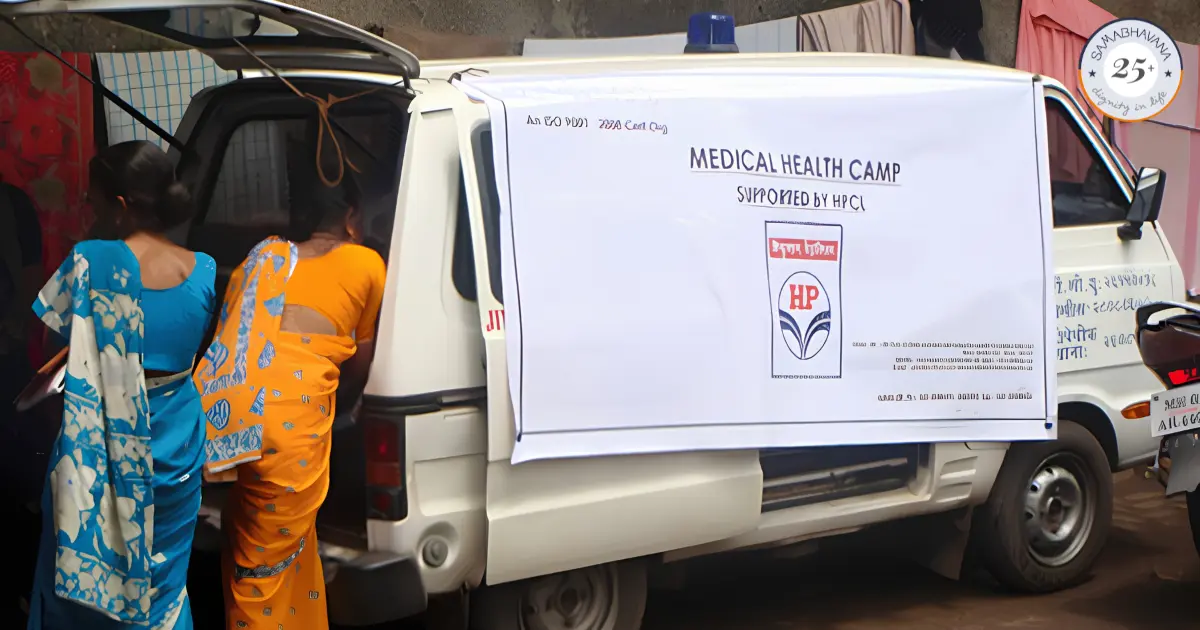
India’s Schedule VII mandates that companies above a certain threshold spend a portion of their profits on CSR activities — and healthcare consistently ranks among the top sectors for that spending. Yet walk through any district in rural Maharashtra, Jharkhand, or Odisha, and you’ll find the remains of community health CSR projects that generated impressive launch-day press releases and very little else.
The gap between intent and impact in a community health CSR project is real, it’s common, and it’s preventable. This post is for CSR managers, sustainability heads, and NGO implementation partners who want to close that gap — and design a community health CSR project that actually delivers measurable, lasting results.
Why Most Community Health CSR Projects Fall Short
The failure of many community health CSR projects rarely comes down to lack of funding. It comes down to design. Too many projects are built around what’s convenient to report rather than what communities actually need.
Common failure patterns include one-time health camps with no follow-up, referral, or continuity of care; imported frameworks that don’t account for local language, culture, or existing health infrastructure; siloed implementation where the corporate funder, NGO, and government health system never speak to each other; weak baseline data that makes it impossible to prove — or disprove — impact; and short funding cycles of one year applied to health challenges that take three to five years to shift.
A community health CSR project that actually works starts differently. It starts with honest questions before any money moves.
Start With a Needs Assessment, Not a Budget
Before you design a community health CSR project, you need to understand the health reality of the target community — not the health reality you assume it has.
A proper needs assessment for a health CSR initiative covers four things.
Primary health data: What are the leading causes of morbidity and mortality in this geography? What is the current immunisation coverage? What is the maternal mortality ratio? These numbers exist — in district health reports, HMIS data, and NFHS surveys. Read them.
Barrier mapping: Why do people not access available health services? Is it distance? Cost? Gender norms that prevent women from seeking care alone? Lack of awareness? The barriers are rarely what you think.
Asset mapping: What health infrastructure already exists? Which ASHA workers, PHCs, or community health centres are operational? A strong community health CSR project does not replace existing systems — it strengthens them.
Community voice: This is non-negotiable. Every effective community health CSR project includes a stage where community members — especially women, elderly, and marginalised groups — are asked directly what they need. Participatory rural appraisal tools, FGDs, and household surveys all work.
The needs assessment shapes everything: the intervention design, the geographic focus, the implementation timeline, and the metrics you will use to track success. Skip it, and you are guessing.
Choosing the Right NGO Implementation Partner
A community health CSR project is only as strong as its implementation partner. The NGO you choose will determine whether your investment translates into real health outcomes or well-formatted reports with good photography.
Sector-specific experience: An NGO with five or more years of documented work in community health — not a general-purpose organisation that pivots to health when the funding is available. Ask for specific project references, not just portfolio lists.
Local presence: National NGOs with no ground presence in your target district are a liability. You need an organisation with established community relationships, local staff, and — critically — the trust of the community. That trust takes years to build and cannot be parachuted in.
Compliance credentials: For CSR funds to be utilised properly, your implementation partner must hold valid CSR1 registration, 80G certification, and be registered with Niti Aayog’s NGO Darpan portal. These are baseline requirements, not differentiators.
Monitoring infrastructure: Ask how the NGO collects data, who oversees quality, and how they handle underperformance against targets. Organisations that welcome this question are worth working with. Organisations that don’t are a warning sign.
Government alignment: The most effective community health CSR projects work with the government health system — training ASHAs, strengthening PHCs, supporting NHM schemes — rather than creating parallel structures that collapse once funding ends.
At Samabhavana, over 25 years of CSR implementation across health, education, and skill development has taught us that the right partner makes or breaks any community health CSR project. Our work with 50+ corporate partners has been built on exactly this foundation: ground presence, compliance rigour, and genuine community relationships.
Designing Interventions That Communities Actually Use
The word “intervention” carries a certain arrogance — as if health is something you do to a community rather than with it. The best community health CSR projects reject this framing entirely.
Continuity: A community health CSR project that offers a one-time health camp does not change health outcomes. It changes health awareness, briefly, for some people. True impact requires sustained touchpoints — regular outreach, referral pathways, follow-up care, and linkage to government services.
Behaviour change communication (BCC): Most preventable health problems — diarrhoea, malnutrition, preventable infections — are linked to behaviour, not just access. Any community health CSR project targeting these issues needs a dedicated BCC component: community meetings, IEC materials in local language, and trained community health volunteers who can reinforce messaging through trusted relationships.
Gender-responsive design: In many communities, women’s health decisions are not their own. A community health CSR project that ignores this dynamic will consistently underperform on maternal health, family planning, and child nutrition indicators. Design your intervention for the actual social context, not an idealised one.
Linkage to entitlements: India has a robust — if under-utilised — portfolio of government health schemes: Ayushman Bharat, PM Matru Vandana Yojana, Janani Suraksha Yojana, and more. A well-designed community health CSR project actively connects beneficiaries to these entitlements rather than duplicating what the government already funds.
Community ownership: Invest in building local capacity — training community health workers, forming village health and sanitation committees, equipping local leaders. Ownership is what separates a project that sustains from one that ends with the funding cycle.
Building Measurable Health Outcomes Into the Project
“We conducted 12 health camps and reached 4,000 beneficiaries” is an output. It tells you nothing about whether anyone’s health improved.
A community health CSR project with credible impact measurement is built on outcomes, not activities. Before your project launches, define the following.
Baseline metrics: What is the current status of the health indicators you intend to shift? Immunisation coverage, institutional delivery rate, anaemia prevalence, malnutrition levels — document them before you begin.
SMART targets: Specific, Measurable, Achievable, Relevant, Time-bound. “Increase full immunisation coverage in target villages from 54% to 75% by Month 18” is a target. “Improve immunisation” is not.
Mid-line and end-line surveys: Conduct formal surveys at defined intervals, using the same methodology as your baseline so data is comparable.
Third-party verification: For projects above a certain scale, external evaluation adds credibility — both for internal learning and for CSR reporting to the board and MCA.
Qualitative evidence: Numbers tell one story. Testimonials, case studies, and community narratives tell another. Both are needed for a complete picture of whether your community health CSR project delivered what it set out to deliver.
The GRI Standards, SDG indicators (particularly SDG 3), and the Ministry of Corporate Affairs’ CSR reporting format all provide useful frameworks for structuring your impact measurement.
Mobile Health, Preventive Care and High-Impact Delivery Models
When budgets are limited and geographies are large, the delivery model matters enormously. Here are the approaches with the strongest evidence base for a community health CSR project in India.
Mobile Health Units (MHUs): Especially effective for reaching remote or tribal communities where fixed health facilities are sparse or underutilised. MHUs can provide primary OPD services, diagnostics, and referral in a single touchpoint. Several of India’s largest community health CSR initiatives — including those run by corporate foundations in energy, mining, and manufacturing — have deployed MHUs as their primary delivery vehicle.
Preventive care and screening camps: Cancer screening (oral, breast, cervical), diabetes and hypertension detection, and vision camps address conditions that are both high-burden and highly treatable when caught early. These work best when linked to referral pathways, not left as standalone events.
ASHA and community health worker strengthening: Training and incentivising existing frontline health workers costs less than building parallel systems and creates far more sustainable change. A community health CSR project that invests in people already trusted by communities is a smart investment.
WASH: Many community health projects underestimate the role of water, sanitation, and hygiene in determining health outcomes. Household toilets, clean drinking water access, and handwashing behaviour change can significantly reduce child diarrhoea and mortality — and are a legitimate, high-impact focus area for any community health CSR project.
Telemedicine and digital health: Increasingly viable even in low-connectivity environments, telemedicine can extend specialist access to underserved communities. Some companies are now integrating digital health components into their community health CSR projects with promising early results.
Taking Women Empowerment of Rural India: 35 Villages of Mathura & Vrindavan
If the real test of any intervention is whether it works beyond city limits, Samabhavana’s work in rural Mathura and Vrindavan answers that question clearly.
Building on years of ground-level work in urban slum communities in Mumbai — where mobile health clinics, reproductive health education, and financial literacy programmes reached women who had long been invisible to the formal system — Samabhavana replicated and adapted this entire framework for 35 rural villages across Mathura and Vrindavan. The results have been tangible, community-owned, and lasting.
Rural women in these villages face a particular convergence of challenges: geographic isolation, limited access to healthcare infrastructure, low literacy rates that restrict economic participation, and deeply entrenched social norms around gender roles, bodily autonomy, and domestic life.
Samabhavana’s intervention was designed to address all of these — not in silos, but as the interconnected realities they are.
Healthcare access was the first priority. Recognising that permanent infrastructure wasn’t feasible across 35 dispersed villages, mobile clinics were deployed — offering confidential checkups, antenatal care, family planning services, and STI screening in spaces where women could access care without stigma or travel burden. The same model that worked in Mumbai’s slums proved equally critical here, where the nearest public health facility could be hours away.
Literacy and economic inclusion went hand in hand. Basic literacy sessions focused specifically on functional literacy — helping women read bank documents, understand government schemes, and navigate financial institutions independently. For many, this was the first step toward opening a bank account or accessing a self-help group, both of which became gateways to livelihood and agency.
Legal awareness and safety formed the third pillar. Awareness sessions on the Domestic Violence Act (2005), marital rape, and women’s legal rights were conducted by a panel of advocates — delivering information that most of these women had never had access to in plain, accessible language. For communities where gender-based violence and marital abuse had long been normalised into silence, naming these as legal violations — and explaining the remedies available — was itself a form of transformation.
Across all 35 villages, Samabhavana’s approach held to a single principle: sustainable change doesn’t happen when you bring solutions to a community. It happens when the community owns them. Health awareness, legal knowledge, and economic tools were built into the fabric of daily life — through local women leaders, peer educators, and consistent follow-through.
This is what 25 years of implementation expertise looks like on the ground.
How to Scale and Sustain Beyond Year One
Most community health CSR projects are funded for one to three years. Most health problems take much longer to shift. This tension — between the funding cycle and the change cycle — is one of the sector’s most persistent challenges.
Phase your project design: Year 1 for foundation-building and trust. Year 2 for scale and behaviour change. Year 3 for consolidation and handover to government or community systems. Build this phasing into your proposal from the start.
Document and package what works: Develop toolkits, training manuals, and SOPs during implementation so the approach can be replicated at lower cost in subsequent phases.
Engage the government early: The National Health Mission, district health societies, and PRIs are potential co-investors in sustainability. A community health CSR project that positions itself as a complement to government programmes is far more likely to outlast its initial funding.
Build a community health cadre: Train local health volunteers, women’s group leaders, and youth champions who continue to serve as health ambassadors after formal project activities wind down.
Seek multi-year commitments: Push for three-year funding commitments rather than annual renewals. The evidence is clear — community health CSR projects with multi-year commitments outperform short-cycle projects on virtually every outcome indicator.
Frequently Asked Questions
What are the most effective focus areas for a community health CSR project in India? Maternal and child health, preventive care (cancer, diabetes, hypertension), nutrition, WASH, and mental health are among the highest-priority areas given India’s disease burden. The right focus area for any specific community health CSR project depends on the needs assessment for your target geography.
How do I select an NGO partner for a community health CSR project? Evaluate sector experience, local presence, compliance credentials (CSR1, 80G, Niti Aayog registration), monitoring systems, and track record of government collaboration. Ask for independently verified impact data, not just self-reported figures.
What is a realistic timeline for a community health CSR project to show results? Community-level health behaviour change typically takes 18 to 36 months to show up in outcome data. Projects shorter than this can show output data but rarely demonstrate genuine health impact. Build a minimum three-year timeline into your programme design.
How should I measure the success of a community health CSR project? Define health outcome indicators at the design stage — immunisation rates, institutional delivery, anaemia prevalence. Conduct baseline, mid-line, and end-line surveys using consistent methodology. Supplement with qualitative evidence and, for larger projects, third-party evaluation.
Can a community health CSR project qualify under Schedule VII of the Companies Act? Yes. Healthcare including preventive healthcare, sanitation, and safe drinking water are explicitly listed under Schedule VII. Ensure your implementing partner holds valid CSR1 registration and that expenditures are documented against an approved CSR policy.
What makes a community health CSR project sustainable after funding ends? Sustainability comes from community ownership, linkage to government schemes, trained local health cadres, and government co-investment. Projects that build these elements from Day 1 have significantly higher survival rates post-funding.
Conclusion
A community health CSR project is not a charity gesture or a compliance checkbox. When it is designed well — rooted in real needs, implemented by credible partners, measured honestly, and built for sustainability — it is one of the most powerful tools available to the private sector for improving lives at scale.
The difference between a project that delivers and one that disappoints lies almost entirely in the upfront choices: who you partner with, how you listen to the community, what you measure, and how you think about the years after the funding runs out.
If you are designing a community health CSR project and want to get it right, Samabhavana has 25 years of implementation experience across India. Connect with us.