
Activities of CSR That Turn Corporate Responsibility Into Real Results
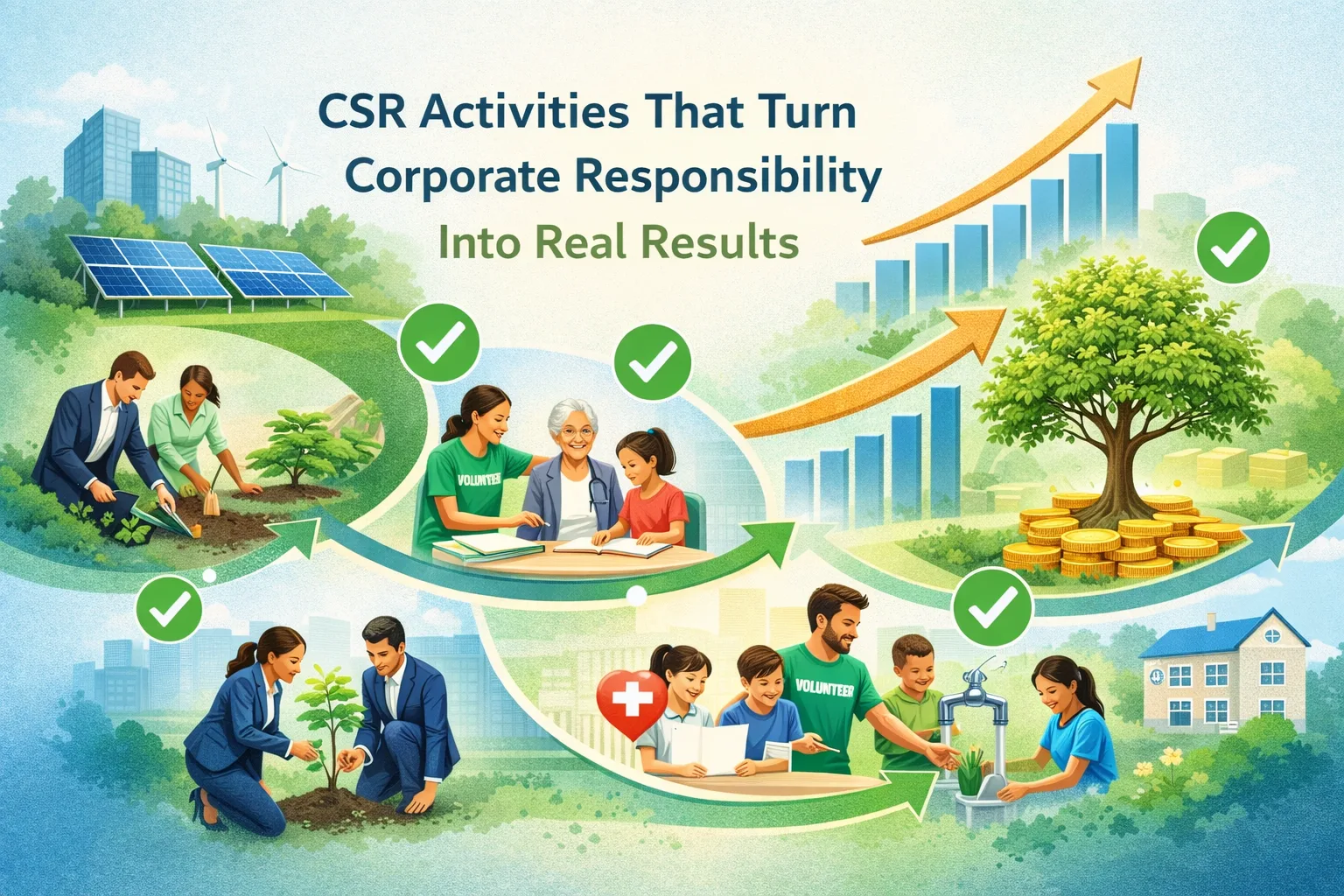
Corporate Social Responsibility (CSR) is more than just a promise or policy from a corporation. Implementation matters most as such activities address challenges or needs of the community and the environment. If done well, the results of corporate social responsibilities can impact the corporation positively by building public trust and enhancing the image of the corporation.
In this article, the author explains the major functions of CSR that translate corporate social responsibility into tangible reality.
Environmental Sustainability Initiatives
Taking care of the environment entails being green and green-friendly. It is among the most popular and effective types of corporate social responsibility.
Common environmental CSR activities include:
- Reducing energy and water consumption
- Using renewable energy sources
- Managing waste through recycling and reuse
- Cutting down carbon emissions
- Supporting tree plantation and conservation programs
Such activities result in tangible outcomes such as reduced operational expenses, legal compliance with environmental statutes, and a good public image. Consumers are gradually warming up to businesses that exhibit concern for the planet; hence the power of environmental CSR.
Employee-Focused CSR Activities
Employees are the backbone of an organisation. CSR activities that involve the well-being of the organisation’s employees will directly impact the organisation’s productivity.
Key employee-centered CSR actions:
- Fair wages and equal opportunity policies
- Health and safety programs
- Mental health support and work-life balance initiatives
- Skill development and training programs
- Diversity and inclusion efforts
When workers feel valued and supported, it enhances job satisfaction. This shows that a decrease in employee turnover and a strong motivating force are acchieved. Eventually, the benefits of greater efficiency and innovation will be reaped.
Community Development Programs
CSR programs related to community development ensure lasting effects on the community as a whole since they involve improving the lives of people in a community in various ways.
Popular community-based CSR activities:
- Education support such as scholarships and school infrastructure
- Healthcare programs including free medical camps
- Clean drinking water and sanitation projects
- Rural development and livelihood support
- Disaster relief and emergency assistance
These initiatives assist businesses in developing a good rapport within the communities. They even increase the credibility of the brand as well as its acceptability in the market. This is very important for a business to run smoothly.
Ethical Supply Chain and Responsible Sourcing
The activities of CSR do not culminate in the company’s operations. Businesses with high ethics reach beyond the company to suppliers.
Ethical supply chain CSR activities include:
- Ensuring fair labor practices among suppliers
- Avoiding child labor and unsafe working conditions
- Supporting local and small-scale suppliers
- Promoting transparency and ethical sourcing
Such measures help mitigate reputation risk and promote stability in the supply chain. Consumers as well as investors are increasingly demanding that companies be responsible for all aspects of product manufacturing and not just the end product.
Customer-Centric CSR Initiatives
Customer-based CSR activities can foster trust and long-term relationships with customers. The dominant themes in this respect are honest communication and responsible product practices.
Examples of customer-focused CSR activities:
- Providing safe and high-quality products
- Transparent pricing and honest marketing
- Protecting customer data and privacy
- Offering eco-friendly or socially responsible products
These initiatives result in more confident customers and greater brand loyalty. When customers are made to feel respected and their information protected, they are far more likely to remain with the brand and recommend it to others.
Education and Skill Development Programs
Education-related CSR initiatives result in tangible outcomes in that they help to empower people through knowledge and skills.
Key initiatives in this area:
- Supporting schools and colleges
- Funding vocational training programs
- Offering internships and apprenticeships
- Conducting digital literacy and skill workshops
These programs fill skill gaps found in societies while also developing a future-ready workforce. Organisations get to benefit from the development of talent pools based on the industry they operate in.
Measuring and Reporting CSR Impact
CSR activities will have practical results only if there is monitoring and improvement in results.
Important steps include:
- Setting clear CSR goals
- Measuring social and environmental impact
- Publishing transparent CSR reports
- Gathering feedback from stakeholders
Doing so ensures a sense of accountability and facilitates further refining of strategies in order to achieve better results.
Conclusion
Good activities of Corporate Social Responsibility help make corporate social responsibility a reality when these activities are functional and in sync with the values and objectives of businesses. Right activities of corporate social responsibility help in creating sustainability and benefits for society and firms when these activities are effective and include objectives of businesses. Companies engaging in effective activities of corporate social responsibility not only contribute but help in creating success for themselves.