Author: admin_blogs

  • Designing a Community Health CSR Project That Delivers Results

    Designing a Community Health CSR Project That Delivers Results

    India’s Schedule VII mandates that companies above a certain threshold spend a portion of their profits on CSR activities — and healthcare consistently ranks among the top sectors for that spending. Yet walk through any district in rural Maharashtra, Jharkhand, or Odisha, and you’ll find the remains of community health CSR projects that generated impressive launch-day press releases and very little else.

    The gap between intent and impact in a community health CSR project is real, it’s common, and it’s preventable. This post is for CSR managers, sustainability heads, and NGO implementation partners who want to close that gap — and design a community health CSR project that actually delivers measurable, lasting results.


    Why Most Community Health CSR Projects Fall Short

    The failure of many community health CSR projects rarely comes down to lack of funding. It comes down to design. Too many projects are built around what’s convenient to report rather than what communities actually need.

    Common failure patterns include one-time health camps with no follow-up, referral, or continuity of care; imported frameworks that don’t account for local language, culture, or existing health infrastructure; siloed implementation where the corporate funder, NGO, and government health system never speak to each other; weak baseline data that makes it impossible to prove — or disprove — impact; and short funding cycles of one year applied to health challenges that take three to five years to shift.

    A community health CSR project that actually works starts differently. It starts with honest questions before any money moves.


    Start With a Needs Assessment, Not a Budget

    Before you design a community health CSR project, you need to understand the health reality of the target community — not the health reality you assume it has.

    A proper needs assessment for a health CSR initiative covers four things.

    Primary health data: What are the leading causes of morbidity and mortality in this geography? What is the current immunisation coverage? What is the maternal mortality ratio? These numbers exist — in district health reports, HMIS data, and NFHS surveys. Read them.

    Barrier mapping: Why do people not access available health services? Is it distance? Cost? Gender norms that prevent women from seeking care alone? Lack of awareness? The barriers are rarely what you think.

    Asset mapping: What health infrastructure already exists? Which ASHA workers, PHCs, or community health centres are operational? A strong community health CSR project does not replace existing systems — it strengthens them.

    Community voice: This is non-negotiable. Every effective community health CSR project includes a stage where community members — especially women, elderly, and marginalised groups — are asked directly what they need. Participatory rural appraisal tools, FGDs, and household surveys all work.

    The needs assessment shapes everything: the intervention design, the geographic focus, the implementation timeline, and the metrics you will use to track success. Skip it, and you are guessing.


    Choosing the Right NGO Implementation Partner

    A community health CSR project is only as strong as its implementation partner. The NGO you choose will determine whether your investment translates into real health outcomes or well-formatted reports with good photography.

    Sector-specific experience: An NGO with five or more years of documented work in community health — not a general-purpose organisation that pivots to health when the funding is available. Ask for specific project references, not just portfolio lists.

    Local presence: National NGOs with no ground presence in your target district are a liability. You need an organisation with established community relationships, local staff, and — critically — the trust of the community. That trust takes years to build and cannot be parachuted in.

    Compliance credentials: For CSR funds to be utilised properly, your implementation partner must hold valid CSR1 registration, 80G certification, and be registered with Niti Aayog’s NGO Darpan portal. These are baseline requirements, not differentiators.

    Monitoring infrastructure: Ask how the NGO collects data, who oversees quality, and how they handle underperformance against targets. Organisations that welcome this question are worth working with. Organisations that don’t are a warning sign.

    Government alignment: The most effective community health CSR projects work with the government health system — training ASHAs, strengthening PHCs, supporting NHM schemes — rather than creating parallel structures that collapse once funding ends.

    At Samabhavana, over 25 years of CSR implementation across health, education, and skill development has taught us that the right partner makes or breaks any community health CSR project. Our work with 50+ corporate partners has been built on exactly this foundation: ground presence, compliance rigour, and genuine community relationships.


    Designing Interventions That Communities Actually Use

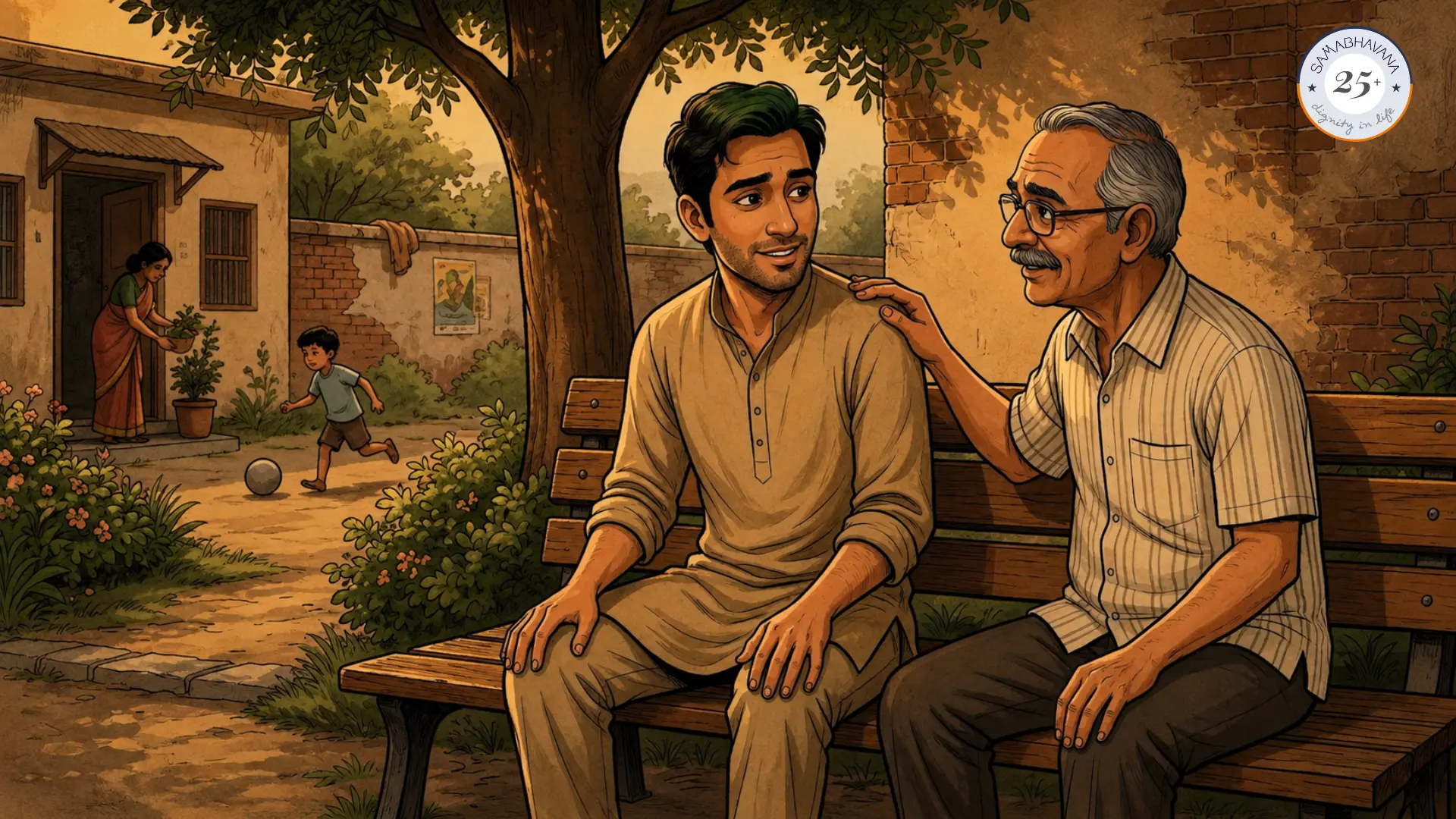
    The word “intervention” carries a certain arrogance — as if health is something you do to a community rather than with it. The best community health CSR projects reject this framing entirely.

    Continuity: A community health CSR project that offers a one-time health camp does not change health outcomes. It changes health awareness, briefly, for some people. True impact requires sustained touchpoints — regular outreach, referral pathways, follow-up care, and linkage to government services.

    Behaviour change communication (BCC): Most preventable health problems — diarrhoea, malnutrition, preventable infections — are linked to behaviour, not just access. Any community health CSR project targeting these issues needs a dedicated BCC component: community meetings, IEC materials in local language, and trained community health volunteers who can reinforce messaging through trusted relationships.

    Gender-responsive design: In many communities, women’s health decisions are not their own. A community health CSR project that ignores this dynamic will consistently underperform on maternal health, family planning, and child nutrition indicators. Design your intervention for the actual social context, not an idealised one.

    Linkage to entitlements: India has a robust — if under-utilised — portfolio of government health schemes: Ayushman Bharat, PM Matru Vandana Yojana, Janani Suraksha Yojana, and more. A well-designed community health CSR project actively connects beneficiaries to these entitlements rather than duplicating what the government already funds.

    Community ownership: Invest in building local capacity — training community health workers, forming village health and sanitation committees, equipping local leaders. Ownership is what separates a project that sustains from one that ends with the funding cycle.


    Building Measurable Health Outcomes Into the Project

    “We conducted 12 health camps and reached 4,000 beneficiaries” is an output. It tells you nothing about whether anyone’s health improved.

    A community health CSR project with credible impact measurement is built on outcomes, not activities. Before your project launches, define the following.

    Baseline metrics: What is the current status of the health indicators you intend to shift? Immunisation coverage, institutional delivery rate, anaemia prevalence, malnutrition levels — document them before you begin.

    SMART targets: Specific, Measurable, Achievable, Relevant, Time-bound. “Increase full immunisation coverage in target villages from 54% to 75% by Month 18” is a target. “Improve immunisation” is not.

    Mid-line and end-line surveys: Conduct formal surveys at defined intervals, using the same methodology as your baseline so data is comparable.

    Third-party verification: For projects above a certain scale, external evaluation adds credibility — both for internal learning and for CSR reporting to the board and MCA.

    Qualitative evidence: Numbers tell one story. Testimonials, case studies, and community narratives tell another. Both are needed for a complete picture of whether your community health CSR project delivered what it set out to deliver.

    The GRI Standards, SDG indicators (particularly SDG 3), and the Ministry of Corporate Affairs’ CSR reporting format all provide useful frameworks for structuring your impact measurement.


    Mobile Health, Preventive Care and High-Impact Delivery Models

    When budgets are limited and geographies are large, the delivery model matters enormously. Here are the approaches with the strongest evidence base for a community health CSR project in India.

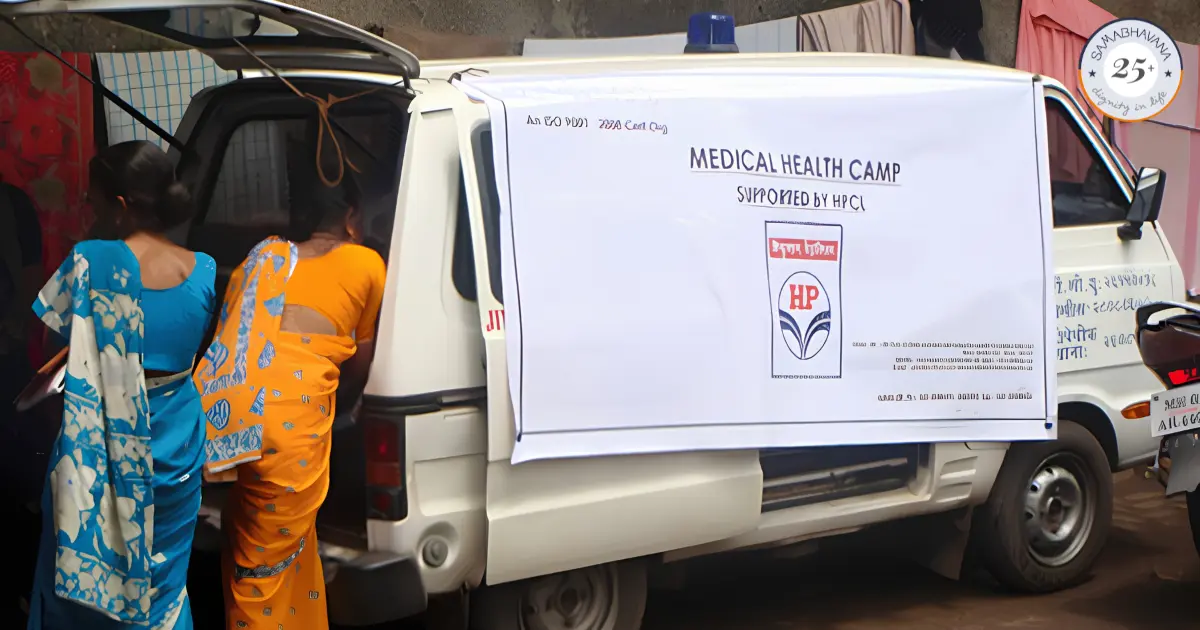
    Mobile Health Units (MHUs): Especially effective for reaching remote or tribal communities where fixed health facilities are sparse or underutilised. MHUs can provide primary OPD services, diagnostics, and referral in a single touchpoint. Several of India’s largest community health CSR initiatives — including those run by corporate foundations in energy, mining, and manufacturing — have deployed MHUs as their primary delivery vehicle.

    Preventive care and screening camps: Cancer screening (oral, breast, cervical), diabetes and hypertension detection, and vision camps address conditions that are both high-burden and highly treatable when caught early. These work best when linked to referral pathways, not left as standalone events.

    ASHA and community health worker strengthening: Training and incentivising existing frontline health workers costs less than building parallel systems and creates far more sustainable change. A community health CSR project that invests in people already trusted by communities is a smart investment.

    WASH: Many community health projects underestimate the role of water, sanitation, and hygiene in determining health outcomes. Household toilets, clean drinking water access, and handwashing behaviour change can significantly reduce child diarrhoea and mortality — and are a legitimate, high-impact focus area for any community health CSR project.

    Telemedicine and digital health: Increasingly viable even in low-connectivity environments, telemedicine can extend specialist access to underserved communities. Some companies are now integrating digital health components into their community health CSR projects with promising early results.


    Taking Women Empowerment of Rural India: 35 Villages of Mathura & Vrindavan

    If the real test of any intervention is whether it works beyond city limits, Samabhavana’s work in rural Mathura and Vrindavan answers that question clearly.

    Building on years of ground-level work in urban slum communities in Mumbai — where mobile health clinics, reproductive health education, and financial literacy programmes reached women who had long been invisible to the formal system — Samabhavana replicated and adapted this entire framework for 35 rural villages across Mathura and Vrindavan. The results have been tangible, community-owned, and lasting.

    Rural women in these villages face a particular convergence of challenges: geographic isolation, limited access to healthcare infrastructure, low literacy rates that restrict economic participation, and deeply entrenched social norms around gender roles, bodily autonomy, and domestic life. 

    Samabhavana’s intervention was designed to address all of these — not in silos, but as the interconnected realities they are.

    Healthcare access was the first priority. Recognising that permanent infrastructure wasn’t feasible across 35 dispersed villages, mobile clinics were deployed — offering confidential checkups, antenatal care, family planning services, and STI screening in spaces where women could access care without stigma or travel burden. The same model that worked in Mumbai’s slums proved equally critical here, where the nearest public health facility could be hours away.

    Literacy and economic inclusion went hand in hand. Basic literacy sessions focused specifically on functional literacy — helping women read bank documents, understand government schemes, and navigate financial institutions independently. For many, this was the first step toward opening a bank account or accessing a self-help group, both of which became gateways to livelihood and agency.

    Legal awareness and safety formed the third pillar. Awareness sessions on the Domestic Violence Act (2005), marital rape, and women’s legal rights were conducted by a panel of advocates — delivering information that most of these women had never had access to in plain, accessible language. For communities where gender-based violence and marital abuse had long been normalised into silence, naming these as legal violations — and explaining the remedies available — was itself a form of transformation.

    Across all 35 villages, Samabhavana’s approach held to a single principle: sustainable change doesn’t happen when you bring solutions to a community. It happens when the community owns them. Health awareness, legal knowledge, and economic tools were built into the fabric of daily life — through local women leaders, peer educators, and consistent follow-through.

    This is what 25 years of implementation expertise looks like on the ground.

    How to Scale and Sustain Beyond Year One

    Most community health CSR projects are funded for one to three years. Most health problems take much longer to shift. This tension — between the funding cycle and the change cycle — is one of the sector’s most persistent challenges.

    Phase your project design: Year 1 for foundation-building and trust. Year 2 for scale and behaviour change. Year 3 for consolidation and handover to government or community systems. Build this phasing into your proposal from the start.

    Document and package what works: Develop toolkits, training manuals, and SOPs during implementation so the approach can be replicated at lower cost in subsequent phases.

    Engage the government early: The National Health Mission, district health societies, and PRIs are potential co-investors in sustainability. A community health CSR project that positions itself as a complement to government programmes is far more likely to outlast its initial funding.

    Build a community health cadre: Train local health volunteers, women’s group leaders, and youth champions who continue to serve as health ambassadors after formal project activities wind down.

    Seek multi-year commitments: Push for three-year funding commitments rather than annual renewals. The evidence is clear — community health CSR projects with multi-year commitments outperform short-cycle projects on virtually every outcome indicator.


    Frequently Asked Questions

    What are the most effective focus areas for a community health CSR project in India? Maternal and child health, preventive care (cancer, diabetes, hypertension), nutrition, WASH, and mental health are among the highest-priority areas given India’s disease burden. The right focus area for any specific community health CSR project depends on the needs assessment for your target geography.

    How do I select an NGO partner for a community health CSR project? Evaluate sector experience, local presence, compliance credentials (CSR1, 80G, Niti Aayog registration), monitoring systems, and track record of government collaboration. Ask for independently verified impact data, not just self-reported figures.

    What is a realistic timeline for a community health CSR project to show results? Community-level health behaviour change typically takes 18 to 36 months to show up in outcome data. Projects shorter than this can show output data but rarely demonstrate genuine health impact. Build a minimum three-year timeline into your programme design.

    How should I measure the success of a community health CSR project? Define health outcome indicators at the design stage — immunisation rates, institutional delivery, anaemia prevalence. Conduct baseline, mid-line, and end-line surveys using consistent methodology. Supplement with qualitative evidence and, for larger projects, third-party evaluation.

    Can a community health CSR project qualify under Schedule VII of the Companies Act? Yes. Healthcare including preventive healthcare, sanitation, and safe drinking water are explicitly listed under Schedule VII. Ensure your implementing partner holds valid CSR1 registration and that expenditures are documented against an approved CSR policy.

    What makes a community health CSR project sustainable after funding ends? Sustainability comes from community ownership, linkage to government schemes, trained local health cadres, and government co-investment. Projects that build these elements from Day 1 have significantly higher survival rates post-funding.


    Conclusion

    A community health CSR project is not a charity gesture or a compliance checkbox. When it is designed well — rooted in real needs, implemented by credible partners, measured honestly, and built for sustainability — it is one of the most powerful tools available to the private sector for improving lives at scale.

    The difference between a project that delivers and one that disappoints lies almost entirely in the upfront choices: who you partner with, how you listen to the community, what you measure, and how you think about the years after the funding runs out.

    If you are designing a community health CSR project and want to get it right, Samabhavana has 25 years of implementation experience across India. Connect with us.
  • The Power of SMART Digital Classroom CSR Programs

    The Power of SMART Digital Classroom CSR Programs

    Picture a government school in rural India. Forty children squeezed onto wooden benches, sharing textbooks, learning from a blackboard with half the chalk missing. Their teacher — talented, committed, overworked — is doing the best she can with what she has. Two hundred kilometres away, a private school student is watching a 3D animation of the human circulatory system on an interactive panel, asking follow-up questions to an AI-powered learning assistant.

    This is India’s education divide- which needs to be addressed.

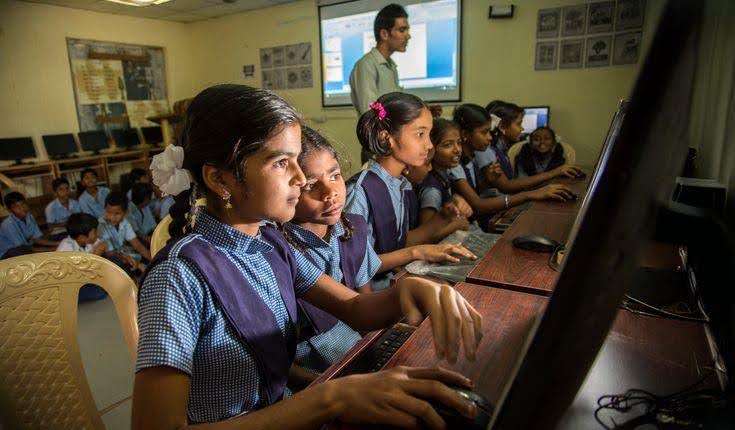
    The good news is that India’s corporate sector is doing something about it. SMART digital classroom CSR programs are rapidly becoming one of the most impactful — and most in-demand — education CSR projects in India to Sambhavana’s own corporate partners like Suzuki Motorcycles and Worley are channeling their CSR budgets into transforming government schools through technology, teacher training, and digital learning infrastructure.

    In this article, we will walk you through exactly what SMART digital classroom CSR programs are, why they matter, what the research says about their impact, and how your company can design and implement one that creates real, measurable, lasting change — not just a room full of equipment that nobody knows how to use.


    What Is a SMART Digital Classroom CSR Program?

    A SMART digital classroom CSR program is a structured corporate social responsibility initiative that funds the installation, training, and ongoing support of technology-enabled learning environments in underserved government schools.

    The acronym SMART — Specific, Measurable, Achievable, Relevant, and Time-bound — is intentional. The best digital classroom CSR projects are not one-time donations of hardware. They are end-to-end programmes that combine infrastructure, content, teacher development, and impact monitoring into a single, coherent intervention.

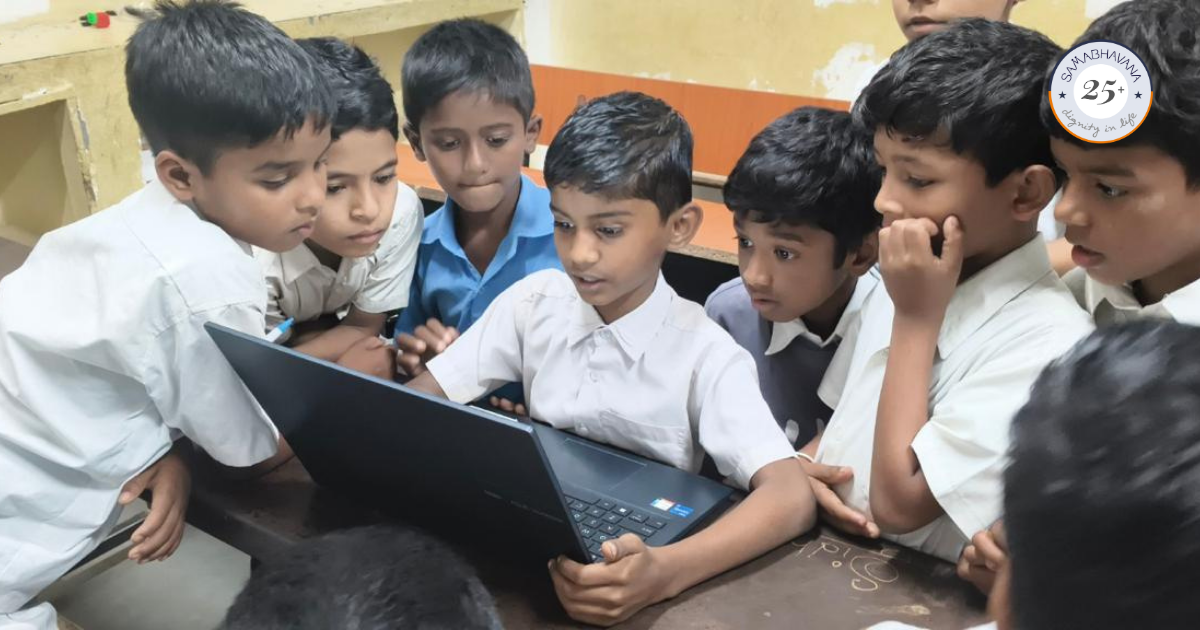
    At the most basic level, a SMART digital classroom typically includes an interactive flat panel or smartboard, a projector or LED screen, curriculum-aligned digital content in regional languages, a computer or tablet station for the teacher, and in many cases, an offline content server for schools in areas with inconsistent internet connectivity.

    But the hardware is only the beginning. What separates a well-designed digital classroom CSR project from an expensive equipment donation is the ecosystem built around it — trained teachers who know how to use the technology, curriculum-aligned content that makes lessons genuinely more engaging, and a monitoring system that tracks student outcomes over time.

    Samabhavana, which has delivered SMART digital classroom CSR programs for corporate partners including Suzuki Motorcycles (India) Private Limited across locations in Gurugram and Haryana & Worley in Navi Mumbai- Maharashtra, approaches every digital classroom intervention as a holistic transformation — not just a technology installation, but a shift in how learning happens in that community.


    Why Rural Schools in India Need SMART Digital Classrooms

    India has over 11 lakh elementary schools — one of the largest government school systems in the world. Yet the gap between what a child learns in an urban private school and what a child learns in a rural government school remains stark, persistent, and deeply consequential.

    The challenges facing rural schools are well-documented. Limited infrastructure — crumbling classrooms, unreliable electricity, no libraries. There is a shortage of qualified and trained teachers, particularly in STEM subjects. Low digital literacy among both students and educators. High dropout rates driven by a combination of socioeconomic pressure and disengagement from a teaching method that has not changed in decades.

    The data on what digital classroom CSR programs can do about this is compelling. According to a UNESCO report, investing in teacher professional development — a core component of every strong SMART classroom programme — can increase student achievement by 12%. Research from the Centre for Social Impact and Philanthropy shows that NGOs with proven sector-specific expertise are 50% more effective at meeting corporate CSR goals. There is field evidence from various CSR programmes — consistently shows improved student engagement, attendance, and academic performance after implementation.

    The reason is straightforward. Children who have been taught through rote memorization and blackboard instruction for their entire school life respond viscerally to animated, visual, interactive content. Abstract concepts that were previously impossible to teach in under-resourced classrooms — the water cycle, chemical reactions, geometric proofs, historical events — suddenly become accessible, engaging, and memorable.

    This is what SMART digital classroom CSR programs are actually delivering. Not gadgets. Not novelty. A fundamentally better learning experience for children who deserve it.


    The Key Components of SMART Digital Classroom CSR Program

    Not all digital classroom CSR projects are created equal. Companies that achieve measurable impact from their education CSR programmes share a consistent approach — one that goes well beyond procuring hardware and calling it done.

    Here are the five components that define an effective SMART digital classroom CSR program:

    1. Infrastructure Assessment Before Installation

    Before a single piece of equipment is purchased, a credible NGO implementation partner conducts a thorough assessment of the school’s existing infrastructure. Is there reliable electricity? If not, a power backup system is part of the project scope. Is the classroom structurally suitable for a smartboard installation? Is the school’s leadership engaged and supportive? These questions matter because the most common reason digital classroom CSR projects fail is not lack of funding — it is lack of groundwork.

    2. Curriculum-Aligned, Regionally Relevant Digital Content

    The content loaded onto a SMART classroom system must align with the specific state board curriculum — not generic national content, and certainly not content designed for urban learners. The best programmes include materials in the regional language, animations that reflect local contexts, and interactive modules that give students the ability to learn at their own pace. Access to only 11% of rural children through digitized education before large-scale CSR programmes began was largely a content problem, not just a connectivity problem.

    3. Comprehensive Teacher Training

    A smartboard gathering dust because no one was trained to use it is one of the most common — and most frustrating — outcomes of poorly designed digital classroom CSR programs. Effective programmes invest as heavily in teacher development as in hardware installation. This means structured training sessions before the classroom goes live, refresher workshops throughout the year, and ongoing support from the implementation partner’s field team.

    4. Community and Parent Engagement

    Digital classrooms do not transform schools in isolation. They work when the broader community understands and values them. Community-driven literacy programmes have been shown to reduce dropout rates by up to 15% in villages. Effective SMART classroom CSR programs include community engagement components — parent orientation sessions, local leader involvement, and regular impact updates shared openly with the community.

    5. Monitoring, Evaluation, and Impact Reporting

    For a CSR manager, this is the component that makes everything else accountable. A well-designed digital classroom CSR project includes a monitoring framework established before implementation begins — baseline data on student attendance, academic performance, and teacher engagement, tracked against post-implementation outcomes at regular intervals.


    How SMART Digital Classroom CSR Programs Align with Section 135

    For CSR managers working within the compliance framework of Section 135 of the Companies Act 2013, SMART digital classroom CSR programs fall clearly within Schedule VII’s permissible activities — specifically under the categories of promotion of education and rural development projects.

    This matters because some companies still approach education CSR as a supplementary activity rather than a primary investment. The reality is that education CSR is one of the most strategically sound investments a company can make under Section 135 — combining measurable community impact, strong brand visibility, clear compliance credentials, and alignment with India’s national development priorities under the National Education Policy 2020.

    The NEP 2020 specifically emphasizes STEM education, digital literacy, and the integration of technology into government schools. SMART digital classroom CSR programs are precisely the kind of private-sector intervention the government is actively encouraging to complement its own investment in school infrastructure. When Samabhavana has delivered digital classroom programmes for partners like Suzuki Motorcycles & Worley, the alignment with both corporate CSR mandates and national education policy has made the partnership straightforward to structure, implement, and report.

    A classroom that did not exist before your CSR programme is now full of children learning. That is the kind of impact that shows clearly in every documentation format, from field visit reports to impact assessment frameworks.


    Samabhavana’s Approach to SMART Digital Classroom CSR

    Samabhavana has been delivering education CSR programmes for corporate and PSU partners for over 25 years. Our approach to SMART digital classroom CSR is built on the same principles that have guided all our work — genuine community engagement, full compliance and transparency, and a commitment to outcomes rather than outputs.

    We work with corporate partners designing programmes that fit their specific CSR mandate, geography, and reporting requirements. This begins with a thorough school selection and community assessment process, moves through infrastructure installation and teacher training, and includes ongoing monitoring and quarterly impact reporting throughout the project duration.

    Our digital classroom programmes have been delivered for partners including Suzuki Motorcycles India Private Limited in Gurugram, Haryana & Worley in Navi Mumbai- Maharashtra — where SMART classroom installations were part of a broader CSR intervention that also included school renovation and health infrastructure support. The results in these communities have been consistent with national research findings: higher student engagement, improved attendance, more confident teachers, and parents who are actively invested in their children’s education for the first time.

    As an NGO registered with Niti Aayog, holding valid 80G, 12A, and CSR1 certifications, with published audit reports and a formal capability statement, Samabhavana provides corporate partners with the compliance, confidence and implementation depth that education CSR programmes of this scale require.


    How to Structure Your SMART Digital Classroom CSR Program

    If your company is considering a digital classroom CSR project, here is a practical framework for getting it right.

    Step 1 — Define your geography and scale. Start by identifying the region where you want to create impact — ideally within or near your operational footprint, consistent with the spirit of Section 135 guidelines. Decide on the number of schools and classrooms based on your available CSR budget, keeping in mind that quality of implementation matters more than quantity of installations.

    Step 2 — Choose an experienced NGO implementation partner. This is the single most important decision you will make. Look for a partner with verified CSR1 registration, published audit reports, and a documented track record of education CSR delivery specifically — not just general community development work. Request references from previous corporate partners and ask to see impact data from past programmes.

    Step 3 — Design the programme collaboratively. Work with your NGO partner to design a programme that fits your company’s Schedule VII categories, your reporting requirements, and the specific needs of the school communities you are targeting. A good NGO partner will not simply accept your brief and disappear — they will push back constructively where the design could be stronger.

    Step 4 — Run a pilot before scaling. Start with two or three schools. Establish clear baseline metrics and agree on what success looks like at the end of the pilot period. Evaluate execution, community response, teacher adoption, and reporting quality before committing to a multi-school rollout.

    Step 5 — Build sustainability from day one. The most common failure mode in digital classroom CSR programs is the sustainability gap — programmes that thrive during the CSR funding period and collapse when it ends. Sustainable programmes invest in teacher ownership of the technology, community governance of the classroom, and a maintenance plan that doesn’t depend entirely on corporate funding to function.


    The Business Case for SMART Digital Classroom CSR

    For CSR managers making the case to their boards and finance teams, the business case for investing in SMART digital classroom CSR programs is strong and multi-dimensional.

    Education CSR delivers clean, verifiable expenditure that withstands audit scrutiny and fulfils Schedule VII requirements straightforwardly. From a brand standpoint, digital classroom programmes generate rich visual content — inaugurations, student testimonials, before-and-after classroom photography — that supports internal communications, ESG reporting, and external brand narrative simultaneously.

    From a community relations standpoint, transforming a school into a community where your employees live and work builds goodwill that no advertising spend can replicate.

    Research consistently shows that 77% of global consumers prefer brands with clear, credible CSR commitments. In the Indian context, where Education and Rural Development consistently rank among the top Schedule VII categories for CSR investment, a well-executed SMART digital classroom programme positions your company as a genuine stakeholder in India’s development story — not just a compliance box-ticker.

    The investment required is also more accessible than many companies assume. A single, well-equipped SMART classroom in a government school — including hardware, content, teacher training, and first-year support — can be delivered effectively for between Rs 3 lakh and Rs 8 lakh depending on specifications and geography.


    Frequently Asked Questions

    Q1. What is a SMART digital classroom CSR program?

    A SMART digital classroom CSR program is a structured corporate social responsibility initiative that funds the installation, teacher training, and ongoing support of technology-enabled learning environments in government schools, particularly in rural and underserved areas. It falls under Schedule VII of the Companies Act 2013 as an education and rural development CSR activity.

    Q2. How much does a SMART digital classroom CSR project

    cost? The cost of a digital classroom CSR project varies based on the specifications of the equipment, the location, and the scope of teacher training and community engagement included. A well-implemented single classroom typically ranges from Rs 3 lakh to Rs 8 lakh. Multi-school programmes often benefit from economies of scale. Your NGO implementation partner should provide a detailed project estimate with clear line items.

    Q3. Which Schedule VII category do SMART digital classroom CSR programs fall under?

    SMART digital classroom CSR programs fall primarily under Schedule VII Item II — promotion of education — and may also qualify under Item X — rural development projects — depending on the programme design and geography.

    Q4. How do I measure the impact of a digital classroom CSR program?

    Effective impact measurement begins with establishing baseline data before the programme launches — student attendance rates, academic performance scores, and teacher engagement indicators. Post-implementation data is collected at regular intervals — typically quarterly — and compared against the baseline.

    Q5. Why should I work with an NGO implementation partner for my digital classroom CSR program?

    Experienced NGO partners bring community access, teacher training expertise, regulatory compliance knowledge, and field monitoring capability that corporate teams cannot replicate in-house. Organisations with proven education CSR track records are 50% more effective at meeting corporate CSR goals than companies attempting direct implementation. An NGO with valid CSR1, 80G, and 12A certifications also ensures your expenditure is legally sound and MCA-compliant.

    Q6. Can SMART digital classroom CSR programs work in areas with no internet connectivity?

    Yes. Many leading digital classroom systems operate entirely offline, using pre-loaded curriculum-aligned content on local servers. This makes them highly suitable for rural and remote government schools where internet connectivity is unreliable or absent. When assessing your programme design, confirm with your NGO partner that the content system selected is appropriate for the connectivity conditions of your target schools.

    Q7. How does Samabhavana approach SMART digital classroom CSR implementation?

    Samabhavana’s approach combines school and community assessment, curriculum-aligned content selection, hardware installation, comprehensive teacher training, and ongoing monitoring and impact reporting. We work collaboratively with corporate partners from programme design through to final impact documentation, ensuring compliance with MCA reporting requirements and delivering outcomes that stand up to independent audit scrutiny. Our digital classroom programmes have been delivered for partners including Suzuki Motorcycles India across Gurugram and Haryana with documented community impact.


    Conclusion

    India’s rural children are not waiting for permission to learn. They are waiting for the tools that give them a fair chance.

    SMART digital classroom CSR programs are one of the most direct, visible, and impactful ways a company can deploy its Section 135 CSR obligation — not as a compliance exercise, but as a genuine investment in the communities that share geography with your operations, your employees, and your brand.

    The research is clear. The field evidence is consistent. And the implementation pathway — with the right NGO partner — is more straightforward than many CSR managers realise.

    If your company is ready to explore a SMART digital classroom CSR program — whether a single pilot school or a multi-geography rollout — Samabhavana is ready to help you design it, deliver it, and document its impact with the rigour that your board, your auditors, and the communities you serve all deserve.

    📞 022-45658306 📧 info@samabhavana.in 🌐 samabhavana.in

  • Inside a Robotics CSR Project in Rural Schools

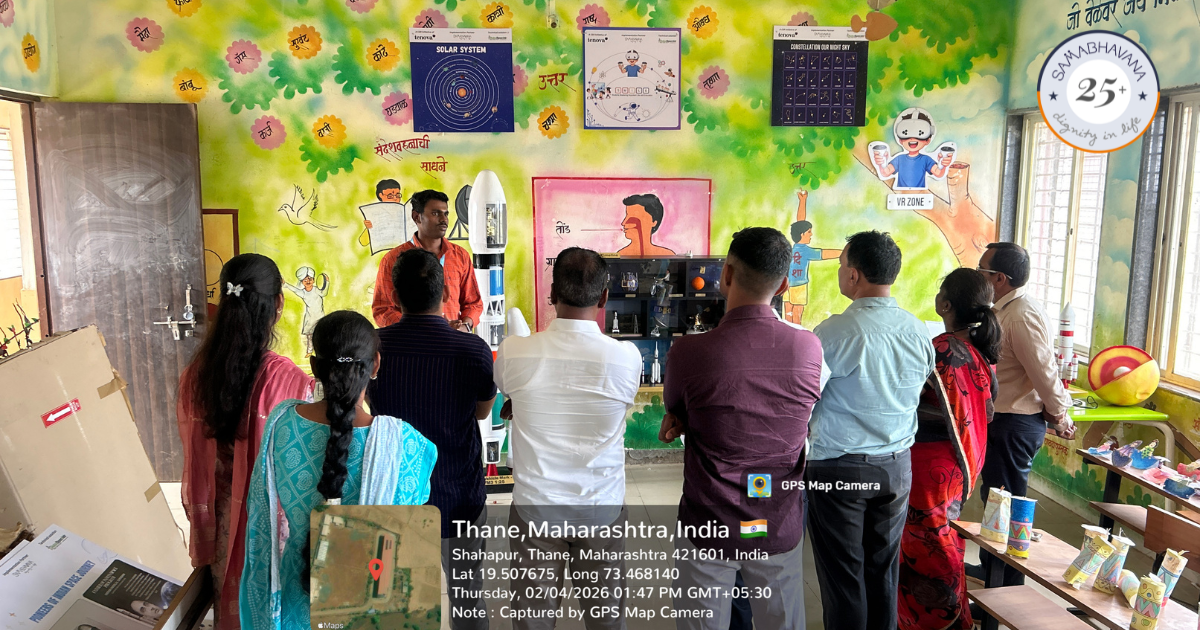
    Inside a Robotics CSR Project in Rural Schools

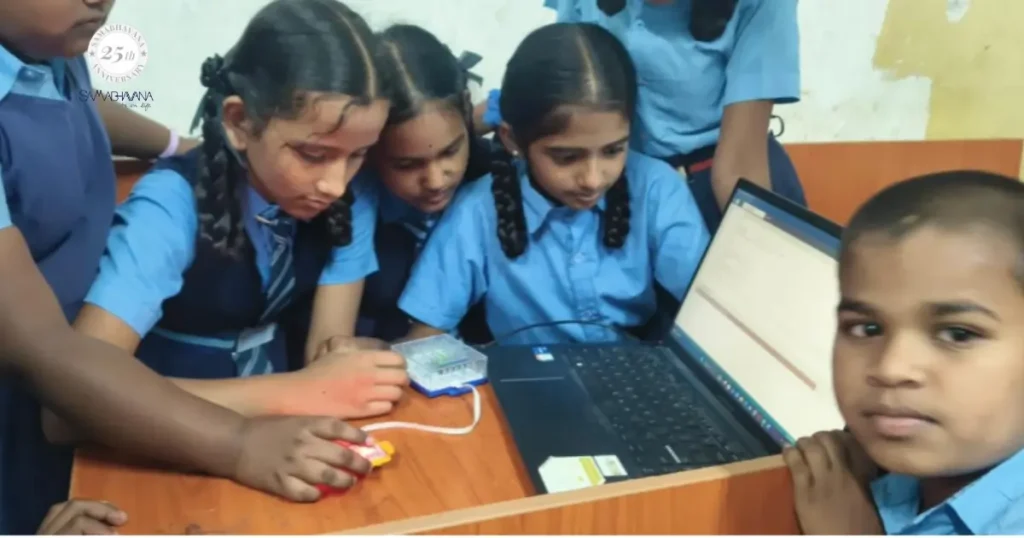
    Picture a classroom in rural India. Forty children share a handful of textbooks. The blackboard is cracked. There is no computer lab, no science equipment, and certainly no exposure to the technologies reshaping the world outside their village.

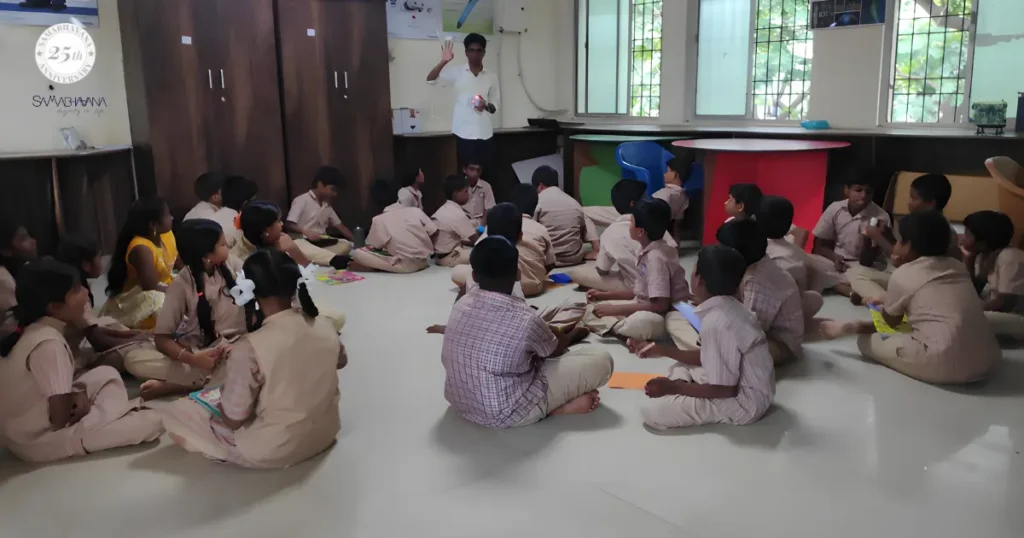
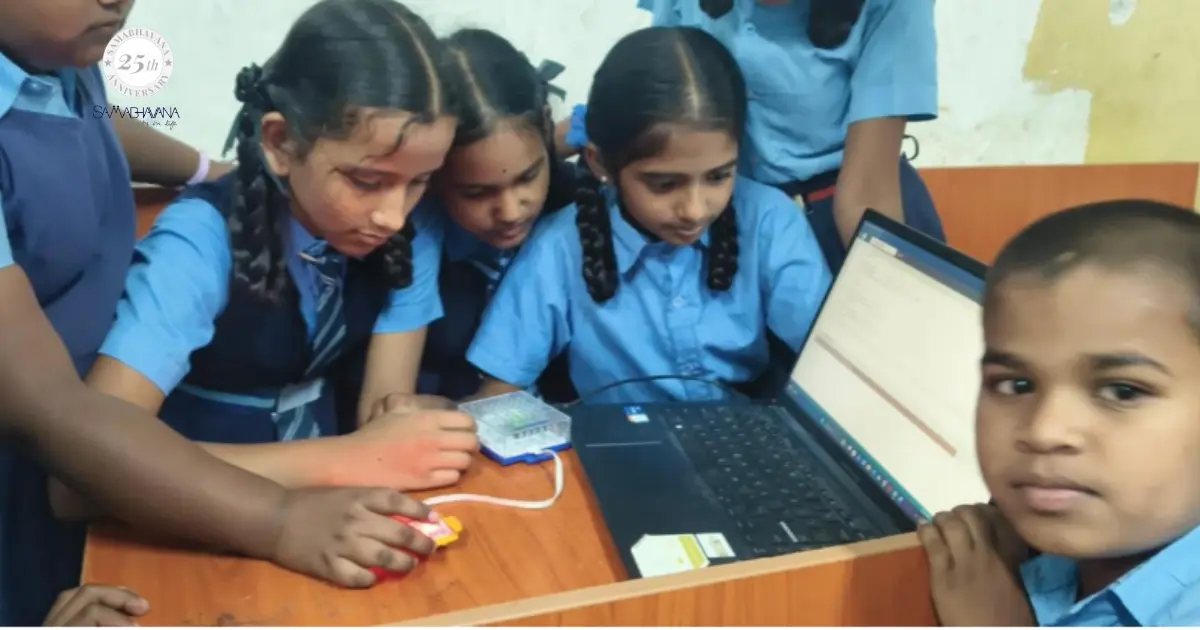
    Now picture the same classroom six months later — children huddled in groups, laughing as they programme a small robot to navigate a maze they built themselves. Their teacher, freshly trained, guides them with confidence. On the wall hangs a hand-drawn poster: “We are the engineers of tomorrow.”

    This is not a scene from an advertisement. This is what a well-designed robotics CSR project actually looks like on the ground.

    Across India, a quiet but powerful revolution is underway. Forward-thinking corporates, partnering with experienced NGOs and education organisations, are bringing robotics, coding, and STEM education into government schools in towns and villages that have never seen a functional computer lab. They are doing it not as charity, but as strategy — investing in the human capital that will define India’s future.

    In this blog, we go inside what these robotics CSR projects look like, why they matter, and what it truly takes to make them work.


    The Problem — Why Rural Schools Are Being Left Behind

    India’s education story has two very different chapters. In urban private schools, children learn to code before they learn cursive. Robotics clubs, STEM labs, and AI workshops are becoming standard offerings. Meanwhile, in thousands of government schools spread across rural India, the reality is starkly different.

    The numbers tell a sobering story. Rural India’s internet penetration stands at just 37%, compared to 67% in urban areas. Only 24.4% of schools across the country have smart classrooms. And the gap is even wider in government and rural institutions, where both infrastructure and device access lag far behind their urban counterparts.

    The National Education Policy 2020 was a landmark step — it recognised the urgency of integrating technology into education and made STEM skill-building a national priority. But policy intent and ground reality are two different things.

    Most rural children still do not have access to smartphones, tablets, or computers. Many of their teachers have never been trained in digital tools. The very infrastructure needed to make tech-enabled education possible — reliable electricity, internet connectivity, functional devices — is missing in large parts of rural India.

    This is not just an education problem. It is an equity problem. When a child in a Mumbai private school learns robotics at age ten and a child in a rural government school never encounters a computer until adulthood — if at all — the gap between them compounds with every passing year. By the time both enter the workforce, one is equipped for the economy of tomorrow. The other is not.

    This is the gap that robotics CSR projects are stepping in to close — and closing it is one of the most important investments a corporate can make.


    What a Robotics CSR Project Actually Looks Like

    So what does a robotics CSR project in a rural school actually involve? It is far more than donating a box of kits and walking away. The most impactful initiatives are structured, sustained, and deeply embedded in the school ecosystem.

    The Infrastructure First

    Before a single child touches a robot, the groundwork has to be laid. This means setting up a functional STEM or robotics lab — equipping the space with computers, robotics kits, coding software, and reliable power supply. In many rural schools, this alone is transformative. For students who have never seen a working computer lab, simply having one changes what they believe is possible for them.

    The Curriculum

    Effective robotics CSR programmes follow a structured learning path. At the foundational level, students learn basic coding using beginner-friendly platforms. As they progress, they move into hands-on robotics — building, programming, and testing machines that solve real problems. The best programmes align this curriculum with the NEP 2020 framework, making it relevant to national education goals and easier to integrate into the school’s existing timetable.

    The Teacher

    This is the piece most programmes get wrong. Giving children robots without training their teachers is like giving someone a car without teaching them to drive. Sustainable robotics CSR projects invest heavily in teacher training — equipping educators with the confidence, knowledge, and ongoing support to keep the programme running long after the implementing organisation has stepped back.

    The Community

    The most successful robotics CSR projects do not operate in isolation. They involve parents, local administrators, and community leaders — building a sense of shared ownership that keeps the momentum going. When a child comes home excited about the robot they built, and a parent sees it with their own eyes, the entire community’s relationship with education shifts.

    Done right, a robotics CSR project does not just teach children to code. It teaches them to think, to collaborate, to fail and try again — skills that no textbook can fully deliver.


    What Changes When Children Learn Robotics

    The impact of a robotics CSR project cannot be measured only in the number of kits distributed or workshops conducted. The real change happens in the minds of children — and it ripples outward in ways that are difficult to quantify but impossible to ignore.

    Confidence

    Many children in rural government schools grow up believing that technology and innovation belong to someone else — someone from a city, someone from a wealthier family, someone who went to a better school. The moment a child successfully programmes a robot to complete a task, that belief shatters. The confidence that follows is not just academic. It is existential. They begin to see themselves as capable of participating in — and contributing to — a modern, technology-driven world.

    Critical Thinking and Problem Solving

    Robotics is not a passive subject. Every session requires children to define a problem, design a solution, test it, observe what goes wrong, and try again. This process — iterative, hands-on, failure-friendly — builds the kind of thinking that classrooms rarely teach. These are precisely the skills that employers, entrepreneurs, and innovators need most.

    Reduced Dropout Rates

    Engagement is one of the most powerful tools against school dropout. When children look forward to coming to school — when learning feels exciting rather than irrelevant — attendance improves. Several robotics education initiatives across India have reported measurably higher student engagement and attendance in schools where programmes have been introduced.

    A Pipeline of Future Talent

    At the national level, the stakes are even higher. India needs millions of skilled technology professionals over the coming decades. The talent to fill those roles exists in every village and district in the country. Robotics CSR projects are one of the most direct ways to identify, nurture, and channel that talent — creating a pipeline that benefits not just the children involved, but the entire economy.


    Why Corporates Need NGO Partners to Deliver This

    A robotics CSR project sounds exciting in a boardroom. Actually executing it in a rural school — navigating local dynamics, training teachers, sourcing appropriate curriculum, building community trust — is a different matter entirely.

    This is where experienced NGO partners become indispensable.

    They Know the Ground

    An NGO that has been working in rural education for years understands things that no corporate team can learn from a distance. They know which schools are ready for a programme like this. They know the teachers who will champion it and the administrators who need to be brought on board. They understand the local language, the seasonal rhythms that affect school attendance, and the cultural sensitivities that determine whether a community embraces or resists an outside initiative.

    They Bridge the Curriculum Gap

    Not every robotics kit comes with a curriculum that works for a Class 6 student in a Marathi-medium school in rural Maharashtra. Effective NGO partners adapt content, translate materials, and contextualise learning in ways that make it genuinely accessible — not just technically available.

    They Train and Sustain

    The difference between a robotics CSR project that thrives and one that quietly fades after the first year almost always comes down to teacher training and follow-up support. NGOs embedded in communities provide the ongoing mentoring, troubleshooting, and encouragement that keeps both teachers and students engaged beyond the initial excitement.

    They Ensure Accountability

    For corporates, CSR accountability matters — both for regulatory compliance and for stakeholder communication. A strong NGO partner brings monitoring systems, impact documentation, and transparent reporting that allows corporates to demonstrate exactly what their investment has achieved.

    In short, the corporate brings the vision and the resources. The NGO brings the relationships, the expertise, and the staying power. Together, they deliver something neither could achieve alone.


    What Makes a Robotics CSR Project Truly Successful

    Not all robotics CSR projects are created equal. Some create genuine, lasting transformation. Others produce impressive launch-day photographs and little else. The difference comes down to a handful of critical factors.

    Long-Term Commitment

    A one-day workshop or a single donation of equipment is not a programme — it is a gesture. Meaningful change in education takes time. The most impactful robotics CSR initiatives run for a minimum of three to five years, with structured milestones, regular reviews, and a clear plan for how the school will sustain the programme independently once the corporate engagement winds down.

    Focus on Sustainability from Day One

    Sustainability should not be an afterthought. It should be designed into the programme from the very beginning. This means training local teachers thoroughly enough that they become the programme’s long-term custodians. It means building relationships with district education authorities so the initiative gets integrated into school systems. It means creating student alumni communities that give back as mentors and advocates.

    Measurable Outcomes Over Activities

    The temptation in CSR is to count activities — workshops conducted, kits distributed, students reached. But these are outputs, not outcomes. A truly successful robotics CSR project measures whether students have actually built skills, whether teachers have genuinely been upskilled, whether attendance and engagement have improved, and whether the school can run the programme without external hand-holding.

    The Right NGO Partner

    As discussed, the implementing partner is everything. A credible, experienced NGO with a track record in education, strong community relationships, and robust reporting systems is the single most important factor in determining whether a robotics CSR project succeeds or stalls.


    Frequently Asked Questions

    Q1. What is a robotics CSR project and how does it work?

    A robotics CSR project is a corporate-funded initiative that brings robotics, coding, and STEM education into schools — particularly government and rural schools — that would otherwise have no access to these resources. Typically, a corporate partners with an NGO or education organisation to set up labs, train teachers, deliver a structured curriculum, and monitor outcomes over a defined project period.


    Q2. How much does it cost to set up a robotics CSR programme in a rural school?

    Costs vary depending on the scale, duration, and level of infrastructure required. A basic robotics lab setup with curriculum and teacher training can range from ₹5 – 10 lakhs for a single school. Larger, multi-school programmes with sustained implementation and impact measurement will require proportionally higher investment. The key is to view it as a multi-year commitment rather than a one-time expenditure.


    Q3. Does a robotics CSR project qualify under Schedule VII of the Companies Act?

    Yes. Robotics and STEM education initiatives in schools fall squarely within the education and vocational skills categories under Schedule VII of the Companies Act, 2013 — making them fully eligible for CSR expenditure by qualifying companies.


    Q4. How do we measure the impact of a robotics CSR project?

    Impact can be measured across several dimensions — student skill assessments before and after the programme, teacher confidence surveys, attendance and engagement data, participation in robotics competitions, and long-term tracking of student academic and career outcomes. A good NGO partner will have robust monitoring and evaluation systems in place from day one.


    Q5. Can girls participate equally in robotics CSR projects?

    Absolutely — and they should be actively encouraged to do so. Some of the most inspiring outcomes from robotics education programmes in India have come from young girls in rural schools who had never previously been given access to technology. Dedicated initiatives like “Girls Who Build Robots” have demonstrated that when girls are given equal access and encouragement, they thrive.


    Q6. How do we find the right NGO partner for a robotics CSR project?

    Look for NGOs with a proven track record in education, specific experience in STEM or technology programmes, strong community relationships in your target geography, and transparent impact reporting. Verify their legal registrations, review past project documentation, and where possible, conduct a field visit before formalising the partnership.


    Conclusion

    Talent is everywhere. Opportunity is not.

    That is the quiet injustice at the heart of India’s education divide — and it is one that the right CSR investment can begin to correct. When a child in a rural school builds their first robot, something shifts. Not just in what they know, but in what they believe about themselves and what is possible for their future.

    Robotics CSR projects are not about giving children a fun after-school activity. They are about fundamentally expanding the horizons of what a child from any background, any geography, any economic circumstance can aspire to achieve. They are about building the engineers, the problem-solvers, the innovators that India will need in the decades ahead.

    For corporates looking to make their CSR spending count — not just on paper, but in practice — investing in robotics and STEM education in rural schools is one of the highest-impact choices available. Choose the right NGO partner, commit for the long term, and measure what actually matters.

    Because the child sitting in that rural classroom right now, with curiosity in their eyes and a robot in their hands, is not tomorrow’s charity case.

    They are tomorrow’s innovators. They just needed the chance.

  • The Role of NGOs in CSR: Why Corporates Need NGO Partners

    The Role of NGOs in CSR: Why Corporates Need NGO Partners

    Every year, hundreds of Indian companies write large cheques in the name of Corporate Social Responsibility. The funds go out. The reports get filed. And yet, somewhere between the boardroom and the community, the impact gets lost.

    The problem isn’t intent — it’s execution.

    Corporates are brilliant at running businesses. But reaching a village in rural Maharashtra, understanding why a girl drops out of school, or knowing which health intervention actually works in a specific slum cluster — that’s not their domain. That’s where Non-Governmental Organisations, or NGOs, step in.

    In India, CSR is no longer optional for eligible companies. Under Section 135 of the Companies Act, 2013, companies meeting certain financial thresholds are legally required to spend at least 2% of their average net profits on approved social initiatives. That’s a significant mandate — and one that demands serious, on-ground partners to fulfil meaningfully.

    This is exactly why NGO-corporate partnerships have become the backbone of impactful CSR in India. NGOs bring community trust, implementation expertise, and grassroots reach that no corporate team can replicate overnight.

    In this blog, we unpack the role NGOs play in CSR — and why choosing the right NGO partner isn’t just good ethics, it’s good strategy.

    Understanding the CSR Landscape in India

    To appreciate why NGOs matter in CSR, it helps to first understand the landscape they operate in.

    India is one of the very few countries in the world where CSR is a legal mandate, not just a voluntary gesture. Since April 2014, Section 135 of the Companies Act, 2013 has required every company with a net worth of ₹500 crore or more, a turnover of ₹1,000 crore or more, or a net profit of ₹5 crore or more, to spend at least 2% of their average net profits on CSR activities.

    The numbers that have followed are staggering. Between FY2014 and FY2024, qualifying listed companies collectively spent over ₹1.22 lakh crore on CSR — and nearly 63% of that amount was deployed in just the last five years alone. CSR in India is not slowing down. It is accelerating.

    But here’s what those numbers don’t tell you: spending money is the easy part. Spending it well is where most companies struggle.

    The approved activities under Schedule VII of the Companies Act span a wide range — education, healthcare, skill development, women empowerment, environmental sustainability, rural development, and more. These are not areas where a corporate HR team or a CSR committee can simply show up and deliver results. They require deep sectoral knowledge, trusted community relationships, and years of on-ground experience.

    This is precisely the gap that NGOs are built to fill. They don’t just help corporations spend their CSR budgets — they help them spend those budgets where it actually counts.

    What NGOs Bring to the Table — The Real Partnership

    When a corporate decides to partner with an NGO for CSR, they’re not just outsourcing a task. They’re plugging into an ecosystem that has taken years — sometimes decades — to build. Here’s what that ecosystem actually looks like in practice.

    1. Community Trust and Last-Mile Reach

    The single biggest challenge in social development work is not funding — it’s access. Credible NGOs are deeply rooted in the communities they serve. They know the local language, the cultural sensitivities, the key influencers, and the real barriers that prevent people from accessing education, healthcare, or livelihoods. This hyper-local presence means that CSR initiatives don’t just land at the district level — they reach the last family in the last lane.

    2. Sectoral Expertise

    A company may manufacture automobiles or run a fintech platform — but an NGO working in education for 20 years understands learning outcomes, dropout patterns, teacher training, and curriculum gaps in ways that no corporate team can match. That expertise translates directly into better programme design, smarter resource allocation, and stronger results.

    3. Established Networks and Partnerships

    Effective NGOs don’t work alone. They come with an existing web of relationships — with government bodies, local panchayats, hospitals, schools, self-help groups, and other civil society organisations. When a corporate partners with a credible NGO, they’re instantly tapping into that entire network rather than building it from scratch.

    4. Accountability and Transparent Reporting

    Compliance-conscious corporates need more than good intentions — they need documentation, impact data, and audit trails. Established NGOs have systems in place for monitoring, evaluation, and reporting. This makes it significantly easier for companies to file accurate CSR reports, satisfy board-level scrutiny, and demonstrate genuine impact to stakeholders.

    5. Long-Term Sustainability

    Perhaps most importantly, NGOs ensure that CSR projects don’t die the moment the funding cycle ends. Because they remain embedded in communities long after a corporate’s financial year closes, they create the conditions for lasting, self-sustaining change — which is ultimately what meaningful CSR is supposed to deliver.

    How NGO – Corporate Partnerships Work


    Understanding the value of NGO partnerships is one thing — seeing how they actually function on the ground is another. The best NGO-corporate partnerships are not transactional. They are strategic, structured, and built on a foundation of shared goals.

    The Typical Partnership Journey

    It usually begins with alignment. A corporate identifies its CSR focus areas — say, education or women empowerment — and looks for an NGO whose work directly maps to those priorities. This isn’t just about finding any NGO; it’s about finding the right one. Credibility, track record, legal compliance, and geographical presence all factor into the decision.

    Once a partnership is established, the NGO typically takes on the role of an implementing agency. This means they design the programme, mobilise the community, hire and train field staff, execute the interventions, and report back to the corporate with data and documentation.

    What Good Partnerships Look Like

    The most impactful NGO-corporate partnerships share a few common traits. First, there is clarity of purpose — both parties know exactly what success looks like before the project begins. Second, there is open and regular communication — co-review meetings, field visits, and shared dashboards keep everyone aligned. Third, there is mutual respect — the corporate trusts the NGO’s ground-level judgment, and the NGO respects the corporate’s compliance and reporting requirements.

    The India Context

    In India, the scale of this model is significant. In recent years, approximately 60% of CSR expenditure has been channelled through implementing agencies — the majority of which are NGOs. This tells a clear story: Indian corporates have already recognised that the NGO route is not just viable, it is preferable when the goal is genuine, measurable impact rather than mere compliance.

    The partnership model works. And when it works well, both the corporate and the NGO are stronger for it — as are the communities they serve together.

    Key Areas Where NGOs Drive CSR Impact


    NGOs don’t operate in a vacuum. Their impact is felt most powerfully in specific sectors — areas where corporate resources meet community needs, and where the right implementing partner can turn a budget line into a life change. Here are the key domains where NGO-led CSR consistently delivers results.

    Education

    From reducing dropout rates to improving learning outcomes, NGOs working in education bring structured, evidence-based programmes into classrooms and communities. They train teachers, build digital literacy, support girls’ education, and ensure that children from marginalised backgrounds don’t fall through the cracks. For corporates looking to invest in the future workforce, education-focused NGOs offer both scale and depth.

    Healthcare

    Access to quality healthcare remains one of India’s most persistent challenges — particularly in rural and peri-urban areas. NGOs bridge this gap through mobile health units, community health workers, maternal and child health programmes, and hospital linkages. They don’t just treat illness; they build health-seeking behaviour in communities that have historically been underserved.

    Skill Development and Livelihoods

    For corporates in manufacturing, retail, or technology, partnering with NGOs on skill development creates a direct pipeline of trained, work-ready youth — while simultaneously uplifting communities. NGOs design vocational training programmes that are locally relevant, gender-sensitive, and aligned with actual market demand.

    Women Empowerment

    NGOs working on women empowerment go beyond surface-level awareness campaigns. They build self-help groups, provide legal literacy, support survivors of violence, and create economic opportunities that give women genuine agency over their lives. CSR investment in this space, channelled through the right NGO, delivers some of the highest social returns of any intervention.

    Environmental Sustainability

    From watershed management to waste reduction and renewable energy adoption, NGOs with environmental expertise help corporates move beyond tree-plantation drives toward interventions that create measurable ecological impact.

    Each of these sectors demands specialised knowledge, community relationships, and long-term commitment — precisely what experienced NGOs bring to every CSR partnership.

    What Corporates Should Look for in an NGOs in CSR 


    Not every NGO is the right fit for every corporation. Choosing a partner carelessly can lead to misaligned goals, poor outcomes, and in some cases, reputational risk. So what separates a strong NGO partner from a weak one? Here’s what corporations should evaluate before signing on the dotted line.

    1. Legal Compliance and Eligibility

    First things first — the NGO must be legally eligible to receive CSR funds under the Companies Act. This means they should be a registered entity, whether a Section 8 company, a trust, or a society, and must have a valid 12A and 80G registration. They should also be registered on the MCA’s CSR portal. These aren’t bureaucratic formalities — they are the baseline for accountability.

    2. Track Record and Credibility

    How long has the NGO been operational? What programmes have they run, and what outcomes have they achieved? A credible NGO will have documented impact reports, third-party evaluations, and verifiable beneficiary data. Past performance is the clearest indicator of future reliability.

    3. Sectoral Alignment

    The NGO’s core expertise should align with the corporate’s chosen CSR focus area. A generalist NGO attempting to run a specialised health intervention is rarely as effective as one that has spent years building deep domain knowledge in that specific space.

    4. Transparency and Financial Integrity

    Ask for audited financial statements. Understand how funds are allocated — what proportion reaches the ground versus administrative overheads. A trustworthy NGO will welcome this scrutiny rather than resist it.

    5. Monitoring and Reporting Capabilities

    Can the NGO provide real-time updates, geo-tagged field reports, and outcome-based impact data? In an era where CSR reporting is increasingly rigorous, an NGO’s ability to document and communicate impact is not a nice-to-have — it is essential.

    Choosing the right NGO partner is one of the most consequential decisions a corporate CSR team will make. Getting it right means the difference between spending money and creating change.

    Frequently Asked Questions (FAQ)


    Q1. Why should corporates partner with NGOs for CSR instead of implementing projects directly?

    Corporates are experts at running businesses — not at navigating community dynamics, government schemes, or grassroots social programmes. NGOs bring decades of on-ground experience, established community trust, and sectoral expertise that would take a corporate team years to build independently. Partnering with an NGO means faster deployment, deeper reach, and stronger outcomes — all while staying fully compliant with CSR regulations.


    Q2. Is it legally required to work with an NGO for CSR in India?

    No, it is not mandatory. Companies can implement CSR projects directly or through their own foundations. However, data consistently shows that a significant portion of CSR expenditure in India is routed through implementing agencies — primarily NGOs — because of the efficiency and impact they deliver. The key requirement is that any NGO receiving CSR funds must meet the eligibility criteria under the Companies Act, 2013.


    Q3. How do we verify if an NGO is credible and eligible for CSR funding?

    Start by checking their legal registrations — 12A, 80G, and MCA CSR portal listing. Review their audited financial statements and annual reports. Ask for impact documentation from previous projects. If possible, conduct a field visit or commission an independent due diligence assessment before formalising the partnership.


    Q4. What is the ideal duration for an NGO-corporate CSR partnership?

    Short-term, one-year engagements rarely produce meaningful social change. The most impactful partnerships are those that span three to five years or more, allowing programmes to move through design, implementation, course-correction, and scale. Long-term partnerships also build deeper trust between the corporate, the NGO, and the communities being served.


    Q5. Can a corporate partner with multiple NGOs simultaneously?

    Absolutely. Many large corporates work with a portfolio of NGO partners — each specialising in a different sector or geography. This approach allows companies to diversify their CSR impact across education, health, livelihoods, and environment without spreading any single partner too thin.


    Q6. How should a corporate measure the success of its NGO partnership?

    Success should be measured against clearly defined outcomes agreed upon at the start of the partnership — not just outputs. Rather than counting the number of workshops held or beneficiaries reached, focus on whether lives have meaningfully improved. Metrics like school retention rates, income levels, health indicators, and skill placement rates tell a far more honest story than activity counts alone.

    Conclusion


    CSR was never meant to be a compliance exercise. It was meant to be a commitment — a recognition that businesses don’t exist in isolation from the societies that sustain them.

    But commitment without capability is just intention. And intention, no matter how genuine, doesn’t build schools, train youth, or put healthcare within reach of a family that has never seen a doctor.

    That’s what NGOs do. Every single day, in communities that rarely make headlines, credible NGOs are converting corporate resources into real, measurable, human change. They are the bridge between what a company wants to achieve and what a community actually needs.

    For corporates serious about maximising the impact of their CSR — not just meeting the legal minimum, but genuinely moving the needle on social development — partnering with the right NGO is not optional. It is the strategy.

    The question is no longer whether to work with NGO partners. The question is which ones, and how to build partnerships that last long enough to matter.

    Because the communities waiting on the other side of that decision don’t need more good intentions. They need corporates and NGOs willing to show up together — and stay.

  • Social Responsibility Projects That Are Changing Lives Across India

    Social Responsibility Projects That Are Changing Lives Across India

    There is a version of corporate social responsibility that looks great in an annual report and does very little on the ground. A nicely photographed tree plantation. A one-day health camp in an accessible urban neighbourhood. A donation to a cause that sounds impressive in a press release.

    And then there is the other kind — the social responsibility projects that quietly, persistently, and measurably change the trajectory of a child’s education, a woman’s financial independence. A community’s access to healthcare, or a young person’s ability to earn a dignified livelihood.

    India is home to both. But increasingly, the second kind is winning.

    This article is about the social responsibility projects that are actually getting that work done. Across education, health, skills development, women empowerment, workplace safety, and mental health. And why the organisations delivering them at the grassroots level matter just as much as the corporates funding them.


    What Makes a Social Responsibility Project Actually Work?

    Before diving into the projects themselves, it is worth asking an honest question: what separates a social responsibility project that changes lives from one that merely spends money?

    The answer, consistently, comes down to three things: community rootedness, sector expertise, and accountability.

    A social responsibility project that is designed in a boardroom and dropped into a community it doesn’t understand tends to produce activity — not change. It reaches the easiest-to-access beneficiaries, generates the most photogenic outputs, and wraps up on schedule regardless of whether the underlying problem has shifted at all.

    A project designed with genuine community input, implemented by an organisation with real on-ground experience in that sector, and measured against baseline indicators that reflect what actually matters to beneficiaries — that is a different animal entirely.

    Organisations like Samabhavana — a Mumbai-based not-for-profit with 25 years of experience across education, health, skills development, women empowerment, POSH awareness, diversity and inclusivity, and men’s mental health — have built their entire approach around this philosophy. Integration over differentiation. Community trust before programme launch. Measurable outcomes built into every project from day one.

    With that frame in mind, here are the social responsibility projects that are genuinely moving the needle across India.


    Education: Building Classrooms That Produce Learners

    Education has consistently been the single largest category for social responsibility projects in India. And for good reason — the gaps are vast, the need is undeniable, and the long-term return on investment is as high as any social intervention can produce.

    CSR contributions have significantly enhanced the educational landscape, fostering infrastructure development, providing scholarships, and promoting digital literacy across millions of students. But the most effective education social responsibility projects have moved well beyond building classrooms.

    The real transformation is happening in learning outcomes, teacher quality, and the connection between education and economic opportunity.

    Digital classrooms and SMART learning

    Post-pandemic, one of the fastest-growing categories of social responsibility projects has been the establishment of SMART digital classrooms in government and under-resourced schools.

    Companies across sectors are funding smart boards, digital content libraries, and internet connectivity in schools that previously operated with nothing more than a chalkboard and a textbook. Digital education CSR initiatives are being replicated by dozens of companies working with NGO partners across the country.

    Samabhavana’s education programmes take this a step further by pairing infrastructure investment with teacher training — addressing the reality that technology in a classroom without a trained teacher to use it produces very little learning.

    Their approach to creating inclusive, supportive learning environments that produce actual academic outcomes rather than just equipment installations reflects exactly the kind of depth that distinguishes genuinely impactful social responsibility projects from superficial ones.

    STEM, robotics, and future-ready learning

    Among the most forward-thinking social responsibility projects in education are those focused on STEM — science, technology, engineering, and mathematics — particularly at the primary and secondary school level.

    Various skill development programmes have provided cutting-edge resources and training in emerging technologies like AI, robotics, and IoT, enhancing accessibility and equipping teachers to deliver effective STEM education.

    These programmes are not just about technology literacy — they are about giving children from underserved communities a genuine shot at careers in sectors that would otherwise remain permanently out of reach.


    Health: From Health Camps to Long-Term Community Care

    Healthcare social responsibility projects have undergone a significant evolution in India. The one-day health camp model — where a corporate team sets up in a community, sees patients, distributes medicines, and leaves — is still common. But it is increasingly being replaced by something more meaningful: structured, long-term community health programmes that build local capacity and address healthcare access at the systemic level.

    Samabhavana’s health programmes are built on a similarly sustained approach. With over 52 hospital assessments conducted and a long-standing focus on community welfare, Samabhavana works not just on access to healthcare services but on the upstream conditions that determine whether people are able to use those services in the first place — awareness, trust, economic barriers, and social stigmas that prevent vulnerable communities from seeking care.

    This includes work on child protection and safeguarding — a dimension of health and wellbeing that is often overlooked in narrower definitions of healthcare CSR but which Samabhavana has addressed directly for over two decades through its POSCO awareness and child protection programmes.


    Skills Development and Vocational Training: The Most Direct Route to Economic Dignity

    If education is about building the foundation, skills development and social responsibility projects are about delivering the outcome — a person with the capability to earn a livelihood, support a family, and participate meaningfully in the economy.

    India’s skills gap is significant. Millions of young people leave the formal education system each year without the practical, market-relevant skills that employers are actually looking for.

    Social responsibility projects in skills development and vocational training are among the most direct and measurable interventions available — and among the most urgently needed.

    Samabhavana’s skills development and vocational training programmes follow this logic precisely. Rather than generic training designed to satisfy a reporting requirement.

    Samabhavana’s programmes are built around real labour market demand and real community context — equipping participants with skills that translate directly into employment or self-employment outcomes.

    The organisation’s 3C programme takes this even further, building the capacity of other NGOs to deliver skills and livelihood programmes more effectively — a multiplier effect that extends the social impact of every rupee invested far beyond any single project.


    Women Empowerment: Moving Beyond Awareness Into Economic Agency

    Women empowerment is one of the most active categories of social responsibility projects in India — and also one of the most inconsistently executed. The gap between organisations that run sensitisation workshops and call it empowerment, and those that actually shift women’s economic participation, safety, and decision-making agency, is enormous.

    The most impactful women empowerment social responsibility projects combine multiple dimensions simultaneously: economic opportunity, safety and legal awareness, health and wellbeing, and the kind of community-level norm change that makes economic gains sustainable over time.

    Samabhavana’s women empowerment programmes operate with precisely this level of ambition — not just awareness, but economic agency. Their work addresses the full spectrum of barriers women face, from vocational skills and livelihood training to legal literacy, health access, and the social conditions that either enable or undermine women’s independence.

    Samabhavana also works on gender-neutral advancement — addressing the male side of gender equity by running programmes that promote positive masculinity, emotional expression, and the dismantling of harmful stereotypes that damage both men and women.


    POSH, POSCO, and Workplace Safety: The Social Responsibility Projects Most Companies Get Wrong

    Prevention of Sexual Harassment (POSH) and Protection of Children from Sexual Offences (POSCO) training represent a category of social responsibility projects that is both legally mandated and chronically under-executed.

    Most companies run a POSH training session once a year, collect the attendance sheets, file the compliance report, and consider the obligation discharged. What they rarely do is invest in the deeper organisational culture change that makes POSH training actually reduce harassment — which is, of course, the actual point.

    Samabhavana has been running POSH and POSCO awareness programmes since before most companies had even heard of the Prevention of Sexual Harassment Act. This is not a side service — it is a core programme area, delivered by practitioners who understand both the legal framework and the community and organisational dynamics that determine whether that framework translates into safer workplaces and safer communities.

    The organisation’s diversity and inclusivity seminars address the broader context in which POSH and POSCO issues arise — challenging the attitudes, assumptions, and power dynamics that create the conditions for harassment in the first place.

    Social responsibility projects in this space, done well, create measurable cultural change. Done poorly, they create paperwork. Samabhavana consistently delivers the former.


    Men’s Mental Health: The Social Responsibility Project India Has Been Ignoring

    Of all the areas where social responsibility projects are genuinely underinvested in India, men’s mental health may be the most striking gap. The statistics are sobering: men account for approximately 70% of suicide deaths in India.

    Yet mental health programmes directed specifically at men — that address the cultural barriers to help-seeking, the stigma around emotional expression, and the specific stressors of masculinity in Indian social contexts — remain rare.

    Corporate Social Responsibility is evolving beyond traditional philanthropy, with organisations recognising that healthy and purpose-driven workplaces and communities are a fundamental driver of societal growth.

    Men’s mental health fits directly into this framework — not as a niche concern but as a mainstream social responsibility project area with significant, measurable community welfare implications.

    Samabhavana has been working in this space for years, running programmes on men’s mental health awareness, positive masculinity, and emotional well-being — work that connects directly to its broader vision of gender-neutral advancement and human rights.

    Their approach recognises something that most CSR programmes miss: that sustainable gender equity requires addressing the experiences and social conditioning of men alongside those of women. A community where men are healthier, more emotionally literate, and less bound by harmful stereotypes is a community where women are also safer and more empowered.


    The PRISM Initiative: Building the Infrastructure for Better Social Responsibility Projects

    Behind all of Samabhavana’s on-ground programme work sits a structural contribution to India’s social responsibility ecosystem that deserves its own recognition.

    In 2013, Samabhavana organised India’s first CSR conference — the PRISM initiative (Partnering Resources for India in Sustainable Movement). At a time when the Companies Act had just made CSR mandatory and most companies were still figuring out what that meant in practice, PRISM created a platform for dialogue between government, corporates, and civil society — the kind of cross-sector collaboration infrastructure that makes effective social responsibility projects possible at scale.

    PRISM has since evolved into a podcast platform on YouTube, a space for thought leadership on CSR and ESG, and a connector between the worlds of corporate investment and community need. It is, in many ways, a social responsibility project about social responsibility projects — building the knowledge, relationships, and shared frameworks that make the whole ecosystem more effective.


    What the Best Social Responsibility Projects Have in Common

    Across all of these sectors — education, health, skills development, women empowerment, POSH, men’s mental health — the projects that genuinely change lives share a recognisable set of characteristics.

    These are designed with communities, not just for them. They are implemented by organisations with real sector expertise and established community relationships. They measure what actually matters — not just outputs like the number of people who attended a session, but outcomes like whether lives measurably improved as a result.

    With communities developing the ownership and capacity to carry the work forward beyond the initial funding cycle. And they are delivered by partners who are fully accountable — financially transparent, legally compliant, and genuinely invested in results.

    Samabhavana’s 25-year body of work across education, health, skills development, vocational training, women empowerment, POSH, POSCO, diversity and inclusivity, and men’s mental health reflects all of these characteristics.

    With full regulatory compliance — CSR-1 registration, 80G, 12A, NITI Aayog recognition, Maharashtra Charity Commissioner registration, and IICA-MCA acknowledgement — and a published capability statement and audited annual reports available on their website, Samabhavana represents the kind of accountable, experienced implementing partner that the best corporate social responsibility programmes are built on.

    If your company is looking for social responsibility projects that deliver measurable community impact, strengthen your ESG narrative, and create the kind of long-term social change that actually justifies the investment — the conversation starts here.

    Contact Samabhavana: 📞 022-45658306 📧 info@samabhavana.in 🌐 www.samabhavana.in


    Frequently Asked Questions

    What are social responsibility projects?

    Social responsibility projects are structured programmes implemented by companies, NGOs, or government bodies to address social, environmental, or developmental challenges in communities.

    In India, they are most commonly funded through the mandatory 2% CSR spend under Section 135 of the Companies Act 2013, and implemented across areas like education, healthcare, skills development, women empowerment, and environmental sustainability.

    Which social responsibility projects have the highest impact in India?

    The highest-impact social responsibility projects in India consistently fall into education, skills development, healthcare, and women empowerment categories.

    Projects that combine direct beneficiary services with long-term capacity building — such as STEM education labs, vocational training programmes linked to employment, community health programmes, and POSH training embedded in genuine culture change — tend to produce the most measurable, sustainable outcomes.

    How do companies choose social responsibility projects to fund?

    Companies typically align their social responsibility projects with Schedule VII of the Companies Act 2013, which defines eligible CSR activity categories.

    The best companies go further — choosing projects based on alignment with their core business values, geographic proximity to their operations, community need assessments, and the track record of the NGO partner implementing the programme on the ground.

    What is the role of NGOs in social responsibility projects?

    NGOs are the primary implementing partners for most social responsibility projects in India. They provide the community access, sector expertise, last-mile delivery networks, and compliance infrastructure that corporate teams cannot replicate in-house. Approximately 60% of India’s CSR expenditure flows through NGO implementing agencies, making NGO selection one of the most important decisions in any CSR programme.

    How can an NGO become a partner for social responsibility projects?

    To qualify as an implementing partner for corporate social responsibility projects in India, an NGO must hold CSR-1 registration on the National CSR Portal, 12A and 80G certifications under the Income Tax Act, and a minimum three-year operational track record.

    Organisations like Samabhavana, which hold all required certifications and have 25 years of verified field experience, are well-positioned to support companies across multiple social responsibility project categories simultaneously.

    How do you measure the success of social responsibility projects?

    The most credible social responsibility projects measure success against pre-defined baseline indicators — changes in literacy rates, health outcomes, income levels, employment rates, or social safety metrics — rather than simply counting activities completed.

    Third-party impact assessments, quarterly beneficiary reports, and Social Return on Investment (SROI) calculations are the gold standard for accountability. Mandatory independent impact assessment is required for companies with CSR obligations above Rs 10 crore.

  • From Classrooms to Innovation Hubs: The Power of SMILE Hub in Government Schools

    From Classrooms to Innovation Hubs: The Power of SMILE Hub in Government Schools

    For many years, classrooms in government and underserved schools have been viewed only as spaces for basic instruction. Learning often meant listening, memorising, and repeating information. While this system delivered foundational knowledge, it left little room for creativity, experimentation, or skill-building.

    At Samabhavana, we believe classrooms can be much more than that.

    Through the SMILE Hub (Student Mastering Important Life Skills Education) initiative, classrooms are being transformed into innovation hubs—spaces where students explore, experiment, and actively participate in their learning journey.

    Rethinking the Purpose of a Classroom

    A classroom is not just four walls and a blackboard. It is where confidence is built, curiosity is shaped, and futures begin to take form. However, many government schools face challenges such as limited infrastructure, lack of digital tools, and minimal exposure to experiential learning.

    SMILE Hub was designed to address these gaps in a practical and sustainable way.

    Instead of adding isolated programs, Samabhavana introduced a 360° learning ecosystem that integrates technology, hands-on learning, and life skills within the existing school structure.

    The result is not just upgraded classrooms—but empowered learning environments.

    What Makes SMILE Hub an Innovation Hub

    SMILE Hub is a one-stop learning solution that brings together multiple modes of education under one roof. It combines:

    Smart Digital Classrooms
    • Computer and Digital Literacy Labs
    • STEM Education
    • Robotics, Artificial Intelligence (AI), and Internet of Things (IoT)
    • Astronomy and Scientific Exploration
    • Virtual Reality (VR) Based Experiential Learning

    This integrated model aligns closely with the National Education Policy (NEP 2020), which encourages experiential learning, coding, AI exposure, and skill-based education from an early age.

    Instead of learning concepts in isolation, students experience how subjects connect to the real world.

    Smart Digital Classrooms: Making Learning Engaging

    Smart classrooms form the foundation of the SMILE Hub model. Through digital content, visual aids, and interactive lessons, students understand concepts more clearly and retain information longer.

    For teachers, smart classrooms reduce repetitive work and help explain complex ideas with ease. Lessons become structured, engaging, and inclusive.

    Students who once struggled to stay attentive become active participants when learning is visual and interactive.

    Digital Literacy: Building Essential Skills

    Digital literacy is no longer optional. It is a basic life skill.

    Through computer labs set up under SMILE Hub, students learn how to:

    • Use computers confidently
    • Type and create digital documents
    • Understand basic internet usage and safety
    • Work on simple digital projects

    These skills prepare students not only for academics but also for future employment opportunities. For many children, this is their first meaningful interaction with technology.

    Parents often share that children begin teaching family members what they learn at school—showing the ripple effect of digital education.

    STEM, Robotics, AI, and IoT: Learning by Doing

    One of the most powerful shifts brought by SMILE Hub is hands-on learning.

    Instead of only reading about science and technology, students build models, assemble robotics kits, and explore how machines work. They learn by experimenting, making mistakes, and trying again.

    Robotics, AI, and IoT sessions introduce future-ready concepts in simple, age-appropriate ways. Students learn how technology can solve everyday problems—from agriculture to energy to safety.

    This practical exposure builds confidence and shows children that advanced learning is accessible to everyone, not just students in elite schools.

    Astronomy and Experiential Learning

    Astronomy sessions ignite wonder and curiosity. Through solar system models, sky observations, and discussions about planets and stars, students develop scientific thinking and patience.

    Virtual Reality further enhances experiential learning. VR allows students to explore environments, understand abstract concepts visually, and connect learning to real-life contexts.

    Learning becomes memorable and exciting rather than stressful.

    Empowering Teachers Alongside Students

    Innovation hubs are not only about students—they also support teachers.

    SMILE Hub provides teachers with tools, training, and resources that make teaching more effective and less exhausting. Teachers transition from being information providers to facilitators of learning.

    This shift improves classroom engagement and teacher satisfaction.

    Infrastructure That Supports Learning

    Samabhavana understands that learning environments matter. SMILE Hub initiatives often go hand-in-hand with:

    • Classroom renovation
    • Improved lighting and seating
    • Library enhancement
    • Playground development

    A well-maintained school creates a sense of dignity and motivation for both students and teachers.

    Impact Beyond the Classroom

    The transformation does not stop at school.

    Students become more confident, curious, and expressive. Parents become more involved. Teachers feel supported. Communities begin to see schools as centres of opportunity rather than limitation.

    SMILE Hub classrooms often become points of pride for entire communities.

    Alignment with CSR Goals

    SMILE Hub directly aligns with Section 135, Schedule VII of CSR in India, focusing on:

    • Promoting education
    • Digital literacy
    Skill development
    • Inclusive learning environments

    Corporate partnerships enable Samabhavana to scale SMILE Hubs, upgrade infrastructure, and reach more government schools across regions.

    From Learning Spaces to Innovation Spaces

    When classrooms evolve into innovation hubs, students stop asking,
    “Will this come in the exam?”

    They start asking,
    “What can we build?”
    “How does this work?”
    “What if we try this?”

    That shift changes everything.

    Through SMILE Hub, Samabhavana is redefining what government school classrooms can become—spaces of creativity, confidence, and possibility.

    Because when learning is engaging, inclusive, and hands-on, classrooms don’t just teach lessons.

    They build futures.

  • Digital Classrooms: Helping Teachers Save Time and Energy in Modern Education

    Digital Classrooms: Helping Teachers Save Time and Energy in Modern Education

    Meta Description:
    Discover how digital classrooms help teachers save time and energy by reducing repetitive tasks, improving lesson planning, and enhancing student engagement. Learn how Samabhavana’s Smile Hub Programme supports smart digital education in Indian schools.


    Introduction: Why Teachers Need Digital Support Today

    Teaching has always been a demanding profession. Teachers prepare lessons, create study materials, check notebooks, manage records, and support students—often beyond school hours. In many Indian schools, especially government and resource-limited institutions, educators manage large classrooms with limited support.

    Over time, this heavy workload affects energy, productivity, and motivation.

    At Samabhavana, through initiatives like the Smile Hub Programme and Smart Digital Class interventions, technology is introduced not to replace teachers—but to empower them.

    Digital classrooms help teachers work smarter, reduce repetitive effort, and focus on meaningful student learning.


    What Are Digital Classrooms?

    Digital classrooms integrate technology such as:

    • Smart boards
    • Projectors
    • Interactive presentations
    • Educational videos
    • Digital assessments
    • Online record management systems

    According to UNESCO’s digital learning framework, technology enhances access, quality, and flexibility in education when implemented effectively.


    How Digital Classrooms Help Teachers Save Time

    1. Reducing Repetitive Tasks

    One of the biggest challenges teachers face is repetition:

    • Writing the same notes on the board
    • Drawing diagrams repeatedly
    • Explaining the same concepts multiple times

    With digital tools:

    • Content is prepared once and reused
    • Diagrams and animations are displayed instantly
    • Videos explain complex topics clearly

    This significantly reduces physical strain and time spent on manual explanations.


    2. Easier Lesson Planning and Organization

    Digital classrooms allow teachers to:

    • Organize lesson materials in advance
    • Align lessons with curriculum goals
    • Access resources instantly

    This reduces last-minute stress and improves classroom flow.

    If your school already focuses on structured academic planning, you can integrate digital systems for even better efficiency.
    Learn more about Samabhavana’s Smile Hub Programme (


    3. Better Classroom Management in Large Classes

    Maintaining discipline in large classrooms can be challenging.

    Digital classrooms improve engagement through:

    • Visual content
    • Animations
    • Interactive activities
    • Audio-visual explanations

    When students are actively engaged, classroom discipline improves naturally—saving teachers time and energy.

    From Typing Names to Creating Projects — How Children Learn Fast With Digital Skills

    Improving Student Understanding Without Extra Effort

    Flexible Teaching Approach

    Digital tools allow teachers to:

    • Pause and replay lessons
    • Revisit complex concepts
    • Adapt to different learning speeds

    This ensures that no child is left behind—without requiring teachers to repeat entire lessons multiple times.


    Supporting Different Learning Styles

    Students learn differently:

    • Visual learners
    • Auditory learners
    • Kinesthetic learners

    Digital classrooms support inclusive education by addressing multiple learning styles simultaneously.

    You can also explore how technology supports inclusive education practices through global research by UNICEF.


    Faster and Smarter Assessments

    Assessment becomes more manageable with digital classrooms.

    Teachers can use:

    • Digital quizzes
    • Online polls
    • Instant feedback tools
    • Auto-evaluated exercises

    Benefits include:

    • Reduced notebook checking time
    • Instant performance analysis
    • Clear identification of learning gaps

    This allows teachers to focus more on mentoring instead of paperwork.


    Digital Record-Keeping Saves Valuable Time

    Manual record-keeping consumes hours every week.

    Digital systems help manage:

    • Attendance records
    • Student progress reports
    • Academic planning
    • Communication with parents

    This reduces paperwork and increases efficiency in school management.

    Explore Smart Digital Class Solutions by Samabhavana


    Reducing Physical and Mental Fatigue for Teachers

    Many teachers report reduced physical strain when using digital classrooms.

    Benefits include:

    • Less board writing
    • Fewer repetitive explanations
    • Better visual support
    • More interactive teaching

    Instead of exhausting themselves physically, teachers can:

    • Guide discussions
    • Mentor students
    • Encourage creativity
    • Build stronger student relationships

    Teacher Training: The Key to Successful Digital Classrooms

    Technology alone is not enough.

    At Samabhavana, teacher training is an essential part of implementation through:

    • Smile Hub Programme
    • School-based digital workshops
    • Practical technology guidance
    • Continuous support

    When teachers receive proper training, they feel confident, empowered, and motivated.


    Challenges of Digital Classrooms

    While digital classrooms offer many benefits, some challenges include:

    • Technical issues
    • Maintenance requirements
    • Infrastructure limitations

    However, with proper planning and support, these challenges can be effectively managed.

    The long-term benefits far outweigh the initial difficulties.


    Conclusion: Smart Teaching, Not Hard Teaching

    The goal of digital classrooms is not to make teachers work faster—but smarter.

    By reducing repetitive tasks and manual workload, digital classrooms:

    • Save time
    • Reduce fatigue
    • Improve classroom engagement
    • Strengthen student outcomes

    When teachers feel supported, teaching quality improves.

    And when teachers thrive, classrooms thrive too.

    Through Smart Digital Class initiatives and the Smile Hub Programme, Samabhavana continues to strengthen education systems by supporting both students and educators.

  • Small Schools, Big Dreams: How Robotics Opens New Doors for Rural Students

    Small Schools, Big Dreams: How Robotics Opens New Doors for Rural Students


    Discover how robotics education in rural and underprivileged schools empowers students with confidence, creativity, and STEM skills. Learn how Samabhavana’s Smile Hub Programme is reducing the digital divide through hands-on robotics learning.


    Introduction: Bridging the Gap Through Robotics Education

    Across many rural and underserved communities in India, schools operate with limited infrastructure but unlimited dreams. Classrooms may be simple, yet they are filled with curious young minds eager to explore the world beyond their surroundings.

    For these students, exposure to modern learning experiences—especially robotics education and STEM learning—is just as important as textbooks.

    At Samabhavana, we believe every child deserves access to meaningful, future-ready education. Through initiatives like the Smile Hub Programme, This is being introduced into small schools to connect students with technology, creativity, and hands-on learning.


    Why Robotics Education Matters in Rural Schools

    Moving Beyond Traditional Learning

    In many underprivileged schools, education is largely textbook-based. This introduces:

    • Practical, hands-on learning
    • Interactive problem-solving
    • Team-based activities
    • Real-world application of classroom concepts

    According to UNESCO, hands-on STEM learning improves critical thinking and innovation skills among students.
    Outbound Reference: https://www.unesco.org/en/education

    Robotics transforms passive learning into active exploration.


    First Robotics Experience: A Moment of Discovery

    For many children, their first robotics session becomes unforgettable.

    Students approach robotics kits with curiosity—sometimes unsure, sometimes excited. As they:

    • Assemble parts
    • Connect wires
    • Program simple movements
    • Watch their creations move

    Hesitation turns into confidence.

    Classrooms once quiet begin buzzing with discussion and teamwork. Learning becomes dynamic and collaborative.


    Connecting Robotics to Real-Life Challenges

    One powerful aspect of its education is relevance.

    Students often relate what they build to everyday challenges such as:

    • Farming support tools
    • Water management solutions
    • Household assistance devices
    • Safety innovations

    When learning feels meaningful, engagement naturally increases.

    STEM concepts—Science, Technology, Engineering, and Mathematics—become easier to understand because students can see and touch what they create.

    For global insights on STEM education impact, you can explore UNICEF’s education resources:


    Building Confidence and Problem-Solving Skills

    Learning Through Experimentation

    This encourages:

    • Trial and error
    • Logical thinking
    • Creative experimentation
    • Patience and resilience

    When a robot doesn’t work as expected, students troubleshoot and try again. Mistakes become learning opportunities instead of failures.

    This process builds:

    • Confidence
    • Analytical skills
    • Emotional resilience
    • Independent thinking

    Children who may struggle with traditional written exams often excel in practical robotics sessions.


    Reducing the Digital Divide in Rural Communities

    Introducing robotics in small schools helps reduce the digital divide.

    The focus is not just on using devices—but understanding how technology works.

    Instead of being only consumers of technology, students become creators.

    This shift changes mindset:

    • From limitation to possibility
    • From hesitation to innovation
    • From observation to participation

    Encouraging Inclusion and Equal Participation

    Robotics classrooms promote teamwork between boys and girls.

    When girls actively:

    • Build robots
    • Lead group projects
    • Design solutions

    Traditional stereotypes around technology begin to shift.

    Students learn to respect each other’s ideas and contributions, creating more inclusive learning environments.


    Expanding Career Awareness and Future Aspirations

    Robotics opens doors to conversations about:

    • Engineering careers
    • Innovation and design
    • Artificial intelligence
    • Technology entrepreneurship

    Even if students choose different career paths, early exposure to robotics strengthens:

    • Self-belief
    • Curiosity
    • Future readiness

    Students begin imagining possibilities beyond their immediate surroundings.


    Challenges of Introducing Robotics in Small Schools

    While education offers immense benefits, implementation requires:

    • Teacher training
    • Structured scheduling
    • Resource management
    • Ongoing technical support

    Through structured initiatives like Samabhavana’s Smile Hub Programme, these challenges are addressed with proper planning and guidance.


    The Real Goal of Robotics Education

    The goal is not to turn every child into a robotics engineer.

    The real aim is to nurture:

    • Curiosity
    • Confidence
    • Creativity
    • Critical thinking

    In a diverse country like India, educational equality requires more than textbooks. It requires experiences that allow children to experiment, explore, and dream—regardless of their location or background.


    Conclusion: Small Schools Can Nurture Big Dreams

    When a child in a small rural school sees a robot they built move for the first time, something powerful happens.

    They begin to believe:

    • Their ideas matter
    • Complex concepts are within reach
    • Their future is not limited by geography

    Through hands-on robotics learning and Smile Hub centres, Samabhavana continues to bring transformative educational experiences to underserved communities.

    Small schools truly can nurture big dreams.

    And robotics is opening doors to a world of possibility.

  • A Powerful Conversation with Shri Uttam Lal Ji – Understanding NHPC Ltd’s CSR Vision Through PRISM

    A Powerful Conversation with Shri Uttam Lal Ji – Understanding NHPC Ltd’s CSR Vision Through PRISM


    Explore insights from PRISM’s conversation with Shri Uttam Lal Ji, Director (HR), NHPC Ltd. Learn how NHPC’s CSR initiatives focus on grassroots development, sustainability, and community empowerment across India in alignment with Samabhavana’s mission.


    Introduction: CSR Leadership Insights from NHPC Ltd

    In one of the most insightful episodes of PRISM by Samabhavana, we had the privilege of hosting Shri Uttam Lal Ji, Director (HR), NHPC Ltd — India’s largest green power company and a prestigious Navratna Public Sector Enterprise.

    The conversation offered meaningful insights into the CSR process of NHPC Ltd, highlighting how corporate social responsibility can go beyond compliance and create sustainable, grassroots-level transformation.

    NHPC Ltd operates under the CSR framework defined by Section 135 of the Companies Act, 2013, which governs CSR in India.
    🔗 Reference: https://www.mca.gov.in/

    However, as Shri Uttam Lal Ji emphasized, NHPC’s CSR philosophy extends far beyond statutory obligations — it focuses on long-term empowerment and community resilience.


    NHPC Ltd: A Navratna Company with a Purpose-Driven CSR Approach

    NHPC Ltd is widely recognized for its leadership in hydropower and renewable energy. As a Navratna company, it stands for operational excellence and national development.

    But NHPC’s commitment does not stop at energy production.

    Through structured and strategic CSR initiatives, NHPC focuses on:

    • Need-based development
    • Community participation
    • Sustainable growth
    • Long-term empowerment

    The objective is not short-term relief — but sustainable transformation.

    This vision aligns closely with Samabhavana’s mission of building self-reliant communities through education, health, and empowerment initiatives.

    🔗 Explore Samabhavana’s Mission & Vision
    https://samabhavana.in/


    How NHPC Plans and Implements CSR Initiatives

    1. Need-Based Assessment Before Action

    A key insight shared during the PRISM conversation was NHPC’s strong emphasis on groundwork before implementation.

    Before launching any CSR initiative, NHPC teams conduct detailed field surveys to understand:

    • Community needs
    • Local socio-economic challenges
    • Livelihood opportunities
    • Gaps in education and healthcare

    This ensures that projects are relevant, practical, and impactful.

    As Shri Uttam Lal Ji explained:

    Development should not happen in isolation. When one area grows, surrounding communities should grow together.


    2. Collaboration with Local Stakeholders

    NHPC’s CSR projects are implemented in collaboration with:

    • District administrations
    • Village committees
    • Local leaders
    • Community representatives

    This collaborative model ensures transparency, accountability, and shared ownership.

    Such partnerships reflect the broader vision of the United Nations Sustainable Development Goals (SDGs).
    🔗 Reference: https://sdgs.un.org/goals


    Real Impact at the Grassroots Level

    The PRISM episode highlighted several inspiring examples of NHPC’s CSR impact across India.

    Women-Led Livelihood Programs in Arunachal Pradesh

    NHPC supported women’s empowerment through:

    • Sericulture training
    • Cooperative business models
    • Income-generation initiatives

    These programs strengthened economic independence and boosted local confidence.


    Strengthening Education in Remote Regions

    NHPC’s CSR efforts in education include:

    • Smart classrooms
    • Computers and digital tools
    • Uniforms and learning kits

    Such initiatives reduce educational inequality and improve access to quality education in underserved regions.

    🔗Learn more about Samabhavana’s Smile Hub Programme
    https://samabhavana.in/


    Healthcare Support in Challenging Terrains

    NHPC has also invested in healthcare infrastructure, including:

    • MRI machines
    • X-ray facilities
    • Telemedicine services

    In remote areas like Ladakh and Kashmir, these initiatives have significantly improved access to healthcare services.


    The Core Philosophy: Empowerment Over Dependency

    One of the most powerful messages from the conversation was clear:

    CSR is not about holding someone’s hand forever — it is about helping communities stand strong on their own.

    This philosophy resonates deeply with Samabhavana’s work in:

    • Promoting self-reliance
    • Strengthening education systems
    • Building health awareness
    • Supporting sustainable livelihoods

    Both organizations believe that meaningful change comes from empowerment, not dependency.


    Why PRISM Matters: Beyond a Podcast

    PRISM is not just a series of interviews.

    It is a platform for:

    • Honest conversations
    • Real-life experiences
    • Lessons from challenges
    • Reflections on grassroots realities

    Guests are encouraged to speak freely — without pressure or scripted responses.

    Behind every successful CSR initiative are:

    • Field-level struggles
    • Difficult decisions
    • Learning from setbacks
    • Community engagement efforts

    PRISM brings these authentic stories to light.


    A Platform for Learning and Collaboration

    Each PRISM episode features voices from CSR leaders, development professionals, and changemakers.

    At Samabhavana, we believe sustainable change happens when people:

    • Listen with empathy
    • Share knowledge openly
    • Learn from lived experiences
    • Collaborate across sectors

    In today’s fast-paced world, PRISM creates space for reflection and thoughtful dialogue.

    Listeners have described the episodes as relatable, inspiring, and deeply informative — particularly for those interested in CSR partnerships, education reform, and community development.


    PRISM: Strengthening Relationships Through Stories

    PRISM stands for:

    • Building understanding
    • Strengthening relationships
    • Learning from real journeys

    Every conversation opens new perspectives and challenges conventional thinking about development.

    Guests trust Samabhavana with their stories — and that trust is honoured through respectful, meaningful engagement.


    Moving Forward: Conversations That Create Change

    PRISM exists because:

    • Stories matter.
    • Listening matters.
    • Conversations create change.

    Through PRISM, Samabhavana continues to amplify voices that contribute to India’s social development ecosystem.

    Behind every CSR initiative, every partnership, and every success story — there are human journeys.

    And PRISM is here to share them.

  • Men’s Mental Health in India: Why Emotional Awareness Is the Real Strength

    Men’s Mental Health in India: Why Emotional Awareness Is the Real Strength


    Introduction: A Silent Crisis Nobody Is Talking About

    In India, 72.5% of all Suicide Victims are Men.

    That Number comes from the National Crime Records Bureau (NCRB). It’s not a Small Statistic Hidden in a Footnote — it’s the Clearest Evidence that something is Deeply Wrong with how our Society treats Men’s Mental Health.

    Yet, conversations about Mental Health in India almost always center on Awareness in General. The Specific, Urgent Crisis of Men’s Mental Health remains largely unaddressed — in Homes, Workplaces, Schools, and even in Mainstream Media.

    At Samabhavana, working across communities in Mumbai and beyond for 25+ years, we see this gap every day. Men who are struggling — quietly. Men who have been taught, from the time they were boys, that asking for help is a form of failure.

    This blog is a Deep Dive Honest look at why Men’s Mental Health in India is in crisis, what Emotional Awareness actually means for Men, and what Communities, Families, Workplaces, and CSR partners can do about it.


    The Numbers Tell the Story

    Before we talk about solutions, the scale of the problem needs to be clear:

    • 72.5% of suicide deaths in India are men (NCRB, Accidental Deaths & Suicides in India)
    • 4 in 10 men in India do not discuss their mental health with anyone — not Family, not Friends, not Doctors (Manipal University research)
    • 200 million+ Indians live with a Mental Health Condition, yet over 70% have never Ever sought help, primarily due to Stigma (Mentis India, 2026)
    • India has approximately 0.3 psychiatrists per 100,000 people — one of the lowest ratios in the world (WHO)

    The Mental Health treatment gap in India is severe. For Men, it’s Catastrophic. Not because men experience more mental illness, but because the Cultural and Social barriers to seeking help are Significantly higher.


    Why Do Men Struggle to Talk About Mental Health?

    This is not a character flaw. It is a learned behavior — one that starts early and is reinforced across decades.

    It begins in childhood. Boys are consistently given different messages than girls when they experience emotions. “Don’t cry.” “Be a man.” “Handle it.” These aren’t always meant to be harmful — often, they come from Parents, Elders and Friends who genuinely want to build Resilience. But what they Unintentionally build is Emotional Suppression.

    It continues in school. Teasing, Peer Pressure, and the Social cost of being seen as “Sensitive” teaches Boys to disconnect from their feelings. Vulnerability becomes something to hide.

    It intensifies at work. Adult Men face compounding pressures — Financial Responsibility, Career Expectations, Family Roles & Sexual Performance — with almost no safe outlet. In many Indian Workplaces, talking about Stress or Anxiety is still seen as a career risk.

    It is reinforced by Stigma. According to a CSR Journal analysis, India’s cultural framework around Mental Health is heavily stigma laden. For men, this stigma is layered further with notions of Masculinity and social standing. Seeking therapy can feel like admitting defeat.

    The result: Men learn to cope in Silence. And Silence, for too long, becomes a Health Crisis.


    What Suppressed Emotions Actually Do

    Unexpressed emotions don’t disappear. They accumulate — and they emerge in other ways:

    • Irritability and Anger — often the only “Acceptable” emotion for men to display
    • Withdrawal from Relationships and Social life
    • Substance abuse — Alcohol and Tobacco use are significantly higher among Men struggling with Mental Health
    • Physical symptoms — Chronic Headaches, Sleep Disorders, Fatigue, Digestive Issues
    • Risk-taking behavior — which can mask Depression or Anxiety

    A study published in PMC (NCBI) found a significant association between emotional suppression and depression, anxiety, and stress among adult Indian men. The Body keeps score — even when the Mind insists everything is fine.


    Redefining Strength: What Emotional Awareness Actually Means

    Let’s be direct: Emotional Awareness is not Weakness. It is a Social Skill.

    It means:

    • Recognizing what you are feeling — naming it accurately
    • Understanding where that feeling is coming from
    • Choosing how to respond, rather than reacting automatically
    • Knowing when to reach out for support

    Men who develop emotional awareness don’t become less capable. Research from UNICEF’s Mental Health initiatives confirms that Emotional Literacy improves Resilience, Decision-Making, and Interpersonal relationships — all things that make someone better at Work, at Home, and in their Community.

    Redefining Strength doesn’t mean rejecting toughness. It means expanding what toughness includes: the ability to face your own mind, to communicate under pressure, and to ask for help when the situation demands it.

    That is the version of Masculinity India needs to build — and it starts with Community-level change.


    The Role of Families: How Change Starts at Home

    Parents and Caregivers hold the most immediate Power to change this narrative.

    Small, consistent actions matter more than grand gestures:

    • Name emotions out loud. “I’m feeling frustrated today. Let’s talk through it.” Modelling Emotional Vocabulary Normalizes it for Children.
    • Respond to Boys’ distress without dismissing it. “I can see you’re upset. What happened?” is more powerful than “Don’t worry, you’re fine.”
    • Avoid Gender-Specific emotional rules. If girls are allowed to cry and talk, boys should be too — without exceptions.
    • Create low-stakes conversation habits. Regular dinner table check-ins, evening walks, or brief phone calls, and messages build the habit of communication before a crisis hits.

    Families are the first line of intervention. When Emotional openness is normal at home, Men are significantly more likely to seek support when they need it.


    The Role of Schools: Building Emotional Literacy Early

    Schools in India are beginning to integrate social-emotional learning (SEL) into curricula, but implementation is inconsistent. Here’s what makes a real difference:

    • Counsellors who are accessible, not just present — many schools have counsellors on paper only and many may not be trained to deal with issues of Boys.
    • Peer support groups and open-discussion circles for Adolescent Boys in areas Sexual Reproductive Health and changing body.
    • Classroom conversations that treat Mental health the same way Physical Health are discussed.
    • Sports and arts programmes are used intentionally to teach Emotional Regulation, not just as Extracurriculars.

    The teenage years are when Emotional Patterns for adulthood are set.

    An investment in Emotional Literacy at 14 pays dividends for 50 years.


    The Role of Workplaces: CSR and Corporate Responsibility

    This is where Sambhavana’s work intersects directly with the issue.

    Corporate India has begun to take mental health seriously — but most programmes are reactive (EAP helplines, counselling after crises) rather than preventive. And most are Gender-Neutral in design, which means they fail to address the specific barriers Men face in using them.

    What meaningful corporate action looks like:

    • Normalizing help-seeking from the top down. When senior male leaders speak openly about stress and mental health, it gives permission to others.
    • Training managers to spot signs of Distress and respond without Judgment.
    • Designing Gender- Specific sensitive wellness programmes that acknowledge Men’s barriers specifically.
    • Funding community mental health initiatives through CSR — not just workplace programmes.
    • Corporates – Ensuring regular workshops and seminars for Men Employees in which Women are Partnering.

    Under Schedule VII of the Companies Act, 2013, mental health initiatives qualify under preventive healthcare.

    Companies funding community mental health programmes — especially in underserved areas — are fulfilling both compliance and a social obligation.

    Samabhavana works with CSR partners to design and implement community Health Awareness programmes that specifically include Men’s Mental Health, Emotional Eell-being, and De-stigmatization.

    🔗 Explore our Health initiatives: Samabhavana Health Programmes 🔗 Learn how we work with corporate partners: Donors & Partners


    Sambhavana’s Approach: Community as the Site of Change

    For 25+ years, Samabhavana has worked at the community level — and that is precisely where Men’s Mental Health conversations need to happen.

    Clinical services matter, but they’re not accessible BECAUSE they also don’t exist so where do Men seek help?

    What works at scale is:

    • Community awareness programmes that Normalize the language of mental health
    • Facilitator-led dialogue sessions in Neighborhoods, schools, and workplaces
    • Safe spaces for men to speak — not therapy in the traditional sense, but structured conversations that reduce isolation
    • Engaging Women as Allies — Mothers, Wives, Sisters, Girl friends and Colleagues who understand the warning signs and know how to respond.

    Our community well-being initiatives integrate mental health conversations with our broader work in education, health, skill development, and diversity & inclusion.

    🔗 Diversity & Inclusion Seminars: Learn more


    Frequently Asked Questions

    1. Why do men have higher suicide rates in India despite women reporting more depression? This is known as the “gender paradox” of mental health. Women are more likely to be diagnosed with depression because they are more likely to seek help. Men tend to Internalize distress and are less likely to reach out before a crisis point. Under-diagnosis in Men does not mean lower rates of suffering — it means the suffering is invisible until it becomes extreme.

    2. Is Men’s Mental Health a CSR-eligible activity in India? Yes. Under Schedule VII of the Companies Act, 2013, preventive healthcare — which includes Mental Health Awareness — is an eligible CSR activity. Community-level Mental Health programmes, Awareness Campaigns, and Workplace Wellness Initiatives can all Qualify under CSR spending.

    3. What are the early warning signs that a man may be struggling? Increased Irritability or Anger, Withdrawal from Family and Social contact, changes in sleep or appetite, increased alcohol use, reduced interest in activities previously enjoyed, and making self-deprecating or hopeless comments are all signals worth taking seriously.

    4. How can I start a conversation about mental health with a man who resists it? Don’t lead with “Mental health.” Lead with the Behavior you’ve noticed: “You’ve seemed tired recently — is work getting to you?” Normalize struggle without Pathologizing it. Consistency matters more than one conversation. Ask again. Check in regularly.

    5. What role can NGOs play in men’s mental health? NGOs are well-positioned to do what clinical services cannot: reach into communities, build trust, facilitate non-clinical conversations, and train community members as Mental Health first responders. This is especially important in Semi-Urban and Rural India where professional Mental Health services are scarce.

    6. How does Samabhavana integrate mental health into its programmes? Mental Health awareness is woven into Sambhavana’s community Health Initiatives, Diversity and Inclusion programmes, and Education-focused work. We work with Corporate Partners to develop Strategic program process and support in developing funding community-level outreach that addresses Stigma, builds Emotional Literacy, and creates pathways to support.


    Conclusion: Silence Is Not Strength. Community Is.

    India cannot afford to continue losing men to silent, unaddressed Mental Health crises.

    72.5% of suicide victims being men is not a statistic about Male Weakness. It is a statistic about a cultural failure — a failure to allow men to be Human, to struggle, to ask for help, and to receive it without shame.

    The solution is not just Clinical. It is Cultural, Communal, and Corporate.

    Families that normalize emotions. Schools that build emotional literacy. Workplaces that treat mental health as a leadership priority. NGOs that create safe community spaces. And CSR partners that fund the long, patient work of cultural change.

    At Samabhavana, we believe this is exactly the kind of work that India’s Civil Society and Corporate sector must do together.

    Because true Strength is not Silence.

    It is the Courage to Speak, the Wisdom to Listen, and the Community to hold both.


    Samabhavana is a Mumbai-based NGO with 25+ years of experience in CSR implementation across Health, Education, Skill development, Women Empowerment, Male Advocacy and Diversity & Inclusion. If you’re a corporate looking to invest in community mental health through CSR, get in touch with us.