Author: admin_blogs

  • SMILE HUB vs. Standalone STEM Labs: What CSR Managers Should Know Before Choosing

    SMILE HUB vs. Standalone STEM Labs: What CSR Managers Should Know Before Choosing

    Every CSR manager evaluating a STEM education programme faces the same choice at some point: buy equipment and donate it to a school, or invest in a full programme that includes a trainer, curriculum, teacher development, and impact reporting. The first option looks cheaper.

    The second option looks complicated. This guide cuts through both impressions and gives you a clear, honest comparison โ€” so you can make the decision that is right for your company’s CSR goals, compliance requirements, and reputation.

    What a Standalone STEM Lab Actually Gives You

    A standalone STEM lab is exactly what it sounds like: a set of equipment โ€” STEM models, robotics kits, computers, science instruments โ€” procured and installed in a school. The school takes ownership from day one.

    In ideal conditions, a motivated teacher picks up the material, figures out how to use it, integrates it into teaching, and sustains the programme independently.

    SMILE HUB vs. Standalone STEM Labs for CSR

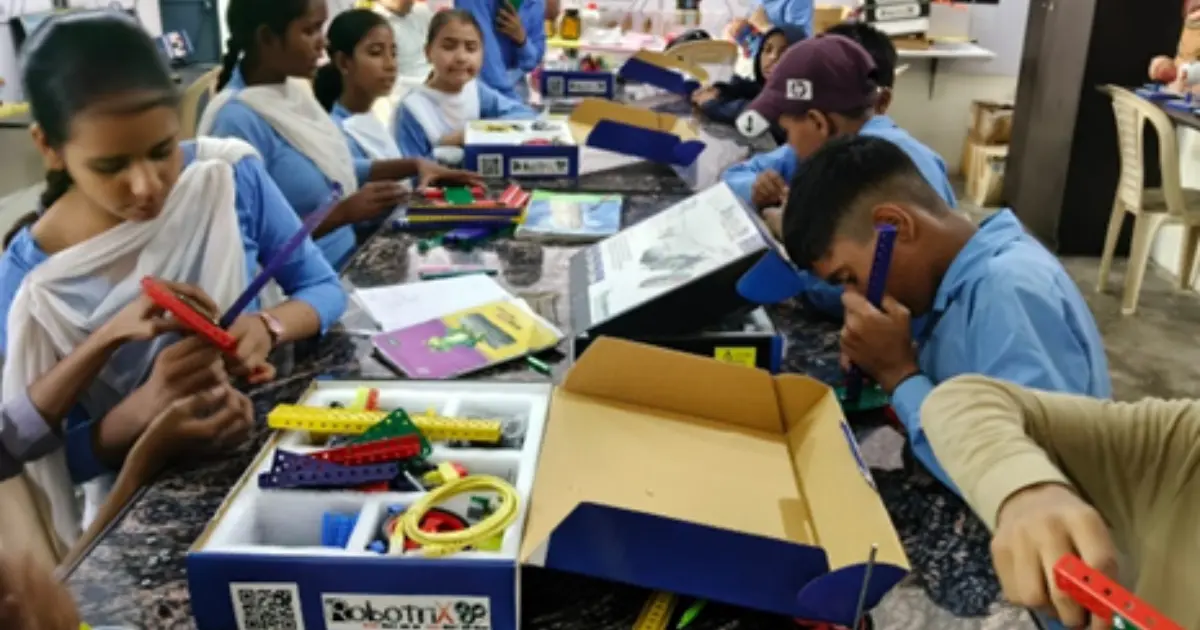
    In practice, this happens in a minority of schools. What more commonly happens: equipment is installed, a photograph is taken for the CSR report, and within 12โ€“18 months the lab is locked because no one knows how to run it, the equipment has not been maintained, and the school’s daily schedule has not been adjusted to accommodate it.

    This is not a hypothetical โ€” it is a pattern that is well-documented across India’s CSR landscape.

    Our post on Inside a Robotics CSR Project in Rural Schools covers what actually happens when technology CSR is implemented without sustained support โ€” and what a properly run programme looks like instead.

    What SMILE HUB Gives You

    SMILE HUB is not a product. It is a programme. The distinction matters because it changes what you are actually buying.

    When you invest in SMILE HUB through Samabhavana, you are not buying equipment โ€” you are buying a running programme that produces documented outcomes. What that includes:

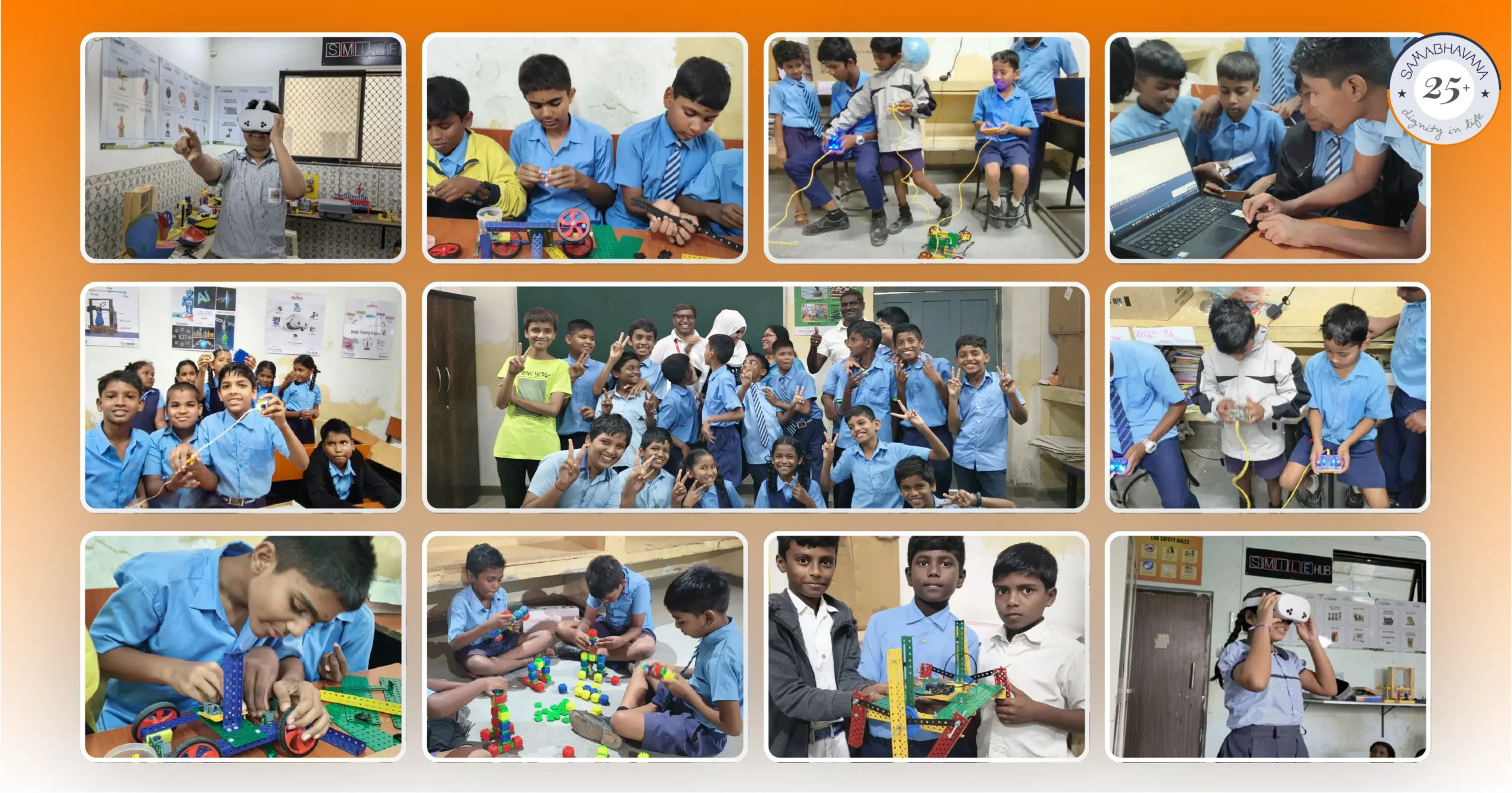
    • 9 technology learning modules โ€” STEM, Robotics, AI, IoT, Astronomy, VR, Coding, Smart Digital Classroom, and Computer Literacy โ€” integrated into a single programme.
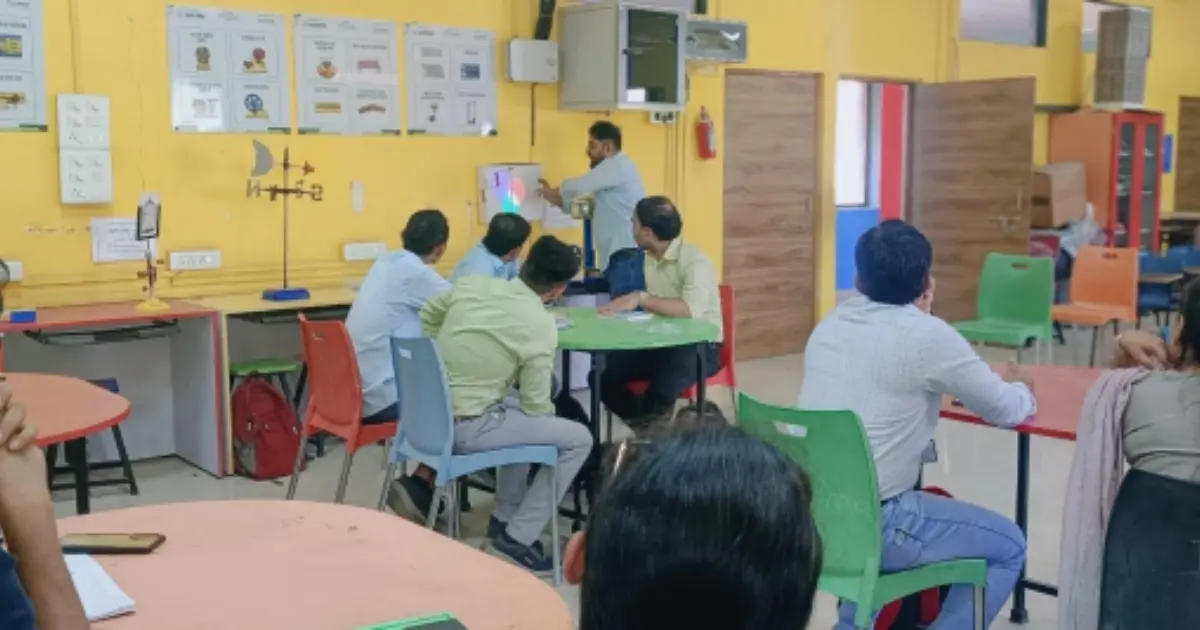
    • A dedicated on-site trainer who runs daily student sessions and monthly teacher training throughout the programme period.
    • NCERT/SCERT-mapped curriculum for every grade level served.
    • Quarterly impact reports with student outcome data โ€” pre/post assessments, session hours, beneficiary demographics.
    • Equipment maintenance support throughout the programme.
    • Full documentation for Schedule VII compliance, CSR-2 filing, and Principal 8 disclosure.

    Head-to-Head Comparison – SMILE HUB vs standalone STEM lab CSR

    Factor

    Standalone STEM LabSMILE HUB Full Programme
    What’s includedEquipment onlyEquipment + Trainer + Curriculum + Reports
    Teachers TrainingTwice or thrice a year onlyScheduled once a month Teachers training
    Dedicated trainerNoYes โ€” daily student sessions
    Curriculum mappingNCERT/SCERT: rarelyYes โ€” mapped to all grade levels
    Impact reportingOutput data onlyFull outcome data + documentation
    Schedule VII fitBorderline (equipment only)Strong โ€” structured education programme
    BRSR complianceWeakFull Principal 8 support provided
    Programme lifeEquipment degrades, no sustainabilitySustained โ€” trainer maintains engagement
    CSR-2 filing supportNoneIncluded โ€” utilisation certificate + reports
    Typical cost rangeโ‚น8โ€“20 lakhโ‚น20โ€“50 lakh per school (full programme)

    The Trainer Question: Why It Is Non-Negotiable

    The single most important variable in any STEM education CSR programme is whether there is a dedicated, trained person running it every day. This is not a nice-to-have. It is the difference between a programme that works and one that doesn’t.

    A school teacher with a full curriculum load and no STEM training cannot be expected to run a STEM/ Robotics programme or an AI lab in their spare time.

    The evidence on this is consistent: STEM labs without dedicated trainers underperform significantly compared to those with sustained trainer support. The equipment is not the constraint โ€” the human expertise is.

    This is why Samabhavana’s approach to every SMILE HUB programme starts with trainer deployment, not equipment procurement.

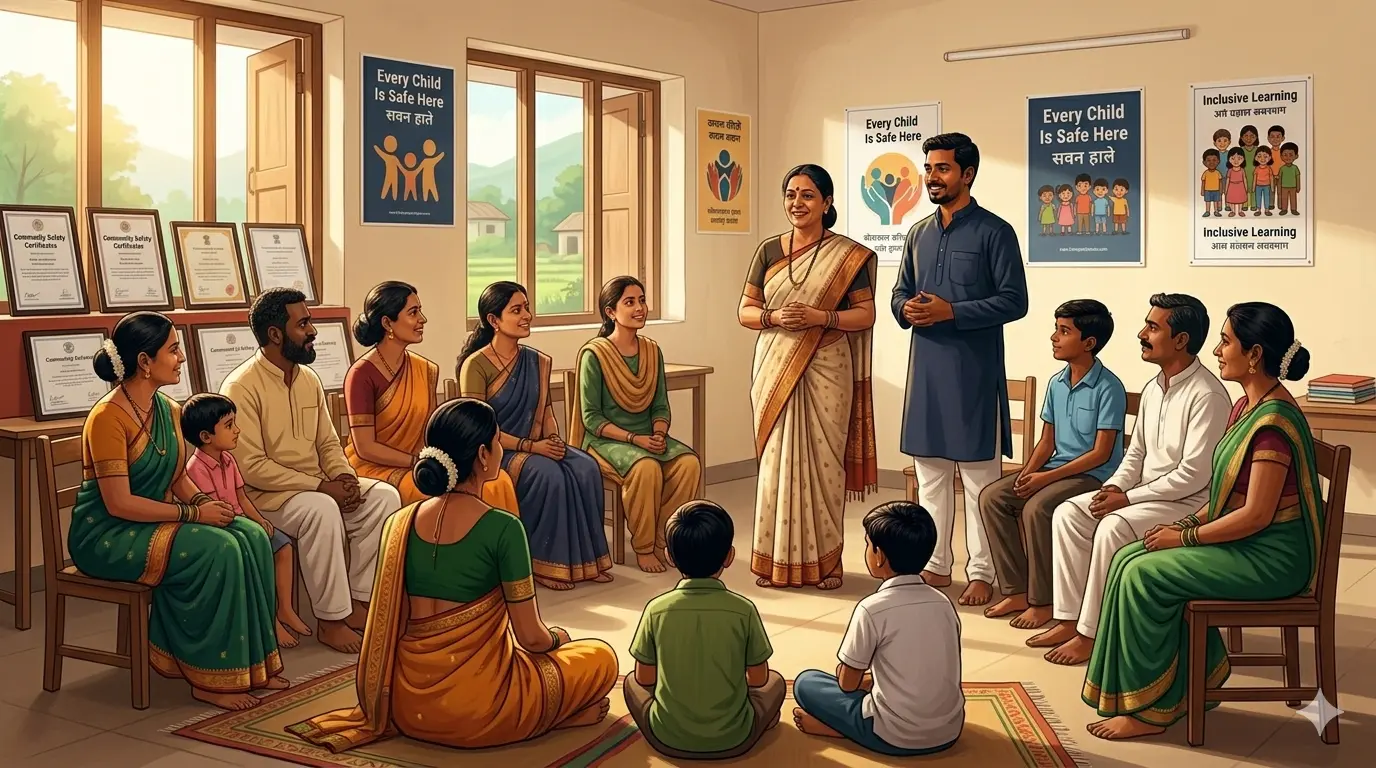
    Our post on Teacher Training CSR: How a Programme Transforms Classrooms explains how we structure teacher development as a programme core โ€” not an afterthought.

    The Smart Digital Classroom Difference

    One module in SMILE HUB that standalone STEM labs cannot replicate is the Smart Digital Classroom โ€” because it is not about equipment in a lab, it is about transforming how all teachers teach, in all classrooms, across all subjects.

    A Smart Digital Classroom upgrade impacts every student in the school, not just those who use the STEM lab.

    For CSR managers trying to maximise beneficiary reach per rupee, this matters.

    Our post on The Power of Smart Digital Classroom CSR Programs covers how this component works and what it adds to the overall programme outcome.

    Total Cost of Ownership: What the Numbers Actually Show

    When CSR managers compare a โ‚น12 lakh standalone STEM kit to a โ‚น35 lakh SMILE HUB programme, the cheaper option looks obvious. Here is what the total cost of ownership calculation actually shows:

    • Standalone STEM lab โ€” Year 1: โ‚น12 lakh equipment. Year 2: โ‚น3โ€“5 lakh replacement/maintenance. Outcome data: none. BRSR impact disclosure: cannot file Principal 8 indicators. Total cost for zero documented outcomes: โ‚น15โ€“17 lakh.
    • SMILE HUB (full programme) โ€” Year 1: โ‚น35 lakh including trainer, curriculum, and reporting. Outcome data: pre/post assessments for 300+ students, 1,000+ session hours documented, Principal 8 indicators filed. Total cost for full compliance and documented impact: โ‚น35 lakh.

    The cheaper option produces no documentable outcome. The full programme produces the compliance record, the data, and the community impact.

    For companies subject to internal CSR audits, Core assurance,on CSR effectiveness, the total cost of the cheaper option is higher โ€” not lower.

    When a Standalone Lab Might Still Make Sense

    To be fair: there are situations where a standalone equipment donation is the right choice. If your company is making a one-time contribution to a school that already has strong teacher capacity and an existing STEM programme, supplementary equipment is a reasonable intervention.

    If you are testing a new geography before committing to a full programme, a small equipment pilot can inform a larger programme decision.

    What a standalone equipment donation should never be positioned as: a complete CSR programme. It is an input. Inputs are not outcomes.

    The Question That Settles It

    Ask yourself one question: in 18 months, will I be able to show my board, my auditor, and my CSR committee documented evidence that students in these schools learned something because of this programme โ€” not just that they received something?

    If the answer needs to be yes โ€” and for most companies it does โ€” then SMILE HUB is the right choice. If your company’s CSR programme is purely goodwill-driven with no compliance or reporting requirements, either approach may work.

    Most companies fall into the first category. That is why SMILE HUB exists. SMILE HUB vs standalone STEM lab CSR

    Want to see SMILE HUB before you commit?
    Samabhavana facilitates site visits to active SMILE Hubs for prospective CSR partners โ€” so your team can see the trainer in action, meet students, and verify the programme quality on the ground before making any commitment.

    Contact us: info@samabhavana.in
    Call: 022-45658306ย  |ย  samabhavana.in/smile-hub.html

    Related Reading: Inside a Robotics CSR Project  |  AI and IoT Education CSR India  |  Smart Digital Classroom CSR  |  The Role of NGOs in CSR

  • How to Measure and Report STEM Education CSR Impact | Samabhavana

    How to Measure and Report STEM Education CSR Impact | Samabhavana

    India’s Business Responsibility and Sustainability Reporting (BRSR) framework, mandated by SEBI for the top 1,000 listed companies, has fundamentally changed what CSR impact reporting must look like. Headcount numbers and inauguration photographs are no longer sufficient.

    BRSR requires structured, indicator-based disclosure โ€” and for education CSR programmes, this means learning outcome data, not just activities delivered.

    This guide explains what STEM education CSR impact reporting under BRSR requires, how to set up measurement from the beginning, and what a credible impact report should contain.

    Why BRSR Has Raised the Stakes on Education CSR Impact

    Before BRSR, most companies’ CSR reporting on education programmes was narrative-based: we set up labs in X schools, we reached Y students, here are photographs. This approach no longer satisfies BRSR’s disclosure requirements โ€” and for the companies subject to BRSR Core (mandatory for the top 150 listed entities from FY2023-24 onwards), it does not meet the reasonable assurance standard either.

    BRSR Principal 8 (Inclusive Growth and Equitable Development) requires companies to disclose the details of their CSR social impact assessments โ€” including the indicators used to measure impact, the methodology for data collection, and the outcomes achieved.

    For STEM education programmes, this translates to a specific set of data points that must be collected during the programme, not reconstructed after it ends.

    The single most common BRSR compliance failure for education CSR: collecting activity data (sessions held, kits distributed) but no outcome data (what students actually learned). Activity data does not satisfy BRSR Principal 8.

    Output vs. Outcome: The Distinction That Determines Your Score

    Outputs (What You Did)

    Outputs are the activities and resources delivered by the programme. They are necessary to report but insufficient on their own:

    • Number of STEM labs / SMILE Hubs set up
    • Number of schools covered
    • Number of students enrolled in programme sessions
    • Number of teacher training sessions conducted
    • Number of session hours delivered
    • Value of equipment procured and installed

    Outcomes (What Changed)

    Outcomes are the changes in knowledge, skills, or behaviour that the programme produced. These are what BRSR requires:

    • Pre- and post-assessment scores: What percentage of students improved their science/technology competency scores after the programme?
    • Skill demonstration: Can students build a circuit, program a robot, or explain an AI concept at the end of the programme?
    • Teacher confidence scores: Did teachers’ self-reported confidence in teaching STEM topics improve?
    • Retention and participation: What was the student session attendance rate over the programme period?
    • Gender breakdown: What percentage of female students participated vs. male โ€” and were outcomes comparable?

    For context on what strong outcome data looks like in practice, our post on AI and IoT Education CSR in India includes the outcome measurement framework Samabhavana uses across all technology education programmes.

    BRSR Principal 8: What the Indicators Require

    Under BRSR’s Essential Indicators for Principal 8, companies must disclose:

    • Details of Social Impact Assessments (SIA) conducted for CSR projects with an outlay of โ‚น1 crore or more โ€” including whether the SIA was third-party verified.
    • Details of ongoing or concluded CSR projects in the current financial year.
    • For projects above โ‚น1 crore: project name, location, amount spent, and impact outcomes.
    • Whether the company has a policy for preferring locally-sourced goods and services in CSR projects.

    Under the Leadership Indicators (voluntary but increasingly expected):

    • Breakdown of persons benefited from CSR activities by gender, geography, and programme type.
    • Details of adverse social impacts from CSR activities (if any) and corrective measures taken.

    How to Set Up STEM CSR Impact Measurement from Day One

    The most important rule in CSR impact measurement: set up your data collection framework before the programme begins, not after. Here is the minimum framework for a SMILE HUB or STEM education CSR programme:

    Baseline Assessment (Before Programme Begins)

    Administer a simple pre-assessment to the students who will participate in the programme. Measure: current science/technology knowledge, current ability to perform relevant tasks (e.g., identify circuit components, understand what a robot does), and teacher’s current confidence in teaching STEM subjects. This becomes your baseline against which outcomes are measured.

    Ongoing Activity Log (During Programme)

    Your implementing NGO should maintain a session-by-session log including: date, school, grade, number of students (male/female), topic covered, module used, and trainer name. This is your output documentation โ€” required for CSR-2 filing and basic BRSR disclosure.

    Quarterly Impact Reports

    Every three months, compile: cumulative session hours, cumulative student reach by grade and gender, mid-point competency assessment scores, teacher training sessions completed, and any notable student project outcomes (robot built, coding project completed, astronomy observation recorded).

    End-line Assessment (Programme Conclusion)

    Re-administer the same assessment given at baseline. Document: improvement in student scores, percentage of students demonstrating defined competency, teacher confidence improvement, and student feedback on programme quality. This is the data that goes into your BRSR Principal 8 disclosure.

    For companies working with PSU partners, our guide on CSR for PSU Companies in India outlines the additional documentation standards that apply CSR programmes.

    What Samabhavana Provides for Reporting

    Every SMILE HUB programme from Samabhavana includes a standardised impact reporting package:

    • Quarterly Impact Reports: student reach by school, grade, and gender; session hours; trainer activity log; equipment utilisation.
    • Learning Outcome Assessment: pre-programme baseline and post-programme end-line scores, with percentage improvement by grade.
    • Teacher Training Record: dates, topics, trainer, attendance, and post-training confidence survey results.
    • Beneficiary Database: anonymised student records with demographic data for BRSR Principal 8 disclosure.
    • Programme Narrative: a written summary of key programme activities and outcomes, formatted for your Annual Report and CSR section.
    • Financial Utilisation Certificate: issued by Samabhavana’s auditor for your CSR-2 filing.

    For programmes above โ‚น1 crore, Samabhavana can arrange third-party Social Impact Assessment (SIA) support to meet mandatory SIA disclosure requirement.

    For a deeper look at how teacher development integrates into the overall programme impact measurement framework, see our post on Teacher Training CSR: How a Programme Transforms Classrooms.

    A Note on Third-Party Verification

    BRSR Core requires companies to obtain reasonable assurance on their BRSR disclosures โ€” including CSR impact claims. For education CSR programmes, reasonable assurance means that an independent third party has reviewed your outcome data and confirmed that it was collected and reported accurately.

    Samabhavana’s impact reporting framework is designed to support third-party verification โ€” all assessment data is documented with school sign-off, and session logs are maintained in a format that an independent assessor can review.

    Want BRSR-ready impact reports built into your SMILE HUB programme?

    Every SMILE HUB programme from Samabhavana includes quarterly impact reports with student outcome data, teacher training records, and beneficiary demographics โ€” structured for direct use in your Principal 8 disclosure and CSR-2 filing.

    Contact us: info@samabhavana.in
    Call: 022-45658306ย  |ย  samabhavana.in/smile-hub.html

    Related Reading: CSR for PSU Companies India  |  AI and IoT Education CSR India  |  The Role of NGOs in CSR

  • How to Set Up a STEM Education CSR Programme in Government Schools | Samabhavana

    How to Set Up a STEM Education CSR Programme in Government Schools | Samabhavana

    Setting up a STEM education CSR programme in government schools is one of the most impactful things a company can do with its CSR budget โ€” and one of the most mismanaged. The gap between a well-executed STEM programme and an expensive equipment donation that produces no outcomes comes down almost entirely to how the programme is designed and who implements it.

    This step-by-step guide is written for CSR managers who are either planning their first STEM programme or looking to improve on a previous attempt.

    Before You Begin: Two Things to Get Clear On

    Most CSR managers begin their STEM programme planning by looking at equipment catalogues or NGO brochures. That is the wrong starting point. Before any of that, get clarity on two things:

    • What do you want students to know or be able to do when this programme ends? A clear learning outcome โ€” even a simple one โ€” will shape every other decision.
    • What is your CSR geography and how many schools are you realistically able to cover in year one? Spreading budget too thin across too many schools produces shallow impact everywhere. Concentration produces depth.

    With these two anchors in place, the rest of the planning follows a logical sequence.

    The 6-Step Process

    Identify and Shortlist Government Schools

    Work with your District Education Officer (DEO) or municipal education authority to identify government schools in your CSR geography. Selection criteria should include: student enrolment size (larger schools give more beneficiary impact per rupee), existing infrastructure (a room that can house equipment securely), and school management willingness to participate (a resistant principal will undermine any programme).

    For companies with a STEM focus, prioritise schools with strong Science enrolment in Grades 8โ€“12.

    Choose Your Modules Based on Grade Profile

    A STEM education programme is not one-size-fits-all. The right modules depend on the grades you are targeting. For primary schools (Grades 1โ€“5): STEM models, Smart Digital Classroom, and Computer Literacy are the right entry points. For middle and secondary schools (Grades 6โ€“10): add Robotics, Coding, and IoT.

    For senior secondary (Grades 11โ€“12): AI, IoT, and Astronomy are appropriate. SMILE HUB’s 9-module structure covers all three levels โ€” and can be implemented in full or in select combinations based on your school’s grade profile.

    Vet the Implementing NGO Thoroughly

    The implementing NGO is the most important variable in your programme’s success. Equipment can be replaced. A bad NGO relationship cannot be easily unwound mid-year. Before signing any agreement, verify: CSR-1 registration on the MCA21 portal (mandatory since 2021), 80G and 12A certificates, Niti Aayog registration, geographic presence in your specific CSR district โ€” not just a metro office, track record of multi-year programme implementation (not one-off events), and sample impact reports from previous programmes.

    Ask specifically: what happens to programme delivery if your assigned trainer leaves?

    Design for Impact โ€” Not for the Inauguration Photo

    The inauguration photo is not the outcome. The outcome is what students can demonstrate six months after the lab is running. Two decisions at the design stage determine this: whether a dedicated trainer is included (non-negotiable for sustained impact), and whether teacher training is treated as a programme priority (a trained teacher multiplies impact after the programme formally ends).

    Do not cut these to save budget. They are the programme.

    Set a Realistic Timeline and Phasing Plan

    A single-school SMILE HUB installation from project sign-off to operational takes 45โ€“60 days โ€” covering procurement, logistics, installation, trainer deployment, and teacher orientation. Multi-school rollouts are phased over 90โ€“120 days.

    Build this into your CSR planning calendar. Q3 and Q4 (Octoberโ€“March) are the most active deployment months โ€” do not plan for a March 31 inauguration without signing off in January.

    Impact measurement typically begins showing in month 3โ€“4 of operations.

    Define the Reporting Framework Before You Start

    The most common CSR reporting failure is trying to reconstruct impact data after the programme has run. Define upfront what you will report: student reach by grade and gender, session hours delivered, learning outcome assessment scores (pre and post), teacher training sessions completed, and equipment utilisation rate.

    A credible implementing NGO will have this framework built into their programme management system.

    For a detailed look at what a well-run technology education CSR programme looks like on the ground, read our post on Inside a Robotics CSR Project in Rural Schools โ€” it covers the realities of implementation that brochures rarely mention.

    The Smart Digital Classroom Question

    Many companies ask whether they should add a Smart Digital Classroom component to their STEM programme or treat it as a separate CSR initiative. Our recommendation: integrate it from day one.

    A Smart Digital Classroom upgrades every subject across every grade โ€” meaning your CSR investment impacts the entire school population, not just the students in the STEM lab.

    What a SMILE HUB Setup Covers (That Most Programmes Don’t)

    • Government and school liaison โ€” Samabhavana handles all MoU documentation with the school and education authority.
    • Custom curriculum mapping to NCERT/SCERT standards for the specific grades in each school.
    • Dedicated on-site trainer who conducts daily student sessions and monthly teacher training.
    • Equipment maintenance and replacement support throughout the programme period.
    • Quarterly impact reports with student outcome data, ready for BRSR and CSR-2 filing.

    For the compliance documentation your company needs for a government school STEM programme, see our guide: How Teacher Training CSR Programmes Transform Classrooms.

    Common Mistakes to Avoid – how to set up STEM education CSR programme India

    • Selecting schools based on convenience rather than community need โ€” this weakens your Schedule VII justification.
    • Splitting budget across too many schools in year one โ€” depth of impact in 2 schools is more valuable than presence in 10.
    • Choosing an NGO based on lowest cost rather than implementation track record.
    • Planning for a financial-year-end installation โ€” the effective programme period shrinks to weeks, not months.
    • Measuring success in equipment delivered rather than learning outcomes achieved.
    Bring SMILE HUB to Your CSR Geography Samabhavana handles every step in this guide โ€” from school selection and government liaison to installation, trainer deployment, and documentation. 25+ years. 1000+ SMILE Hubs. Pan India.

    Contact us: info@samabhavana.in

    Call: 022-45658306ย  |ย  samabhavana.in/smile-hub.html

    Related Reading: Inside a Robotics CSR Project  |  Smart Digital Classroom CSR  |  Teacher Training CSR

  • How SMILE HUB Qualifies Under Schedule VII Item II And What Documents Your Company Needs

    How SMILE HUB Qualifies Under Schedule VII Item II And What Documents Your Company Needs

    Before any CSR commitment is made, the compliance question must be answered first.

    For STEM education programmes, the question is almost always the same: does this qualify under Schedule VII of the Companies Act 2013, and what documentation does our company need to demonstrate that it does?

    This guide answers both questions specifically for SMILE HUB โ€” Samabhavana’s 9-module STEM education CSR programme.

    What Schedule VII Item II Actually Says

    Schedule VII of the Companies Act 2013 lists the categories of activities that qualify as eligible CSR expenditure. Item II is the education clause, and it covers two distinct categories that are relevant to SMILE HUB:

    “Promoting education, including special education and employment enhancing vocational skills especially among children, women, elderly, and the differently abled and livelihood enhancement projects.” โ€” Schedule VII, Item (ii), Companies Act 2013

    This single clause covers two separate qualifying routes for SMILE HUB:

    • Promoting education โ€” for STEM modules targeting students in government schools (Grades 1โ€“12). This is the primary qualification route for SMILE HUB’s STEM, Astronomy, Smart Digital Classroom, and Computer Literacy modules.
    • Employment-enhancing vocational skills โ€” for Robotics, AI, IoT, and Coding modules targeting students at the Class 8โ€“12 level, where the skills being developed are directly linked to future employment in technology sectors.

    Both routes are valid. Many SMILE HUB programmes will qualify under both simultaneously.

    The NEP-2020 Alignment Advantage

    Beyond the Schedule VII clause, SMILE HUB’s alignment with the National Education Policy 2020 strengthens the compliance case in a way that is increasingly valuable for CSR-2 filings and BRSR disclosures.

    NEP-2020 mandates the integration of Technology, Coding, Artificial Intelligence, and Computational thinking into school education across India. SMILE HUB is designed specifically to deliver on these NEP-2020 mandates in government schools that lack the internal capacity to implement them independently.

    A CSR programme that is explicitly aligned to a National Education Policy โ€” with documented curriculum mapping โ€” is a significantly stronger compliance position than one that simply donates equipment.

    This is a distinction we explore in detail in our post on AI and IoT Education CSR in India, which covers the policy context and implementation requirements for technology education CSR.

    Does SMILE HUB Qualify for PSU Companies? – SMILE HUB Schedule VII Compliance

    Yes โ€” and the compliance standard for PSU CSR is higher, not lower. PSU CSR programmes are subject to CAG scrutiny, RTI queries, and in some cases parliamentary review.

    As we outlined in our guide on CSR for PSU Companies in India, PSU CSR managers need an implementing agency that can provide documentation that holds up under audit โ€” not just a programme that delivers activities.

    SMILE HUB’s compliance infrastructure is built to meet this standard. Every programme includes beneficiary data, session logs, pre- and post-assessment scores, teacher training records, equipment utilisation data, and financial audit trail documentation โ€” structured for CAG-audit-ready reporting.

    BRSR Alignment: Which Principal Applies?

    For companies filing a Business Responsibility and Sustainability Report (BRSR), SMILE HUB programmes are reportable under Principal 8: Inclusive Growth and Equitable Development.

    Specifically:

    • Indicator 8.1: Social impact assessments โ€” SMILE HUB programmes include pre/post learning outcome assessments that satisfy this requirement.
    • Indicator 8.2: Rehabilitation and resettlement โ€” not applicable for education programmes.
    • Indicator 8.3: CSR details โ€” SMILE HUB’s structured quarterly reports provide all the programme-level data required for the BRSR CSR disclosure section.

    For companies that have adopted the BRSR Core (mandatory for the top 150 listed entities from FY2023-24), SMILE HUB’s outcome documentation is designed to meet the higher assurance standard required.

    What Documents Your Company Needs

    From Samabhavana (Implementing Agency) – SMILE HUB Schedule VII Compliance

    • CSR-1 Registration Certificate (MCA21 portal) โ€” mandatory since 2021 for any NGO receiving CSR funds
    • 80G Tax Exemption Certificate
    • 12A Income Tax Registration
    • Niti Aayog / NGO Darpan Registration Certificate
    • Maharashtra Charity Commissioner Registration
    • Audited financial statements (last 3 years)
    • Board resolution authorising CSR programme implementation
    • Project proposal with defined beneficiaries, activities, and outcomes

    From Your Company

    • Board-approved CSR Policy mentioning education / STEM / NEP-2020 alignment
    • CSR Committee resolution approving the programme and budget
    • Signed Implementation Agreement with Samabhavana
    • Transfer of funds to Samabhavana’s dedicated programme account
    • Annual CSR-2 Form filed with MCA, citing the programme under Schedule VII Item II

    For BRSR Disclosure – SMILE HUB Schedule VII Compliance

    • Programme name, objectives, and target community
    • Budget allocated vs. budget utilised
    • Beneficiary count by grade, gender, and school
    • Outcome indicators: learning assessment scores, teacher training sessions, session hours
    • Third-party verification reference (available on request for large programmes)

    One Important Clarification on Fund Transfer

    Some companies ask whether they can transfer CSR funds directly to a school rather than through a registered implementing agency.

    Legally, direct transfers to schools are permitted under the Companies Act, but they carry significant compliance risk: schools are not equipped to provide the structured impact documentation, CSR-1-backed receipts, or outcome reporting that CSR-2 filing requires.

    The implementing agency model โ€” where a registered NGO like Samabhavana holds the funds and manages the programme โ€” is the approach that minimises compliance risk for the corporate partner.

    A Note on the NEP-2020 and SOAR Programme Connection

    The Government of India’s SOAR (Skilling for AI Readiness) programme, launched in 2025, introduces foundational AI and machine learning modules for Classes 6โ€“12. SMILE HUB’s Robotics, AI, and IoT modules are directly aligned with the SOAR competency framework. CSR programmes that fund SOAR-aligned technology education can cite this alignment explicitly in their BRSR disclosures and CSR-2 filings โ€” strengthening the government policy justification for the expenditure.

    Want a compliance-ready SMILE HUB proposal for your company?
    Samabhavana holds valid 80G, 12A, and CSR-1 certifications and is registered with Niti Aayog. We provide the full documentation package your CSR-2 filing, BRSR report, and internal audit require โ€” as part of every programme.

    Contact us: info@samabhavana.in
    Call: 022-45658306  |  samabhavana.in/smile-hub.html

    Related Reading: CSR for PSU Companies India  |  AI and IoT Education CSR India  |  The Role of NGOs in CSR

  • How Much Does a STEM Education CSR Programme Cost?

    How Much Does a STEM Education CSR Programme Cost?

    A Budget Guide for CSR Managers

    It is usually the first question a CSR manager asks โ€” and for good reason. STEM education programmes range from modest single-school pilots to pan-India multi-year rollouts, and the cost difference between them can be tenfold or more. If you are planning to set up a STEM education programme as part of your company’s CSR mandate.

    This guide gives you an honest breakdown of what drives the cost, what realistic budget ranges look like, and what to watch for in quotes that look too good.

    Why There Is No Single Answer

    STEM education CSR costs vary significantly based on four variables: the number of schools you are covering, the modules you choose to implement, whether the programme includes a dedicated trainer or is equipment-only, and the geographic spread of your CSR mandate. A single-school pilot in Mumbai looks nothing like a 20-school rollout across Jharkhand.

    Getting clarity on these four variables before requesting quotes will save you significant time โ€” and prevent you from comparing programmes that are not actually comparable.

    The Two Models: Equipment-Only vs. Full Programme

    The Equipment-Only Model

    Some companies opt to procure and donate STEM equipment โ€” Robotics kits, Science models, computers โ€” to schools directly or through a vendor. The upfront cost is lower. A basic STEM model kit for a primary school can be sourced for โ‚น3โ€“8 lakh. A robotics kit setup might run โ‚น8โ€“15 lakh per school depending on the components. On paper, this looks like an efficient use of CSR budget.

    The problem is well-documented: equipment without training, curriculum, and sustained support routinely sits unused within 6โ€“12 months. A CSR report that shows โ‚น12 lakh of equipment donated with no documented student outcomes is not a compliance success โ€” it is a governance risk.

    As we outlined in our guide on Inside a Robotics CSR Project in Rural Schools, the trainer and the pedagogy are what make the equipment work.

    The Full Programme Model (SMILE HUB) – STEM Education CSR Programme

    A full STEM Education CSR programme โ€” like Samabhavana’s SMILE HUB โ€” Integrates Hardware, Curriculum, A Dedicated On-Site Trainer, Teacher Orientation, Quarterly Impact Reporting, and BRSR Documentation into a Single Implementation Package.

    This is the model that produces measurable, auditable outcomes. It costs more upfront. But it is the only model that delivers on what Schedule VII Item II actually requires:

    A Structured Education Initiative with Documented Beneficiary Outcomes.

    Realistic Budget Ranges for STEM Education CSR Programme in India

    ScopeBudget RangeWhat It Covers
    Single school, equipment onlyโ‚น10โ€“12 lakhSTEM models, robotics kit. No trainer, no curriculum.
    Single school, full programmeโ‚น35โ€“45 lakhEquipment + trainer + curriculum + quarterly reports.
    3โ€“5 schools, full programmeโ‚น1.3 crore โ€“ โ‚น1.5 croreMulti-school rollout with phased trainer deployment.
    10โ€“20 schools, pan-Indiaโ‚น5 crore โ€“ โ‚น7 crore+Full SMILE HUB suite, all 9 modules, dedicated staff.
    Multi-year, anchor partnershipโ‚น40 lakh per school (Full Programme)Sustained impact, BRSR-ready, named corporate partner.

    Note: These ranges are indicative. Actual costs depend on module selection, geography, trainer deployment model, and programme duration. Samabhavana provides detailed scope-based proposals โ€” not catalogue pricing.

    What Drives Cost Up โ€” and What Cheap Quotes Leave Out

    When you receive a quote that seems significantly lower than the ranges above, it is worth asking specifically what is included. The most common omissions in low-cost STEM CSR quotes:

    • No dedicated trainer โ€” the school teacher is expected to run the programme with minimal support. This is the single biggest predictor of programme failure.
    • No teacher training โ€” equipment is delivered without teacher orientation, meaning it sits in a cupboard.
    • No impact reporting โ€” outcomes are measured only in headcount (number of students reached), not in learning outcomes.
    • No curriculum mapping โ€” the programme is not aligned to NCERT/SCERT standards, making it difficult to justify under Schedule VII.
    • No BRSR documentation โ€” the implementing agency cannot produce the structured data your sustainability report needs.

    If you are looking to understand how a well-structured education CSR programme is delivered from design to documentation, our blog on AI and IoT Education CSR in India covers the full implementation framework in detail.

    The Real Cost Question: What Does Non-Compliance Cost?

    CSR managers sometimes calculate the cost of a STEM programme and conclude that a lower-cost, equipment-only approach saves money. This is true in year one.

    In year two or three, when an internal audit finds no documented beneficiary outcomes, or when a BRSR disclosure requires learning outcome data that doesn’t exist.

    The cost of remediation โ€” or the cost of reputational damage โ€” typically exceeds what a full-programme approach would have cost from the start.

    For PSU companies in particular, where CAG audits and RTI queries apply, the documentation standard is non-negotiable.

    Our guide on CSR for PSU Companies in India explains the specific compliance requirements that PSU CSR managers need to plan for.

    How Samabhavana Structures SMILE HUB Programme Costs

    Every SMILE HUB proposal from Samabhavana is scope-based and transparent. We break down costs into four categories: Hardware and Equipment, Trainer Deployment and Training Operations, Curriculum and Materials, and Programme Management and Reporting.

    We do not offer catalogue pricing because no two CSR geographies or school contexts are identical.

    What every SMILE HUB programme includes regardless of scope: NCERT/SCERT-mapped curriculum, a dedicated On-Site Trainer, Quarterly Impact Reports with Student Outcome Data, Teacher Training, Equipment Maintenance Support, and full BRSR and CSR-2 Documentation.

    Key Questions to Ask Any STEM CSR Programme Provider

    • Is a dedicated trainer included, or is the school expected to manage the programme independently?
    • Does the curriculum map to NCERT/SCERT standards for the specific grades?
    • What impact metrics are tracked โ€” outputs (kits delivered) or outcomes (learning levels)?
    • Can you provide sample impact reports from previous programmes?
    • What documentation is provided for CSR-2 filing and BRSR reporting?
    • What is your NGO’s CSR-1 registration number on the MCA21 portal?
    Ready to discuss SMILE HUB for your CSR geography?
    Samabhavana has implemented 1000+ SMILE Hubs across India over 25 years. We’ll help you design the right programme scope, budget, and timeline โ€” and handle all the documentation for your BRSR and CSR-2 filing.

    Contact us: info@samabhavana.in
    Call: 022-45658306ย  |ย  samabhavana.in/smile-hub.html

    Related Reading: Inside a Robotics CSR Projectย  |ย  AI and IoT Education CSR Indiaย  |ย  CSR for PSU Companies India

  • From Classrooms to Code: How AI and IoT Education CSR Is Shaping India’s Future

    From Classrooms to Code: How AI and IoT Education CSR Is Shaping India’s Future

    INTRODUCTION

    India is in the middle of the most significant shift in its educational history since the introduction of the National Education Policy-2020. The government has committed to embedding artificial intelligence into the school curriculum from Grade 3 by the 2026โ€“27 academic year.

    The Ministry of Skill Development launched SOAR โ€” Skilling for AI Readiness โ€” in 2025. The Union Budget 2025โ€“26 earmarked โ‚น500 crore to establish a Centre of Excellence in Artificial Intelligence for Education. The signal is unambiguous: AI and IoT competency is no longer a premium add-on for elite private schools. It is being positioned as a foundational skill for every Indian child.

    Yet between national policy and ground-level reality sits a gap that government alone cannot close. Public schools in underserved communities lack the hardware, trained teachers, and pedagogical frameworks to deliver technology education meaningfully. That gap is precisely where corporate CSR โ€” when implemented well โ€” can make a structural difference.

    This is not about donating tablets or installing a computer lab and declaring success. AI and IoT education CSR done right is about building the ecosystems โ€” teacher training, curriculum design, hands-on experiential learning, and sustained community engagement โ€” that turn technology access into technology literacy.

    This article explains what effective AI and IoT education CSR in India looks like, how it qualifies under Schedule VII, what implementation requires, and what every CSR manager must demand before committing to a technology education programme.


    THE NATIONAL CONTEXT โ€” WHY THIS MOMENT MATTERS

    India’s policy momentum on AI in education is real and rapid. The SOAR (Skilling for AI Readiness) programme, launched by the Ministry of Skill Development and Entrepreneurship in July 2025, introduces foundational AI and machine learning concepts through three targeted 15-hour modules for students in Classes 6 to 12, plus a 45-hour upskilling module for teachers.

    This is one of the most structured government-led AI skilling initiatives India has seen at the school level.

    Simultaneously, the National Curriculum Framework for School Education 2023 has laid a pedagogical foundation for integrating technology โ€” including AI, computational thinking, and data literacy โ€” into mainstream school education. When AI becomes a curriculum subject from Grade 3 in 2026โ€“27, the schools that have already built AI and IoT infrastructure and sustainable trained teachers through CSR partnerships will be significantly ahead.


    HOW AI AND IOT EDUCATION QUALIFIES UNDER SCHEDULE VII

    Before a CSR manager commits a budget, the compliance question must be answered: does AI and IoT education qualify under Schedule VII of the Companies Act, 2013?

    The answer is YES!! โ€” on multiple counts.

    Schedule VII Item (ii) covers “promoting education.” This includes not just traditional literacy and numeracy but any education initiative that enhances the knowledge, skills, and capabilities of students. AI and IoT education programmes at schools clearly fall within this category, provided the intervention targets students in underserved or underrepresented communities.

    Schedule VII Item (ii) also covers “promoting vocational skills especially among children, women, elderly, and the differently abled and livelihood enhancement projects.” AI and IoT training for older students โ€” particularly at the Class 8โ€“12 level โ€” that builds employable skills in technology sectors qualifies as vocational skill development CSR.

    For companies whose CSR mandate focuses on education technology, digital access, or future skills, AI and IoT education programmes offer a compelling Schedule VII alignment that also connects to India’s national development agenda.

    One important compliance note: the programme must be clearly structured as an education or skilling intervention with defined beneficiaries, documented learning outcomes along with a sustainable process, and a qualified implementing NGO with valid CSR-1 registration +80G + 12A.

    Donating hardware without a programmatic framework is equipment procurement โ€” not CSR.


    WHAT AI AND IOT EDUCATION CSR ACTUALLY LOOKS LIKE

    Not all AI and IoT education CSR looks the same. Based on Sambhavanaโ€™s 25+ years of programme implementation PAN India models exist โ€” each with different requirements, risks, and outcomes.

    The lab setup model. A company donates AI and IoT equipment โ€” robotics kits, sensors, microcontrollers, computers โ€” to a school or community centre. The lab is inaugurated, photographs are taken, and the company’s CSR obligation for that year is partly addressed. The problem with this model in isolation is well-documented: without sustained teacher training, curriculum design, and sustained maintenance, equipment sits unused within months. Hardware is not a programme. It is an input.

    The teacher training model. A more sustainable approach focuses upstream โ€” training teachers in AI, coding, and IoT concepts before placing technology in classrooms. A teacher who understands computational thinking can create AI-adjacent learning experiences even without expensive equipment. This model creates a multiplier effect: one trained teacher reaches hundreds of students over years. Its weakness is speed. It requires time, qualified trainers, and sustained engagement to produce classroom change.

    The experiential learning model. The most effective AI and IoT education CSR programmes integrate all three components: appropriate hardware, trained teachers, structured curriculum, and ongoing assessment of student learning outcomes. This is the model Samabhavana designs. It is also the most demanding to implement โ€” it requires an implementing NGO with pedagogy expertise, not just a vendor relationship with technology suppliers. The outcomes, when done right, are measurable and sustained.


    THE 5 THINGS CSR MANAGERS MUST GET RIGHT

    1. Curriculum before hardware. The single most common failure in technology education CSR is procurement-led thinking โ€” choosing equipment first and building a programme around it. The correct sequence is the reverse: define the learning outcomes you want for students, identify the pedagogical approaches that will achieve them, and then select the technology tools that support that training.

    A โ‚น50,000 robotics kit in the hands of a teacher with no curriculum framework produces very little. The same kit integrated into a well-designed sustained ย experiential learning programme produces documented, measurable outcomes.

    2. Teacher training as the foundation. Teachers are the most important variable in any education programme โ€” including technology education. An AI lab with an unprepared teacher is a room of equipment. An AI lab with a trained, confident teacher is a transformation engine. CSR programmes that skip teacher training to save time or budget are investing in the wrong place.

    3. Age-appropriate curriculum design. AI and IoT education is not one-size-fits-all. What is appropriate for a Class 3 student โ€” basic computational thinking, pattern recognition, simple cause-and-effect logic using visual programming.

    It is fundamentally different from what a Class 10 student can engage with: data literacy, machine learning concepts, IoT sensor design, basic Python. An effective programme must be designed for the developmental stage of the learner, not for the convenience of the implementer.

    4. Outcomes, not outputs. The CSR report should not measure how many kits were distributed. It should measure how many students can demonstrate a defined AI or IoT competency โ€” design a simple sensor circuit, write a basic algorithm, explain how a recommendation system works, complete a robotics challenge.

    Outcome measurement requires pre- and post-assessments, documented student work, and a qualified evaluator. This is not optional for credible AI and IoT education CSR.

    5. A multi-year commitment. Technology education does not deliver its impact in a single financial year. Year one builds physical and pedagogical infrastructure โ€” lab setup, teacher training, curriculum piloting.

    Year two begins delivering measurable student outcomes at scale. Year three allows refinement, peer learning between schools, and genuine community ownership. Corporate CSR managers who approach technology education with a one-year budget are setting up a programme that will peak before it produces its best outcomes.

    The conversation with your implementing NGO should begin with a three-year commitment framing.


    WHY IMPLEMENTATION EXPERIENCE MATTERS MORE THAN EQUIPMENT

    India does not lack technology vendors willing to sell AI and IoT equipment to CSR programmes. It lacks experienced NGOs who can design, execute, and document an AI and IoT education programme that would survive scrutiny from the corporate’s internal audit team, a third-party impact assessor, or, for PSU partners, a CAG review.

    The distinction matters because technology education programmes are uniquely vulnerable to a specific failure mode: impressive-looking inputs (smart labs, branded equipment, inaugurated facilities) that produce no documented learning outcomes. A CSR manager who cannot show that students learned something โ€” not just that students received something โ€” has a compliance gap, a reputational gap, and a genuine impact gap.

    What separates a credible AI and IoT education programme from a procurement exercise is the implementing organisation’s ability to design learning, not just deliver equipment. This requires training expertise, community relationships, teacher support structures, assessment frameworks, and the institutional memory to know what works in low-resource Indian classroom environments.

    That institutional knowledge is not something any organisation can acquire quickly.


    HOW SAMABHAVANA DELIVERS AI AND IOT EDUCATION CSR

    Samabhavana has been implementing education CSR programmes since 2014 โ€” well before STEM education and technology integration became standard CSR vocabulary.

    Our education programmes span primary learning foundations, experiential science education, and increasingly, digital and technology literacy initiatives designed for underserved communities across Mumbai and Maharashtra.

    Our approach to AI and IoT education programmes is built on three commitments.

    First, curriculum design precedes procurement โ€” we define learning outcomes and design the teaching framework before recommending any technology investment to our corporate partners.

    Second, teacher development is treated as a programme priority equal in importance to student outcomes, because we know that untrained teachers cannot unlock what capable students are ready to learn hence we provide a dedicated trainer.

    Third, we document outcomes in a format that supports our corporate partners’ CSR-2 filing, ESG reporting, and impact assessment requirements.

    Our corporate and PSU partners โ€” including NHPC, SBI Life Insurance, GAIL, BSES Rajdhani, IRCON International, Suzuki Motorcycles, Michelin, Tata Hitachi, SBI Foundation, Murata Electronics (India) Pvt Ltd and Worley โ€” operate under significant public and regulatory scrutiny.

    They require implementation standards that match their own compliance frameworks. That is the standard Samabhavana is built to meet.

    We hold valid 80G, 12A, and CSR-1 certifications and are registered with Niti Aayog. We also run PRISM India โ€” India’s first public-private-civil society CSR dialogue platform โ€” which gives us continuous insight into emerging corporate priorities and policy developments across India’s CSR ecosystem.


    FREQUENTLY ASKED QUESTIONS

    Q1. Does AI and IoT education CSR qualify under Schedule VII of the Companies Act? Yes. AI and IoT education programmes qualify under Schedule VII Item (ii), which covers promoting education and promoting vocational skills.

    For programmes targeting students in underserved communities, the education qualification is the most direct path. For programmes targeting older students (Class 8โ€“12) with employable technology skills, the vocational skills route is also valid.

    The programme must be implemented by a registered NGO with valid CSR-1 certification and must include documented learning outcomes to meet compliance standards.

    Q2. What is the minimum budget for a meaningful AI and IoT education CSR programme? This depends on the scope โ€” number of schools, number of students, programme duration, and whether teacher training is included.

    A single-school, one-year pilot programme with hardware, curriculum, and teacher training can be designed for โ‚น15โ€“40 lakh. Multi-school, multi-year programmes that build genuine competency at scale typically require โ‚น40 lakh and above annually.

    The more important question is not the minimum budget but whether the budget is sufficient to include teacher training and outcome measurement โ€” without these two components, no programme size produces credible impact.

    Q3. How does AI and IoT education CSR align with the government’s NEP 2020 and SOAR programme? The alignment is direct. NEP 2020 mandates technology integration across school education.

    The SOAR programme specifically targets AI and machine learning literacy for Class 6โ€“12 students and their teachers.

    CSR-funded AI and IoT education programmes that follow SOAR’s foundational competency framework are both pedagogically sound and aligned with national education policy โ€” which strengthens the programme’s credibility with regulators, impact assessors, and the communities it serves.

    Q4. Can PSU companies fund AI and IoT education CSR? Yes. PSU companies with CSR obligations under the Companies Act are increasingly directing funds toward technology education as part of their community development mandates.

    The documentation and accountability standards for PSU CSR are typically higher than for private companies โ€” requiring CAG-audit-ready expenditure records and structured outcome reporting.

    PSU partners should confirm that their implementing NGO has experience with this level of documentation scrutiny before committing funds.

    Q5. What does a good AI and IoT education impact report include? A credible impact report for an AI and IoT education programme includes: baseline student assessment data (what competency levels were measured before the programme), programme activity log (sessions conducted, teachers trained, topics covered)

    End-line student assessment (what competency levels were measured after the programme), student work samples or project documentation (evidence of applied learning), teacher feedback and confidence scores, and beneficiary demographic data.

    It should not consist solely of photographs of equipment or headcount figures without learning outcome data.

    Q6. How does Samabhavana approach AI and IoT education differently from a technology vendor? Technology vendors sell equipment. Samabhavana designs learning programmes. The distinction is fundamental.

    We begin with the question: what do we want students to know and be able to do when this programme ends?

    We then design the teacher training, curriculum sequencing, and learning activities that will produce those outcomes supported with a dedicated trainer โ€” and select technology tools that support that learning design.

    The equipment is a means, not the end. This approach produces documented outcomes that survive scrutiny, satisfy compliance requirements, and create genuine value for the communities we work with.


    CONCLUSION

    India’s AI and IoT education moment is real. The policy is in place. The national investment is committed. The corporate appetite is growing. What remains is the harder work: turning intent into impact, at the community level, in classrooms where teachers are underprepared and infrastructure is limited.

    That is implementation work. It is not glamorous, and it does not photograph as well as a lab inauguration. But it is the work that determines whether AI and IoT education CSR produces a generation of technology-literate young Indians โ€” or a generation of schools with unused equipment and no documented outcomes.

    Samabhavana has been doing the unglamorous implementation work for 25 years. We understand the gap between a well-funded CSR proposal and a programme that produces real learning, real documentation, and real community change.

    If you are a CSR manager looking to invest in AI and IoT education that is credibly designed, compliantly executed, and rigorously documented โ€” we would welcome the conversation.

    📩 info@samabhavana.in 📞 022-45658306 🌐 samabhavana.in/education.html

    Samabhavana is registered with Niti Aayog and holds valid 80G, 12A, and CSR1 certifications. All CSR programmes are fully documented for MCA compliance, CSR-2 filing support, and ESG/BRSR reporting.

  • CSR for PSU Companies in India โ€” What You Need to Know

    CSR for PSU Companies in India โ€” What You Need to Know

    INTRODUCTION

    India’s Public Sector Undertakings are among the largest CSR spenders in the country.

    Public sector oil companies alone account for 8โ€“10% of India’s total annual CSR expenditure. Add to that the CSR budgets of PSUs in energy, infrastructure, defence, and financial services โ€” and you are looking at thousands of crores directed toward social development every year.

    Yet PSU CSR managers face a challenge that their private sector counterparts often don’t: the scrutiny is higher, the compliance requirements are stricter, and the consequences of partnering with the wrong implementing NGO are far more visible โ€” and far more consequential.

    A private company can quietly course-correct a failed CSR partnership. A PSU cannot. CAG audits, RTI queries, and parliamentary oversight mean that every rupee of CSR expenditure must be traceable, justified, and impactful.

    This is why choosing the right NGO partner for CSR for PSU companies in India is not a procurement decision. It is a governance decision.

    This guide explains what makes PSU CSR different, what PSU CSR managers should look for in an NGO partner, and what questions to ask before signing any implementation agreement.


    WHAT MAKES CSR FOR PSU COMPANIES IN INDIA DIFFERENT

    PSU CSR operates under a different set of pressures than corporate CSR in the private sector. Understanding these differences is the first step toward making smarter implementation choices.

    Regulatory accountability is deeper. PSU CSR spending is subject to scrutiny by the Comptroller and Auditor General of India. RTI applications can access project details. Parliamentary questions have been raised about PSU CSR effectiveness. This level of public accountability simply does not apply to most private sector CSR.

    General Financial Rules often apply. Many PSUs follow procurement norms aligned with GFR guidelines even for CSR spending, which means vendor and implementing agency selection must be documented and defensible.

    Geographic constraints are real. Many PSUs are required or strongly encouraged to spend a portion of their CSR in the areas surrounding their operations โ€” near plants, refineries, or project sites. This means the NGO partner must have genuine on-ground presence in those specific geographies, not just a registered office in a metro city.

    Impact documentation is non-negotiable. Because PSU CSR is publicly accountable, implementing NGOs must provide beneficiary data, outcome reports, third-party verification support, and MCA-compliant CSR-2 filing documentation. An NGO that cannot produce this is not a safe partner for a PSU.

    Multi-year programme continuity matters. PSUs increasingly prefer partners who can sustain programmes over multiple years rather than running one-off projects. Long-term implementation relationships reduce the administrative burden of fresh partner selection every financial year.


    THE 7 THINGS PSU CSR MANAGERS MUST CHECK BEFORE CHOOSING AN NGO PARTNER

    1. CSR-1 Registration on MCA21 Portal

    Since 2021, any NGO receiving CSR funds must be registered on the MCA21 portal using Form CSR-1. This is not optional โ€” it is a legal requirement. Before any conversation about programme scope or budget, verify that the NGO holds a valid CSR-1 registration. PSUs found to have transferred CSR funds to unregistered entities face compliance risk.

    2. 80G Tax Exemption Certificate

    An 80G registration allows donors to claim tax deduction on contributions. While not mandatory for CSR transfers, 80G certification signals a certain level of institutional legitimacy โ€” the Income Tax Department has reviewed and approved the organisation’s charitable status. For PSUs operating under public scrutiny, partnering with an 80G-registered NGO is a basic credibility filter.

    3. 12A Income Tax Registration

    12A registration grants income tax exemption to NGOs on their income. It is a prerequisite for 80G and signals that the organisation has been operational and compliant for a sustained period. Any credible NGO partner for CSR for PSU India should hold both 12A and 80G registrations.

    4. Niti Aayog / NGO DARPAN Registration

    The Government of India’s NGO Darpan portal under Niti Aayog is the central registry for NGOs seeking to receive central government funds. A Niti Aayog registered NGO has been vetted by government systems and is authorised to receive public funds. For PSUs โ€” which are government entities โ€” this registration is a meaningful trust signal.

    5. Genuine Geographic Presence

    This is where many PSU CSR partnerships fail. An NGO may be registered in Mumbai but have no actual operational capacity in the district where your plant is located. Before signing, ask for: field office addresses, names of local programme staff, and references from community leaders or local government officials in the target geography. Geography on paper is not geography on the ground.

    6. Impact Documentation and Reporting Capability

    Can the NGO produce structured beneficiary data? Do they use outcome indicators, not just output counts? Can they support your CSR-2 filing with the required documentation? Ask for sample impact reports from previous projects. An NGO that measures beneficiaries reached but cannot tell you what changed in their lives is not equipped for accountable PSU CSR.

    7. Multi-Year Programme Track Record

    Check how long the NGO has been operational. Review whether they have managed multi-year programmes (not just one-off events). Ask for references from previous corporate or PSU CSR partners. An NGO with 25+ years of continuous community development work presents a fundamentally different risk profile than one that was registered three years ago.


    WHY PSU CSR NEEDS A DIFFERENT KIND OF NGO PARTNER

    Most NGOs were built to receive grants and deliver activities. Not all of them were built to operate as accountable, documented, multi-sector implementation partners for public sector enterprises.

    The distinction matters enormously for PSU CSR managers.

    A grant-receiving NGO measures success by funds utilised. A genuine CSR implementation partner measures success by community outcomes โ€” and can prove it. For CSR for PSU India, you need the second kind.

    The difference shows up in specific, practical ways:

    Programme design capability. A strong CSR implementation partner does not just execute what you specify. They bring ground-level knowledge of what works in a given community context and help design programmes that are both impactful and MCA-compliant. This saves PSU CSR teams significant internal effort.

    Compliance infrastructure. Credible NGO partners maintain internal compliance systems โ€” beneficiary databases, programme documentation, financial audit trails โ€” that align with what PSU CSR reporting requires. They do not scramble for documentation at the end of the financial year.

    Multi-sector experience. PSU CSR often spans multiple areas: education, health, skill development, environment. An NGO with deep experience across sectors can manage integrated programmes rather than requiring separate vendors for each focus area.

    Long-term accountability. The best PSU CSR partnerships are built on multi-year agreements where the NGO partner has skin in the game โ€” their reputation and institutional relationship with the PSU depends on delivering measurable outcomes year on year.


    HOW SAMABHAVANA HAS PARTNERED WITH PSU CSR TEAMS ACROSS INDIA

    Samabhavana has worked with PSU and major corporate CSR partners for over two decades. Our work with organisations including GAIL, BSES Rajdhani, IRCON International, and Suzuki Motorcycles spans education, skill development, community health, women empowerment, and diversity and inclusion programmes.

    Each of these partnerships is built on the same foundation: full compliance documentation, structured impact reporting, and on-ground programme delivery that goes beyond activities to produce measurable community outcomes.

    Samabhavana holds valid 80G, 12A, and CSR-1 certifications and is registered with Niti Aayog. We have been implementing community development programmes since 1999 โ€” long before CSR became mandatory in India. Our experience with the compliance requirements specific to PSU CSR partnerships means that administrative burden on the PSU side is minimised from day one.

    We also run PRISM India โ€” India’s first public-private-civil society CSR dialogue platform and podcast โ€” which brings PSU CSR leaders, government officials, and civil society voices together to advance India’s CSR ecosystem. PSU CSR managers who partner with Samabhavana are not just getting an implementing agency. They are joining a network.ย 


    WHAT SCHEDULE VII SAYS ABOUT PSU CSR ACTIVITIES

    PSU CSR programmes must fall within the eligible activities listed under Schedule VII of the Companies Act, 2013. The key areas relevant to most PSU CSR mandates include:

    Education and skill development โ€” including vocational training, livelihood enhancement, and employment-linked skill programmes. Samabhavana’s Smile Hub programme delivers technology and robotics education in underserved schools, fully aligned with Schedule VII.

    Health, sanitation, and safe drinking water โ€” a priority for PSUs with operations in rural or peri-urban areas where public health infrastructure is limited.

    Women empowerment and gender equality โ€” including SHG formation, financial literacy, vocational training for women, and entrepreneurship support.

    Rural development projects โ€” broadly defined, including infrastructure, livelihoods, and community welfare initiatives in rural geographies.

    Diversity and inclusion โ€” a newer and growing focus area for PSU CSR programmes, particularly around workforce inclusion and community-level D&I initiatives.

    All Samabhavana programmes are designed and documented to align with Schedule VII eligibility requirements, ensuring that PSU partners have clean compliance records on every rupee spent.


    FREQUENTLY ASKED QUESTIONS

    Q1. What is the biggest compliance risk for PSUs in CSR partnerships? The most common compliance failure is transferring CSR funds to NGOs that do not hold valid CSR-1 registration on the MCA21 portal. Since 2021, this is a mandatory requirement. PSUs found to have bypassed this face audit findings that can escalate to regulatory action. Always verify CSR-1 registration before any fund transfer.

    Q2. Can a PSU partner with an NGO that is not in its vicinity? Yes, but with nuance. While there is no strict legal requirement for geographic proximity, PSU CSR teams are increasingly expected โ€” and in some sectors, directed โ€” to prioritise communities near their operations. Beyond compliance, proximity-based CSR tends to produce more visible and more auditable impact. An NGO with pan-India implementation capability can serve PSU partners across multiple locations without requiring a separate partner for each geography.

    Q3. How should a PSU CSR manager evaluate an NGO’s impact documentation capability? Ask for two things: a sample impact report from a previous project, and their beneficiary data management process. A credible NGO should be able to show you structured outcome data โ€” not just activities delivered, but lives changed. Ask specifically: do they conduct baseline assessments, midline reviews, and end-line evaluations? Do they use third-party verification? Can they provide data in the format required for CSR-2 filing?

    Q4. What is the minimum track record a PSU should look for in an NGO partner? As a general benchmark, look for an NGO with at least 10 years of continuous operations and a minimum of three completed multi-year CSR partnerships with documented outcomes. For high-value or multi-crore programmes, the threshold should be higher. Samabhavana has 25 years of continuous operation and partnerships with 50+ corporate and PSU partners.

    Q5. Is it better for a PSU to have one NGO partner or multiple? For PSUs managing CSR across multiple focus areas and geographies, a single integrated implementing partner โ€” one with cross-sector capability and pan-India presence โ€” significantly reduces administrative complexity. Multiple single-sector NGOs mean multiple agreements, multiple reporting cycles, multiple audit trails, and multiple compliance verification processes. The operational case for a capable single partner is strong.

    Q6. How does Samabhavana support PSU CSR compliance documentation? Samabhavana provides PSU CSR partners with: structured beneficiary databases, programme outcome reports aligned with MCA requirements, third-party verification support, CSR-2 filing documentation, and annual impact reports. Our internal compliance systems are built for the accountability standards that PSU CSR requires. We also hold valid 80G, 12A, CSR-1, and Niti Aayog registrations โ€” all documentation a PSU needs to demonstrate due diligence in partner selection.


    CONCLUSION

    CSR for PSU companies in India carries a different weight than private sector CSR. The money is public. The accountability is public. The consequences of a failed partnership โ€” or a non-compliant one โ€” are measurable and visible in ways that private sector missteps are not.

    Choosing an NGO partner for PSU CSR is not about finding the lowest-cost vendor. It is about finding a partner whose compliance credentials, on-ground capability, impact documentation systems, and long-term track record match the accountability standards that public sector CSR demands.

    The checklist is straightforward: CSR-1, 80G, 12A, Niti Aayog registration, genuine geographic presence, impact measurement capability, and a track record that goes back further than the mandatory CSR era.

    Samabhavana has been implementing community development programmes since 1999 โ€” before CSR was mandatory, before CSR-1 existed, before BRSR was a word. That institutional depth is not something you can build in three years.

    If your PSU is looking for a credible, compliant, and proven CSR implementation partner, we would welcome the conversation.

    📩 info@samabhavana.in 📞 022-45658306 🌐 samabhavana.in/about

    Samabhavana is registered with Niti Aayog and holds valid 80G, 12A, and CSR1 certifications. All CSR programmes are fully documented for MCA compliance and ESG/BRSR reporting.

  • PRISM CSR Podcast: India’s First Platform for CSR Conversations

    PRISM CSR Podcast: India’s First Platform for CSR Conversations

    Introduction – PRISM CSR

    India spends over โ‚น26,000 crore on CSR every year.

    Yet if you asked most CSR managers where they go to genuinely learn โ€” to hear candid conversations about what works, what fails, and what India’s social development ecosystem actually needs โ€” many would struggle to answer.

    The PRISM CSR podcast was created to fill exactly that gap.

    Launched in 2013 by PRISM India โ€” a flagship initiative of Samabhavana โ€” the PRISM CSR podcast is India’s first podcast dedicated entirely to Corporate Social Responsibility. Not a wellness channel dressed up in CSR language. Not a brand visibility exercise. A real, substantive dialogue between the people who shape how India’s corporate sector engages with its communities: government officials, corporate CSR heads, civil society leaders, and social sector practitioners.

    Over a decade on, the PRISM CSR podcast remains the only platform in the country where these three worlds โ€” government, corporate, and civil society โ€” routinely sit at the same table, on the record, and talk honestly about where India’s CSR ecosystem is heading.

    This post explains what the PRISM CSR podcast is, why it was created, what it covers, and why it has become essential listening for anyone serious about CSR in India.


    What Is the PRISM CSR Podcast?

    The PRISM CSR podcast is the audio and video content arm of PRISM India โ€” Partnering Resources for India in Sustainable Movement. PRISM India is a national multi-stakeholder platform built to strengthen how India approaches Corporate Social Responsibility, housed under Samabhavana, one of India’s most experienced CSR implementation partners with over 25 years of community development work across the country.

    When PRISM India was founded in 2013, the CSR landscape in India looked very different. Section 135 of the Companies Act โ€” which made CSR spending mandatory for qualifying companies โ€” had not yet come into force. But Samabhavana’s team saw the shift coming, and recognised something that many organisations missed: that mandatory spending without meaningful knowledge exchange would produce CSR that was compliant on paper and hollow on the ground.

    The PRISM CSR podcast was the response to that problem. A platform where the people with real knowledge โ€” the practitioners, the policymakers, the community-facing NGO leaders โ€” could share what they knew, challenge received wisdom, and help build a smarter CSR ecosystem.

    More than a decade later, that mission has not changed. What has changed is the scale of the problem the PRISM CSR podcast is addressing. CSR budgets have grown dramatically since 2014. But the gap between spending and impact remains. The PRISM CSR podcast exists to close that gap โ€” one conversation at a time.


    Why India Needed a Dedicated CSR Podcast

    The absence of dedicated CSR knowledge infrastructure in India is not a minor problem. It is a structural weakness in the entire ecosystem.

    When a CSR manager at a manufacturing company in Pune is designing a skill development programme for the first time, where do they go for guidance? When a CSR head at a PSU wants to understand how to navigate community health programming without duplicating government schemes, who do they ask? When a civil society organisation wants to understand what corporate partners actually need from an NGO, how do they find out?

    Before the PRISM CSR podcast, the honest answer was: there was no good place to go. CSR knowledge was locked inside organisations. Lessons from successful programmes rarely travelled. Failures were never discussed publicly. The same mistakes were made repeatedly โ€” not because CSR professionals were careless, but because the sector had no shared knowledge commons.

    The PRISM CSR podcast was conceived as that commons. A place where hard-won experience could be shared, where the realities of on-ground CSR implementation could be discussed openly, and where the people shaping India’s social development agenda could be heard by the people funding it.

    This is why the PRISM CSR podcast is not a generic business or leadership podcast that occasionally covers CSR. It is exclusively focused on Corporate Social Responsibility in the Indian context โ€” covering compliance frameworks, implementation models, sector-specific programming, community engagement, impact measurement, and the evolving policy landscape under which all of it operates.


    What the PRISM CSR Podcast Covers

    The PRISM CSR podcast spans the full range of issues that define serious CSR work in India. Across episodes, the key themes include:

    The regulatory and compliance landscape: What Schedule VII of the Companies Act permits, how CSR-2 filing requirements are evolving, how MCA interpretations are shifting, and what companies need to know to remain fully compliant while maximising community impact.

    Sector deep-dives: The PRISM CSR podcast regularly features conversations on specific CSR programme areas โ€” education, healthcare, skill development, women empowerment, livelihoods, mental health, environment, and diversity and inclusion. These are not generic discussions. They feature practitioners with real implementation experience sharing what actually works in specific community contexts.

    Public-private partnership models: One of PRISM India’s core convictions is that India’s most pressing social challenges cannot be solved by any single sector acting alone. The PRISM CSR podcast consistently explores what genuine government-corporate-civil society partnerships look like, how they are structured, and what makes them succeed or fail.

    CSR leadership and organisational culture: The podcast features candid conversations with senior corporate CSR leaders about how CSR is positioned within their organisations, how they build internal credibility for social investment, and how they measure and communicate impact.

    Civil society perspectives: Perhaps uniquely among Indian CSR platforms, the PRISM CSR podcast gives significant airtime to NGO leaders and community practitioners โ€” the people who ultimately implement the programmes that corporate CSR budgets fund. Their perspective on what the corporate sector gets right, and what it consistently gets wrong, is some of the most valuable content the podcast produces.


    Notable Voices on the PRISM CSR Podcast

    The credibility of the PRISM CSR podcast is built on the calibre of guests it has hosted. Among those who have joined the platform:

    Dr. K.K. Upadhyay โ€” a recognised authority on CSR, sustainability, and corporate responsibility, whose conversations on the podcast have addressed some of the most pressing structural questions facing India’s CSR ecosystem.

    Brigadier Rajiv Williams, YSM (Retd.) โ€” a decorated war veteran and former Group Head of CSR at JSL, whose perspective bridges the discipline of military service with the demands of corporate social leadership. His episode on the PRISM CSR podcast is widely regarded as one of the most substantive discussions of what genuine CSR commitment looks like inside a large organisation.

    Shri Saroj Kumar Apato โ€” Vice President of Strategic Partnerships at ESSCI, bringing direct experience of how skill development ecosystems operate at the intersection of government policy and corporate funding.

    These are not guest bookings made for follower counts. They are conversations selected because the guest has something specific and important to say about CSR in India โ€” and because the PRISM CSR podcast’s audience, which includes CSR heads, government officials, NGO leaders, and social sector researchers, will learn something from it.


    The PRISM CSR Podcast as Part of a Larger Platform

    What distinguishes the PRISM CSR podcast from other podcasts touching on social impact is the infrastructure behind it.

    The podcast is not a standalone content product. It is one arm of PRISM India โ€” a full platform that includes multi-stakeholder conferences, structured dialogue sessions, and the COINS mission framework (Corporates Investing Socially), which translates the platform’s conversations into actual partnership formation and resource alignment.

    This means that when a CSR head listens to the PRISM CSR podcast and hears an NGO leader describe a model for community mental health that their company could fund, there is a pathway from that conversation to actual implementation. PRISM India and Samabhavana can facilitate the introduction, structure the partnership, design the programme, and deliver it with the full compliance infrastructure โ€” beneficiary data, impact reporting, CSR-2 filing support โ€” that corporate CSR partners require.

    The PRISM CSR podcast is, in this sense, the beginning of a conversation โ€” not the end of one.


    Why CSR Professionals Should Listen

    If you work in CSR โ€” whether as a head of CSR at a corporate, a manager at an implementing NGO, a government official overseeing social development programmes, or a researcher studying India’s CSR ecosystem โ€” the PRISM CSR podcast belongs in your regular listening.

    Here is the straightforward case:

    The PRISM CSR podcast gives you access to peer-level thinking that you cannot get anywhere else. The guests are not speaking from theory. They are speaking from the experience of having designed, funded, implemented, audited, and sometimes watched CSR programmes fail. That experience is invaluable โ€” and it is not available in any report or textbook.

    The podcast is indexed and searchable. If you are about to design a skill development programme and want to understand what others have learned, there are episodes for that. If you are navigating a community health CSR programme and want to understand the linkages with government schemes, there are episodes for that. The PRISM CSR podcast is a knowledge library for Indian CSR โ€” one that grows with every episode.

    The podcast keeps you current. India’s CSR regulatory environment is not static. MCA guidelines evolve. Reporting requirements change. The PRISM CSR podcast tracks these shifts through conversations with the people closest to them.

    And perhaps most importantly: the PRISM CSR podcast puts names and faces and voices to the CSR ecosystem. It humanises a sector that is too often reduced to compliance percentages and budget allocations. The people on the podcast are doing serious, difficult, important work. Listening to them is a form of professional respect โ€” and professional development.


    Frequently Asked Questions

    Q1. What is the PRISM CSR podcast? The PRISM CSR podcast is India’s first dedicated podcast on Corporate Social Responsibility. It is a PRISM India initiative launched by Samabhavana in 2013, featuring conversations with CSR heads, government officials, NGO leaders, and social sector practitioners.

    Q2. Where can I watch or listen to the PRISM CSR podcast? The PRISM CSR podcast is available on the PRISM India YouTube channel at youtube.com/@PRISMINDIACSR. Episodes are also accessible through the PRISM India page.

    Q3. Who is the PRISM CSR podcast for? The podcast is designed for CSR heads and managers at Indian corporates, PSU CSR teams, NGO leaders seeking to understand corporate sector expectations, government officials working on social development programmes, and researchers and journalists covering India’s CSR sector.

    Q4. How is the PRISM CSR podcast different from other social impact content? The PRISM CSR podcast is exclusively focused on CSR in the Indian context. It features guests with direct, on-ground experience rather than general social impact commentary. And it sits within the PRISM India platform, which means conversations on the podcast connect to real partnership formation and programme implementation through Samabhavana.

    Q5. How often does the PRISM CSR podcast release new episodes? New episodes are released on a regular schedule. Follow the PRISM India YouTube channel or LinkedIn page for notifications of new episodes.

    Q6. Can my organisation participate in the PRISM CSR podcast? Yes. Samabhavana welcomes conversations with CSR heads, NGO leaders, and policy practitioners who have substantive perspectives to share on India’s CSR ecosystem. Reach out via info@samabhavana.in to discuss.


    Conclusion

    India’s CSR ecosystem is maturing. The years of mandatory compliance are giving way to a more sophisticated conversation about impact, accountability, and genuine community partnership. But that conversation needs a home โ€” a place where the people driving change can speak openly, share what they know, and challenge the sector to do better.

    The PRISM CSR podcast has been that home since 2013.

    It is not the loudest voice in India’s social sector. It is one of the most credible. Built on 25 years of Samabhavana’s community development work and more than a decade of multi-stakeholder dialogue, the PRISM CSR podcast offers something that is genuinely rare: honest, substantive, experienced conversation about what Corporate Social Responsibility in India actually looks like โ€” and what it could become.

    If you are serious about CSR in India, the PRISM CSR podcast is where that seriousness is reflected back at you.

    Watch and subscribe: youtube.com/@PRISMINDIACSR Learn more about PRISM India: samabhavana.in/prism.html

    Partner with Samabhavana: info@samabhavana.in | 022-45658306

    Samabhavana is registered with Niti Aayog and holds valid 80G, 12A, and CSR1 certifications. All CSR programmes are fully documented for MCA compliance and ESG reporting.


  • POCSO Awareness CSR Program: A Guide for Indian Corporates

    POCSO Awareness CSR Program: A Guide for Indian Corporates

    Introduction

    Every day in India, 182 cases of child sexual abuse are reported. That is the figure from the National Crime Records Bureau โ€” and it represents only the cases that are actually reported. The real number, according to the Ministry of Women and Child Development, is far higher. An alarming 50% of India’s children experience some form of sexual abuse โ€” and the vast majority of it happens in silence, in spaces adults were supposed to make safe.

    The Protection of Children from Sexual Offences Act โ€” commonly known as the POCSO Act โ€” was enacted in 2012 by the Government of India precisely to address this reality. It is comprehensive, gender-neutral, and unambiguous: any person who becomes aware of child sexual abuse has a legal obligation to report it. Failure to do so is a punishable offence.

    For India’s corporate sector, this creates both a legal responsibility and a powerful CSR opportunity. A well-designed POCSO awareness CSR program does something that most CSR initiatives cannot โ€” it protects the most vulnerable members of society, builds institutional accountability within the communities where companies operate, and delivers measurable social impact that is directly aligned with Schedule VII of the Companies Act 2013.

    This guide walks CSR managers through everything they need to know โ€” what a POCSO awareness CSR program involves, why it matters for your company, how it fits within your CSR mandate, and how to choose the right NGO partner to design and deliver it.


    What Is the POCSO Act and Why Does It Matter for Corporates?

    The Protection of Children from Sexual Offences Act, 2012, is India’s primary legislation for protecting children under the age of 18 from sexual assault, sexual harassment, and exploitation. It is one of the most significant child protection laws in the world โ€” and one of the most misunderstood.

    Here is what every corporate CSR team needs to know about it:

    POCSO is gender neutral. Unlike many earlier child protection statutes, the POCSO Act recognises that boys as well as girls can be victims of sexual abuse. It protects all children under 18, regardless of gender.

    POCSO imposes mandatory reporting on all adults. Under the Act, any person who has knowledge โ€” actual or suspected โ€” of a child sexual offence is legally required to report it to the police or Special Juvenile Police Unit. Failure to report is punishable with six months of imprisonment, a fine, or both. This is not a discretionary obligation. It applies to teachers, parents, NGO workers, corporate employees, and every adult in between.

    POCSO places the burden of proof on the accused. In a significant departure from standard legal practice, the POCSO Act requires the accused to prove their innocence โ€” not the child to prove the abuse occurred. This provision reflects the legislature’s understanding of the power imbalance in child sexual abuse cases.

    POCSO applies to organisations, not just individuals. Any institution that works with or around children โ€” schools, NGOs, corporate offices with on-site childcare, sports academies, community centres โ€” has formal obligations under the Act. For companies running CSR programmes in schools or communities, this is directly relevant.

    The gap between what the POCSO Act requires and what most adults โ€” including corporate employees โ€” actually know about it is enormous. A POCSO awareness CSR program exists to close that gap.


    What a POCSO Awareness CSR Program Actually Involves

    A POCSO awareness CSR program is a structured intervention โ€” delivered by a qualified NGO partner โ€” that builds awareness, knowledge, and response capability around child sexual abuse prevention and the legal framework of the POCSO Act.

    It is not a one-time lecture. The most effective programmes are layered, context-specific, and delivered across multiple stakeholder groups simultaneously.

    Community-level awareness: Sessions for parents, caregivers, and community leaders covering what constitutes child sexual abuse, how to recognise warning signs, how to create safe environments for children, and the legal obligations of any adult who becomes aware of abuse. These sessions use age-appropriate, culturally sensitive language โ€” often delivered in regional languages โ€” to ensure the content reaches people meaningfully rather than staying abstract.

    School and institution-level training: Teachers and school staff are often the first adults a child confides in after experiencing abuse. Training for educators covers recognising behavioural changes that signal trauma โ€” sudden decline in academic performance, withdrawal, fear of specific adults โ€” and the exact steps to take when a child discloses abuse, including how to file a First Information Report without re-traumatising the child in the process. Also see – Teacher Training CSR Programme

    Corporate employee sensitisation: For companies whose CSR programmes involve direct engagement with children โ€” in schools, communities, or residential settings โ€” training their own employees and volunteers on POCSO obligations, mandatory reporting, and appropriate boundaries is not optional. It is essential for the company’s legal standing and its ethical credibility.

    Child-centred safety education: The most forward-thinking POCSO awareness CSR programmes also include age-appropriate safety education delivered directly to children โ€” teaching concepts of body autonomy, consent, and the difference between safe and unsafe touch in language that children can understand and act on.

    Samabhavana has been delivering POCSO and child protection awareness programmes as part of its broader community development and diversity and inclusion work for over 25 years. Our approach combines legal accuracy with community sensitivity โ€” ensuring that awareness translates into real behaviour change, not just compliance documentation.


    How POCSO Awareness CSR Programs Align with Schedule VII

    For CSR managers working within the compliance framework of Section 135 of the Companies Act 2013, POCSO awareness CSR programs sit clearly within Schedule VII’s permissible categories โ€” specifically under the promotion of education, healthcare, and measures for reducing inequalities.

    Child protection is fundamentally an education and health intervention. It addresses a form of harm that directly impacts children’s physical health, mental wellbeing, educational participation, and long-term development. POCSO awareness programmes that are delivered through schools, community centres, and NGO networks fall squarely within the spirit and letter of what Schedule VII intends companies to invest in.

    There is also a specific alignment with the government’s national priorities. The POCSO Act represents a landmark piece of legislation โ€” and the government has consistently encouraged civil society, NGOs, and corporates to strengthen its implementation through awareness and training. A POCSO awareness CSR program is not peripheral to national development goals. It is central to them.

    For PSU CSR teams in particular, POCSO awareness programmes offer a specific advantage: they are verifiable, community-oriented, and directly traceable to a statutory framework โ€” exactly the kind of CSR expenditure that withstands CAG audit scrutiny most robustly.


    Why Your Company Cannot Afford to Ignore POCSO Awareness

    Some CSR managers hesitate to invest in POCSO awareness programmes because the topic feels sensitive or difficult to communicate to leadership. This hesitation is understandable โ€” but it is increasingly difficult to justify.

    The legal risk is real. If a company runs a CSR programme in a school or community setting and one of its volunteers or employees fails to report a case of child sexual abuse โ€” because they were never trained on the mandatory reporting obligation โ€” the company faces genuine legal exposure under the POCSO Act. Ignorance of the law is not a defence.

    The reputational risk is even greater. In an era of growing ESG scrutiny and social media accountability, a company whose CSR programme was associated with a child safety failure โ€” however inadvertently โ€” faces reputational consequences that no amount of subsequent investment can easily undo.

    The business case is compelling. Research consistently shows that 77% of global consumers prefer brands with credible, visible CSR commitments. Child safety is one of the issues that resonates most universally โ€” across demographics, geographies, and political positions. A well-documented POCSO awareness CSR program strengthens your ESG narrative, your annual disclosure, and your employer brand simultaneously.

    The community need is undeniable. With 182 POCSO cases reported every day โ€” and a vastly larger number going unreported โ€” the communities where your company operates, where your employees live, and where your CSR programmes are delivered are communities where this issue is present. Addressing it is not going beyond your mandate. It is fulfilling it.


    Five Components of an Effective POCSO Awareness CSR Program

    Not all POCSO awareness programmes deliver equally. Here are the five components that distinguish a programme that creates real, lasting change from one that generates documentation without impact:

    1. Community needs assessment before design. The most effective programmes begin with a genuine understanding of the community context โ€” what existing knowledge exists, what cultural sensitivities need to be navigated, what language the content needs to be delivered in, and which stakeholder groups are most critical to reach first.

    2. Multi-stakeholder delivery. A programme that trains only teachers, or only parents, misses most of its potential impact. Effective POCSO awareness CSR programmes reach children, parents, educators, community leaders, and corporate employees โ€” because child safety is a whole-community responsibility.

    3. Qualified, trained facilitators. The quality of awareness delivery depends entirely on the quality of the facilitators delivering it. Look for NGO partners whose trainers have documented expertise in child protection law, trauma-informed communication, and community facilitation โ€” not just generic training credentials.

    4. Monitoring and impact documentation. A strong programme establishes baseline data โ€” what participants know before the training โ€” and measures change after it. This gives your company defensible impact evidence for CSR-2 reporting, ESG disclosures, and board presentations.

    5. Follow-through and institutional embedding. The most impactful POCSO awareness CSR programmes do not end with a workshop. They help institutions โ€” schools, NGOs, community organisations โ€” establish Child Protection Committees, safety policies, and internal reporting mechanisms that function independently of the corporate CSR funding that created them. This is what sustainability in child protection actually looks like.


    Samabhavana’s Approach to POCSO Awareness as a CSR Programme

    Samabhavana has been working on child protection, gender equity, and community safety for over 25 years. Our POCSO awareness programmes are part of a broader commitment to creating safe, equitable, and rights-respecting environments in every community we work in.

    We deliver POCSO awareness CSR programmes that combine legal accuracy, cultural sensitivity, and community-centred facilitation โ€” ensuring that awareness reaches the adults and children who need it most, in language they understand, with follow-through that lasts beyond the programme period.

    Our programmes are delivered across schools, community centres, NGO networks, and corporate settings โ€” and they are fully documented for MCA compliance, including beneficiary data, session records, pre and post awareness assessments, and impact reports.

    As an NGO registered with Niti Aayog, holding valid 80G, 12A, and CSR1 certifications, with published audit reports and a formal capability statement available on our website, Samabhavana provides corporate partners with the compliance confidence and community credibility that a sensitive programme like POCSO awareness demands.

    The Invisible Victims: Why POCSO Awareness Must Address Male Children


    One of the most persistently overlooked dimensions of child sexual abuse in India is its impact on boys. The Ministry of Women and Child Development’s own Study on Child Abuse: India 2007 โ€” the most comprehensive national study of its kind โ€” found that 52.94% of children who reported sexual abuse were boys. More boys than girls.

    Yet public discourse, awareness campaigns, and institutional responses to child sexual abuse remain overwhelmingly focused on girl children. The POCSO Act was deliberately designed to be gender-neutral โ€” it protects all children under 18, regardless of sex โ€” but the awareness ecosystem around it has not kept pace with that intention.

    Male children who experience sexual abuse face an additional and compounding barrier: a deep cultural silence that tells them what happened to them either didn’t happen, doesn’t count, or is something to be ashamed of rather than reported. This silence is not incidental โ€” it is produced by the absence of awareness.

    A POCSO awareness CSR programme that does not explicitly address male child victimisation is not only incomplete โ€” it is actively leaving the majority of victims without a framework to understand, report, or recover from what they have experienced.


    How to Choose the Right NGO Partner for Your POCSO Awareness CSR Program

    The choice of NGO partner for a POCSO awareness CSR program is more consequential than for most other CSR initiatives โ€” because the subject matter is sensitive, the legal stakes are real, and the community trust required to deliver effective awareness is not something that can be manufactured quickly.

    When evaluating potential NGO partners, look for:

    Documented experience in child protection, gender, and community safety โ€” not just general social development work. Ask for examples of previous POCSO or child protection programmes with impact data.

    Qualified facilitators with verifiable credentials in child protection law, trauma-informed practice, and community facilitation. Ask to review facilitator profiles and training methodologies.

    Full regulatory compliance โ€” CSR1 registration, 80G and 12A certifications, published audit reports. A credible NGO partner will make all of these available without hesitation.

    A monitoring and evaluation framework that generates the documentation your company needs for CSR-2 filing, ESG reporting, and board disclosure.

    Cultural and linguistic capability in the geographies where your programme will be delivered. POCSO awareness is only effective when it reaches people in language and context they can relate to.


    Frequently Asked Questions

    Q1. Does a POCSO awareness CSR program qualify under Schedule VII of the Companies Act?

    Yes. POCSO awareness programmes fall under Schedule VII categories covering promotion of education, healthcare, and measures for reducing inequalities. Child sexual abuse prevention is directly relevant to children’s health, educational participation, and long-term development โ€” all of which are core Schedule VII priorities.

    Q2. Is POCSO compliance mandatory for all companies, not just schools?

    Yes. The POCSO Act imposes mandatory reporting obligations on all adults โ€” including corporate employees and volunteers who work with or around children as part of CSR programmes. Companies running education or community CSR initiatives have a specific obligation to ensure their teams understand and comply with the Act.

    Q3. Who should attend a POCSO awareness training programme?

    Teachers, school staff, parents, caregivers, NGO workers, counsellors, corporate employees involved in community CSR programmes, and anyone who works directly or indirectly with children. Training should also be adapted for delivery to children themselves in age-appropriate formats.

    Q4. How long does a POCSO awareness CSR programme typically run?

    Programme duration varies based on scope and geography. A community-level programme covering multiple schools and stakeholder groups typically runs for 3โ€“12 months. A corporate employee sensitisation programme can be delivered in a structured full-day workshop format. Your NGO partner should recommend a duration that matches your impact goals.

    Q5. What impact metrics should we track for a POCSO awareness CSR programme?

    Key metrics include number of adults trained, number of children reached, pre and post awareness assessment scores, number of Child Protection Committees established, number of institutions adopting formal child safety policies, and any documented changes in reporting behaviour. For CSR obligations above Rs 10 crore, a mandatory third-party impact assessment is required by MCA.

    Q6. How does a POCSO awareness programme differ from POSH training?

    POSH โ€” Prevention of Sexual Harassment โ€” applies to workplace sexual harassment of adult employees and is governed by the Sexual Harassment of Women at Workplace Act, 2013. POCSO โ€” Protection of Children from Sexual Offences โ€” applies to sexual abuse of children under 18 and is governed by the POCSO Act, 2012. Both are important compliance and awareness areas, and both fall within the scope of Samabhavana’s training programmes.

    Q7. Can a POCSO awareness CSR programme be delivered in rural areas?

    Yes โ€” and rural delivery is where the need is often greatest. Effective rural POCSO awareness programmes use regional language content, community-trusted facilitators, and culturally sensitive communication methods. NGO partners with established rural community networks โ€” like Samabhavana, with 25 years of grassroots engagement across Maharashtra and beyond โ€” are best placed to deliver meaningful awareness in these contexts.


    Conclusion

    Child safety is not a peripheral CSR concern. It is one of the most fundamental responsibilities any organisation can choose to take seriously.

    Every company whose CSR programmes touch schools, communities, or children โ€” and that includes a significant proportion of India’s corporate CSR spenders โ€” has both a legal obligation and a moral imperative to invest in POCSO awareness. The POCSO Act has been on the books since 2012. The gap between what it requires and what most communities and institutions actually know about it remains vast.

    A well-designed POCSO awareness CSR program closes that gap โ€” one school, one community, one workshop at a time. It protects children. It builds institutional accountability. And it positions your company as an organisation that takes child safety seriously โ€” not just as a compliance exercise, but as a genuine commitment to the communities it serves.

    Samabhavana has been delivering child protection and community safety programmes for over 25 years. If your company is ready to design a POCSO awareness CSR program that creates real, documented, lasting impact โ€” we are ready to help.

    📞 022-45658306 📧 info@samabhavana.in 🌐 samabhavana.in
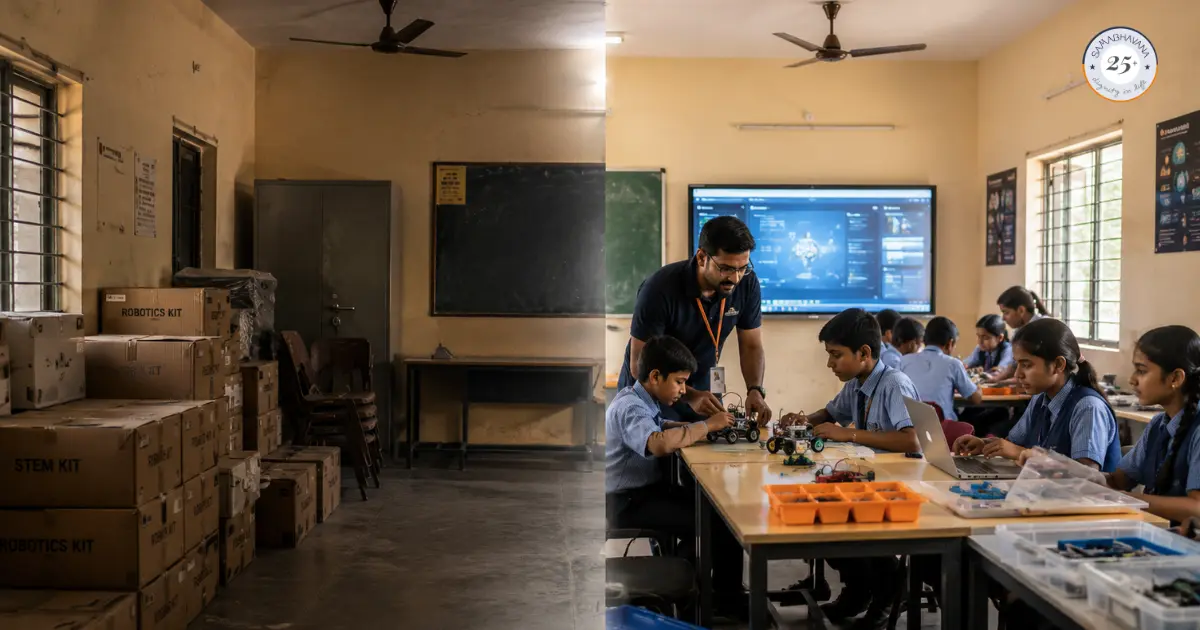
  • Teacher Training CSR: How a Programme Transforms Classrooms

    Teacher Training CSR: How a Programme Transforms Classrooms

    India has over 9.5 million teachers. And yet, year after year, learning outcome data tells the same story: millions of children are sitting in classrooms without acquiring the foundational skills they need to succeed.

    The problem isn’t always infrastructure. It isn’t always enrolment. More often than not, it’s the quality of teaching itself โ€” and the chronic underinvestment in the people at the front of the room.

    This is where teacher training CSR steps in. For companies looking to make a genuine, lasting difference through education CSR, investing in teacher development is one of the highest-leverage choices available. But like most high-potential interventions, it is also one of the most frequently mis designed.

    This guide walks through what effective teacher training CSR looks like, what mistakes to avoid, and how to build a Programme that creates measurable, sustained improvement in classrooms across India.


    What Is Teacher Training CSR?

    It refers to corporate-funded programmes that build the professional capacity of schoolteachers โ€” particularly in government and low-income private schools โ€” to improve teaching quality and, ultimately, student learning outcomes.

    Under Section 135 of the Companies Act 2013, education is one of the Schedule VII themes eligible for CSR expenditure. It sits squarely within this theme, and when designed well, it delivers impact at a scale that few other education interventions can match.

    A well-designed Programme might include subject-matter training, pedagogical skill development, classroom management techniques, use of teaching-learning materials, integration of technology, and ongoing mentoring and observation. The best programmes don’t stop at a single training workshop โ€” they build a continuous professional development culture in the schools they serve.


    Why Teacher Training Outperforms Infrastructure CSR in Education

    When companies first enter the education CSR space, the default instinct is often to build or renovate school buildings, donate computers, or fund mid-day meal programmes. These are visible, photographable, and easy to report.

    Teacher training CSR is harder to photograph. But the evidence for its impact is overwhelming.

    Research consistently shows that teacher quality is the single most significant in-school factor determining student learning outcomes โ€” more than class size, infrastructure, or textbooks. A skilled teacher can compensate for resource gaps. A poorly equipped teacher cannot be compensated for by the best school building in the district.

    For CSR programmes specifically, teacher training offers three structural advantages:

    Multiplier effect. One well-trained teacher impacts 30โ€“50 students every year and continues to do so for the duration of their career. A single infrastructure investment reaches a fixed number of students. Teacher training compounds.

    Sustainability. Skills, once developed, don’t require annual maintenance budgets. A computer lab becomes obsolete. Pedagogical capability does not.

    System-level change. When it is implemented at scale โ€” across multiple schools in a cluster โ€” it shifts the professional culture of an entire school system, not just individual classrooms.

    This is why organizations with deep education implementation experience consistently recommend teacher training as a core pillar of any serious education CSR Programme.


    What a High-Impact Teacher Training CSR Programme Looks Like

    Not all teacher training CSR programmes are equal. Here is what distinguishes the ones that actually move the needle:

    Needs assessment before design. The most common failure training is designing the Programme in a boardroom before anyone has spent time in the classrooms. Effective programmes begin with a baseline assessment โ€” of teacher competencies, student learning levels, and school-level challenges โ€” before a single training module is developed.

    Sustained engagement, not one-off workshops. A two-day teacher training workshop is not a teacher training Programme. It is a workshop. Genuine capacity building requires repeated touchpoints: initial training followed by classroom observation, peer learning circles, mentoring by master trainers, and structured reflection. Programs that embed this cycle over 12โ€“18 months consistently show stronger outcomes than one-time interventions.

    Subject-specific and grade-appropriate content. Generic training on “good teaching” is far less effective than content tailored to the specific subjects and grade levels teachers are actually delivering. A primary school teacher in a rural government school needs very different support from a secondary school science teacher in a semi-urban setting.

    Integration of teaching-learning materials. Training works best when teachers immediately have access to the tools, they need to apply what they’ve learned. Teacher training CSR programmes that combine professional development with classroom resource provision show significantly better adoption rates.

    School leadership involvement. Teachers don’t operate in isolation. When school headmasters and education block officials are engaged in the Programme โ€” understanding its goals, supporting its implementation, and monitoring its progress โ€” training uptake improves dramatically.


    Common Mistakes Companies Make in Teacher Training CSR

    With 25 years of education CSR implementation experience, certain patterns of failure appear repeatedly.

    Selecting an NGO partner based on cost, not competence. Teacher training is a specialized field. The ability to design and deliver effective teacher professional development requires expertise in adult learning, curriculum design, and school systems. Many organizations that pitch teacher training CSR lack this depth. The lowest bid is rarely the best investment.

    Designing for outputs, not outcomes. Reporting “500 teachers trained” tells you nothing about whether any of them changed how they teach, or whether any students learned more as a result. Effective programmes define outcome metrics from the beginning: improvement in teacher competency assessments, student learning outcome data, classroom observation scores, and teacher retention in the Programme.

    Funding for one year only. Professional development is not a one-year project. Teachers develop over time, through practice, feedback, and iteration. Companies that fund a single year of training and expect lasting change are consistently disappointed. The minimum meaningful commitment is three years.

    Working in isolation from government systems. India’s government school system trains and employs its teachers through state-level structures โ€” DIETs (District Institutes of Education and Training), BRCs (Block Resource Centres), and CRCs (Cluster Resource Centres). Teacher training CSR programmes that ignore these structures often create parallel systems that disappear the moment corporate funding ends. The most durable programmes align with and strengthen existing government training infrastructure.


    How to Choose the Right NGO Partner for Teacher Training CSR

    The implementing organization is the most important decision in any teacher training CSR Programme. Here is what to look for:

    Track record in teacher development specifically. Education CSR is a broad field. An NGO with strong experience in school infrastructure may have limited expertise in teacher professional development. Ask for specific evidence of past teacher training programmes โ€” not just activities conducted, but outcomes measured.

    Relationships with government school systems. The best teacher training CSR partners are those who have established credibility with state education departments, district officials, and school principals. Without these relationships, access and cooperation cannot be assumed.

    A robust monitoring and evaluation framework. Before committing, ask the implementing organization how they will measure the impact of the Programme. If the answer is primarily activity-based โ€” number of sessions conducted, number of teachers attending โ€” look elsewhere. You need a partner who measures learning.

    Capacity to operate at your desired scale. Some NGOs have deep expertise but limited operational capacity. Confirm that the organization has the team, the systems, and the geographic reach to implement at the scale your CSR budget requires.


    Measuring the Impact of Your Programme

    Impact measurement in teacher training CSR operates at three levels:

    Teacher-level outcomes: Pre- and post-training competency assessments, classroom observation scores, self-reported confidence and practice surveys, and peer feedback.

    Classroom-level outcomes: Changes in teaching behavior observed through structured classroom visits โ€” use of questioning techniques, student participation, use of teaching-learning materials, time-on-task.

    Student-level outcomes: Improvement in foundational literacy and numeracy assessments, attendance rates, and โ€” for longer programmes โ€” grade transition and retention data.

    A well-designed teacher training CSR Programme should be reported across all three levels. If your implementing partner is only reporting at the first level, push for more. If they are only reporting activity data, that is a red flag.


    Samabhavana’s Approach to Teacher Training CSR

    Samabhavana has spent over 25 years working at the intersection of corporate resources and community needs across education, health, skill development, and women empowerment. In the education space, our work is grounded in a core conviction: that sustainable improvement in learning outcomes requires investing in the people who deliver education every single day.

    Our teacher training CSR programmes are designed from the ground up โ€” beginning with school and community needs assessments, moving through structured professional development cycles with ongoing mentoring, and measured against student learning data throughout.

    We work closely with government school systems, ensuring that every Programme we implement strengthens rather than bypasses existing structures. And we bring 25 years of on-ground implementation experience to every partnership โ€” the kind of institutional knowledge that only comes from decades of working directly in communities.

    If your company is considering teacher training as a CSR investment, we are happy to share our implementation framework, our outcome data, and the lessons we’ve learned from programmes across India.


    Frequently Asked Questions

    Is teacher training an eligible CSR activity under Schedule VII? Yes. Teacher training falls within the education theme of Schedule VII of the Companies Act 2013 and is an eligible CSR expenditure.

    How much does a teacher training CSR Programme cost? Costs vary significantly depending on scale, geography, and Programme design. A well-designed Programme for 100 teachers over 12 months typically ranges from โ‚น10โ€“25 lakhs, depending on the intensity of the intervention and the implementing organizationโ€™s cost structure.

    How long does it take to see results from teacher training CSR? Meaningful changes in teacher behavior typically become visible within 12โ€“18 months of a well-designed Programme. Student learning outcome improvements generally require 18โ€“24 months to manifest in assessable data.

    Can teacher training CSR be implemented in rural areas? Yes, and it is where the need is often greatest. Rural government schools frequently have teachers with limited access to professional development. Effective rural teacher training CSR requires an implementing partner with genuine rural presence and experience โ€” not just urban offices.

    How do we report teacher training CSR to the MCA? Teacher training CSR is reported under the education theme in the Annual CSR Report. Impact metrics should include both activity data (number of teachers, sessions, schools) and outcome data (competency improvements, student learning data) to demonstrate meaningful impact.


    Conclusion

    Teacher training CSR is not the easiest entry point into education philanthropy. It requires patience, a long-term funding commitment, a skilled implementation partner, and a willingness to measure what actually matters rather than what is easiest to count.

    But for companies that are serious about making a lasting difference in India’s education outcomes, it is one of the most powerful investments available.

    A single skilled teacher, reaching 40 students a year over a 30-year career, touches over 1,000 lives. Scale that across 100 teachers in a district, and the numbers become transformative.

    That is the promise of teacher training CSR done right. And that is the work Samabhavana has been committed to for over two decades.

    To learn more about Samabhavanaโ€™ s education CSR programmes, reach out to us at info@samabhavana.in We work with companies across India to design, implement, and measure education interventions that create real, lasting change.