
Students Mastering Important Lifeskills Education
STEM Education CSR That Transforms Government Schools
SMILE HUB by Samabhavana - India's Most Comprehensive 9-Module Technology Learning Programme for Government Schools. 25+ Years of CSR Implementation. 500+ Hubs Set up. Pan India.
(DPE) FY-2026-27 & 2027-28
Schedule VII - Item II
NEP-2020 Aligned
80G + 12A + CSR1 Certified
India's Most Trusted STEM Education CSR — Now Mandated by the Government of India.
Samabhavana’s SMILE HUB delivers STEM+ ROBOTICS-AI-IOT+ ASTRONOMY + VR EXPERIENTIAL LEARNING + Computer Literacy and SMART Digital Classrooms in Government Schools across India.
Fully documented for compliance.
Planning your STEM CSR programme for FY 2026-27?
Talk to us. We’ll walk you through what SMILE HUB looks like for your Geography, Budget, and Reporting requirements.
WHY PSU Partner Should CHOOSE SMILE HUB ?
The Department of Public Enterprises (F.No. 8/2/2018-Dir(CSR) -FTS(11223), Ministry of Finance, June 2026) has mandated Digital learning tools, Modern workshops and Laboratories, and Smart Classrooms as a common CSR theme for all Central Public Enterprises for FY 2026-27 and 2027-28.
SMILE HUB is built for exactly this mandate.
We are a Registered Non-Profit Organisation (RNPO) and 12A + 80G certified NGO with 25+ years of documented implementation.
What is SMILE HUB ?
STUDENT
MASTERING
IMPORTANT
LIFE SKILLS
EDUCATION
SMILE HUB is a 360° One-stop Technology Learning Solution for Under-privileged students Implementing :
- STEM
- Robotics - Coding + AI + IOT
- Astronomy
- Virtual Reality - Experiential Learning
- Smart Digital Classrooms
- Basic Computer Literacy
Built on 25+ Years of Ground-level CSR implementation experience SMILE HUB goes beyond equipment. Each hub is staffed by a Dedicated on-site trainer who runs daily student sessions and monthly teacher training-sustaining impact long after installation.
The SMILE HUB project complements and strengthens
• Section CSR Act, Section 135 Schedule VII (ii) – Promoting Education, Including Special Education and Employment-Enhancing Vocational Skills.
• Atal Tinkering Lab (NITI Aayog) Vision – Fostering Innovation, Problem-Solving and Tech Exposure for Young Students.
• National Digital Education Architecture (NDEAR) – Promoting Tech-Enabled Learning Environments in Schools.
• Innovation & Incubation Ecosystem – NITI Aayog.
WHAT'S INCLUDED
9 Technology Learning Modules. One Complete Education CSR Programme.
Unlike standalone STEM labs, SMILE HUB covers the full spectrum of technology education-from primary science to artificial intelligence – in a Single, Integrated, Curriculum-Mapped Programme.

STEM
Robotics
AI
coding
iot
astronomy
vr
smart digital class

computer literacy
Each Module is Curriculum-Mapped to NCERT/SCERT Standards. Partners Can implement select Modules or the full SMILE HUB Suite.
Module - 1
STEM - Science, Technology, Engineering & Maths
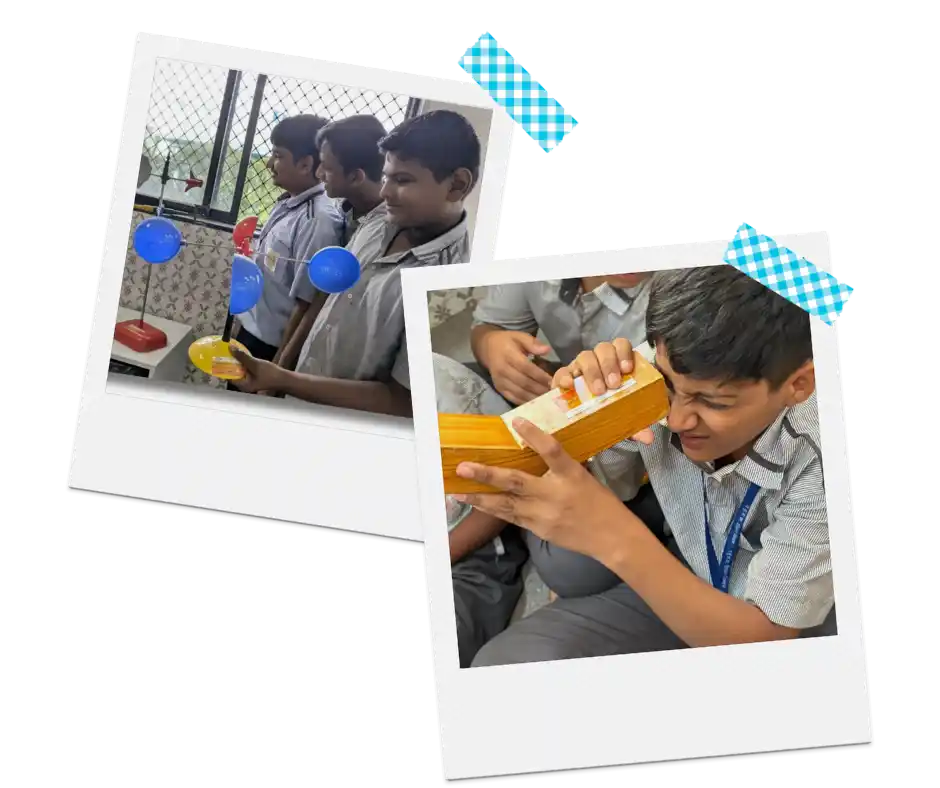
The STEM module gives students in Grades 1 to 12 access to Physical, Hands-on Learning models that make abstract Curriculum Concepts Tangible. Students Build, Experiment, and Discover- Not Memorise.
What's Included
40 STEM Models for 1st to 4th Grade Students.
85 STEM Models for 5th to 12th Grade Students.
100+ Total Models
250+ Concepts Covered
Grades 1-12
Curriculum Mapped
Module - 2
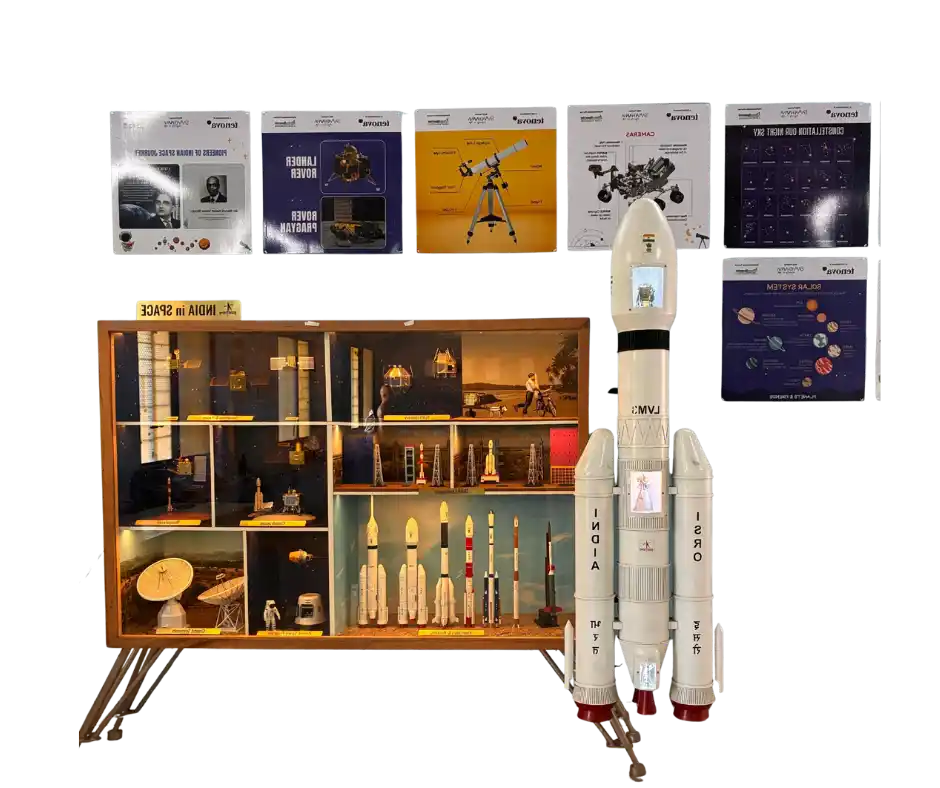
Astronomy - India in Space Wall Museum
Every SMILE HUB School gets India’s Most Immersive school-based space exhibition : a 7×7 ft wall museum dedicated to India’s space journey- from Rohini and Aryabhatta to Chandrayaan, Mangalyaan, and Gaganyaan.
What's Included
25+ Authentic ISRO mission Artefacts in Brass and Aluminium | Toughened-Glass protected display cabinets | Tablet-based dynamic information UI/UX | 25 astronomy hands-on models
7x7 ft wall museum
25+ ISRO Artefacts
DIY Kits
Rohini to Gaganyaan
Module - 3, 4, 5
Robotics + Al, lOT - Where Students Start Building Technology
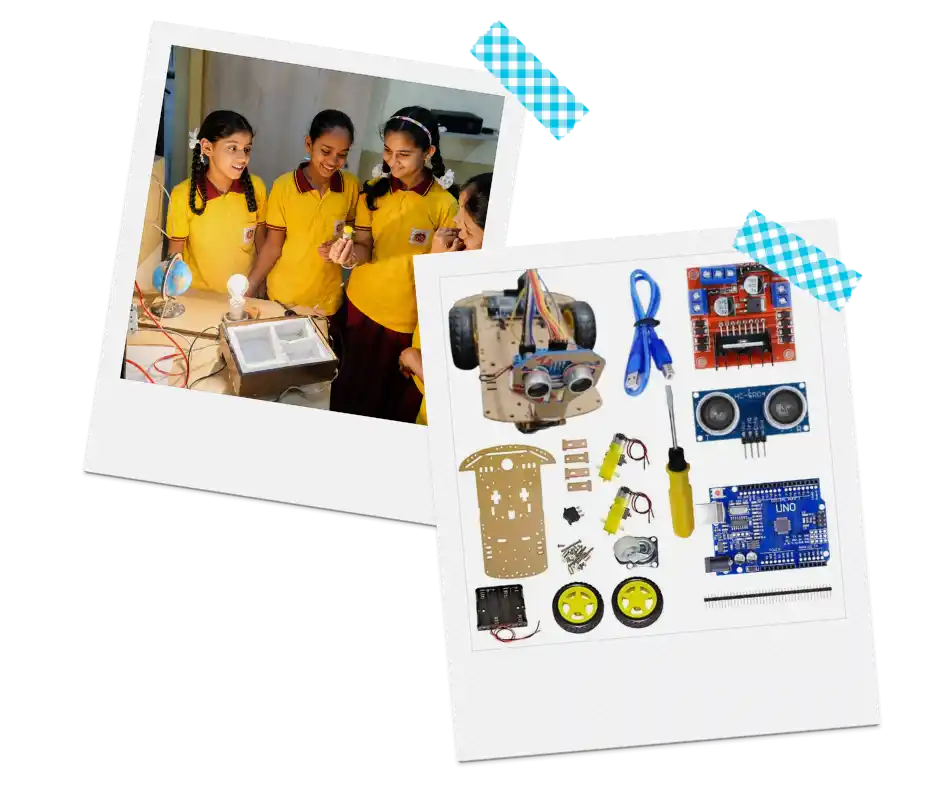
These three modules give students hands-on access to the technologies that will define their careers. Students in government schools build robots, program Al models, and connect loT sensors- skills that private schools charge lakhs for.
What's Included
20 Robotics Models for Grades 1st to 4th Students.
23 Robotics models for Grades 5th-12th (including Drone, 3D Printer, 3D Pen, and Laptop) | 15 DIY build-it-yourself programming kits | Coding integrated across all modules.
23 Robotics Models
Drone + 3D Printer
15 DIY Kits
Grades 1-12
Module - 6, 7
Bilingual Smart Digital Classroom & Computer Literacy - Class 1 to 12
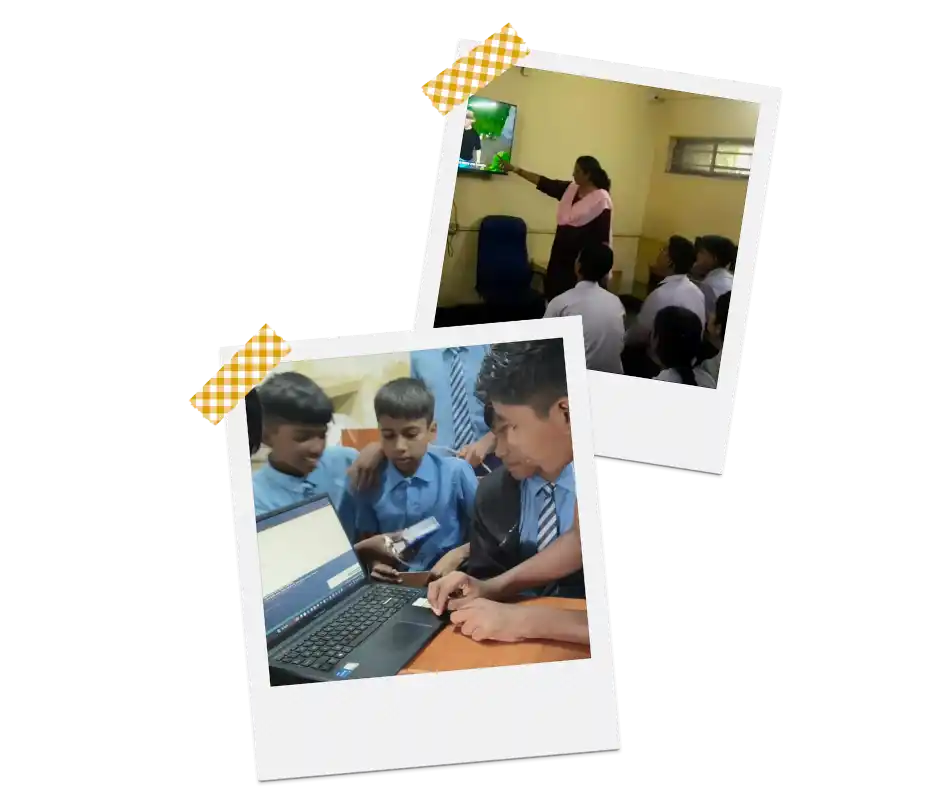
The Smart Digital Classroom module upgrades every subject for every grade through Visual, Audio, and Practical Digital learning – mapped to NCERT/SCERT standards. The Computer Literacy module gives students foundational digital skills that are increasingly non-negotiable in the modern workforce.
What's Included
K-12 NCERT/SCERT-Mapped Digital Curriculum | Visual + Audio + Hands-on practical delivery | Maximum subject coverage across all grades Computer literacy upgradation.
Class 1-12
All Subjects
Module - 8
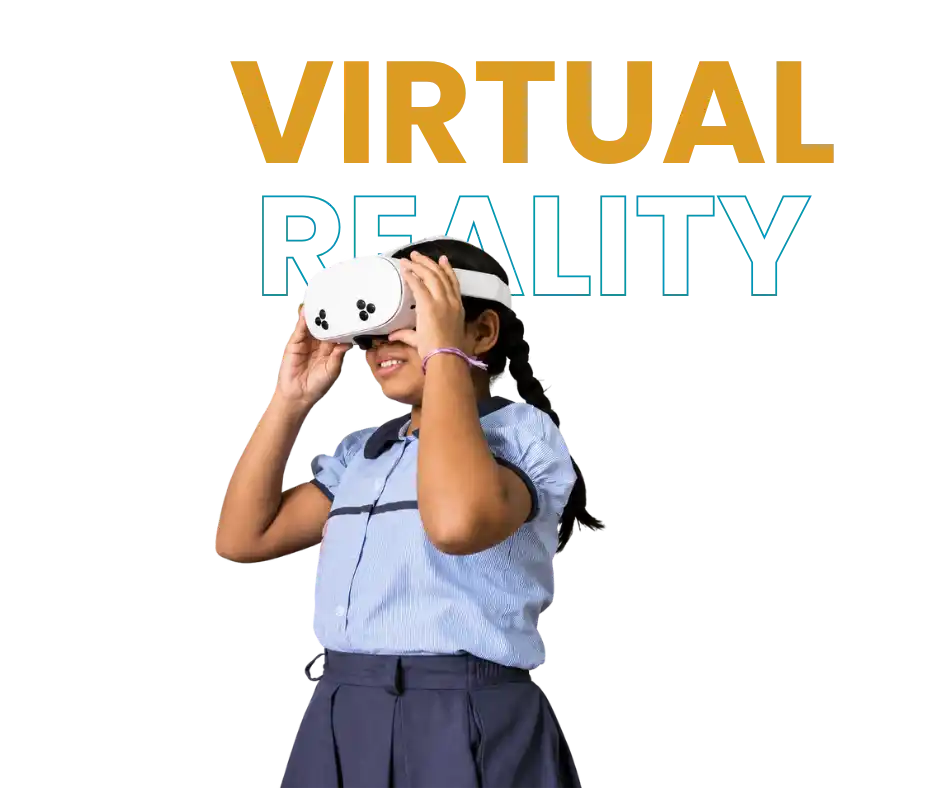
Virtual Reality — Learning Without Limits
There are things a textbook cannot show a child. What it feels like to stand on the surface of the Moon. How blood flows through a beating heart. What the inside of a volcano looks like. What ancient Harappa looked like at its peak.
Virtual Reality in SMILE HUB makes these experiences possible — for students in government schools who may never otherwise have access to them.
The VR module places immersive, curriculum-linked learning experiences directly in the hands of students. Through guided VR sessions, students don’t just read about concepts — they inhabit them. This is experiential learning at its most powerful.
What's Included
Each VR Session is facilitated by the dedicated SMILE HUB trainer & has 12 themes, who guides students through the experience and connects it to the curriculum topic being covered in class.
WHAT MAKES SMILE HUB DIFFERENT
Equipment Is Only the Beginning. These Pillars Deliver the Impact.
Most STEM lab CSR programmes stop at procurement and installation. SMILE HUB goes further – with a dedicated trainer, a structured pedagogy, and a sustained programme that builds impact year after year.
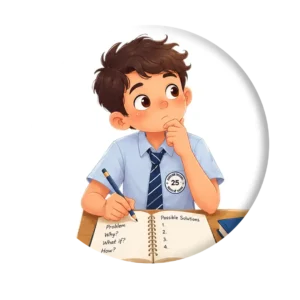
Critical Thinking
Students analyse, question, and solve problems on their own- not follow instructions. Pedagogy is designed to develop independent reasoning from Grade 1 onwards.
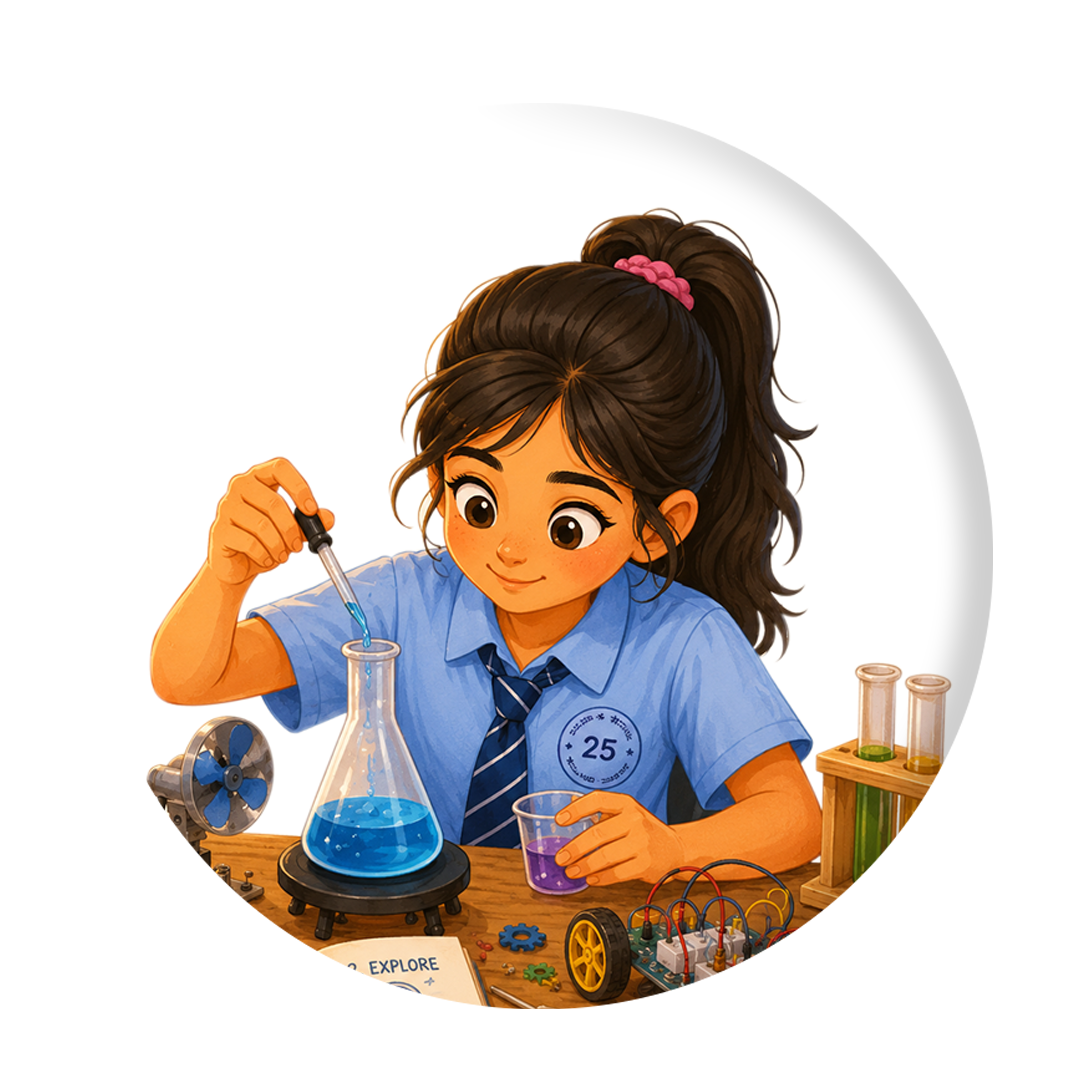
Creative Experimentation
A safe space to try ideas, make mistakes, and learn through exploration. Failure is explicitly part of the process-building resilience alongside skill.

Confidence Building
Hands-on experiences help students believe in their own abilities and take initiative — a measurable, reportable shift in how they approach challenges.
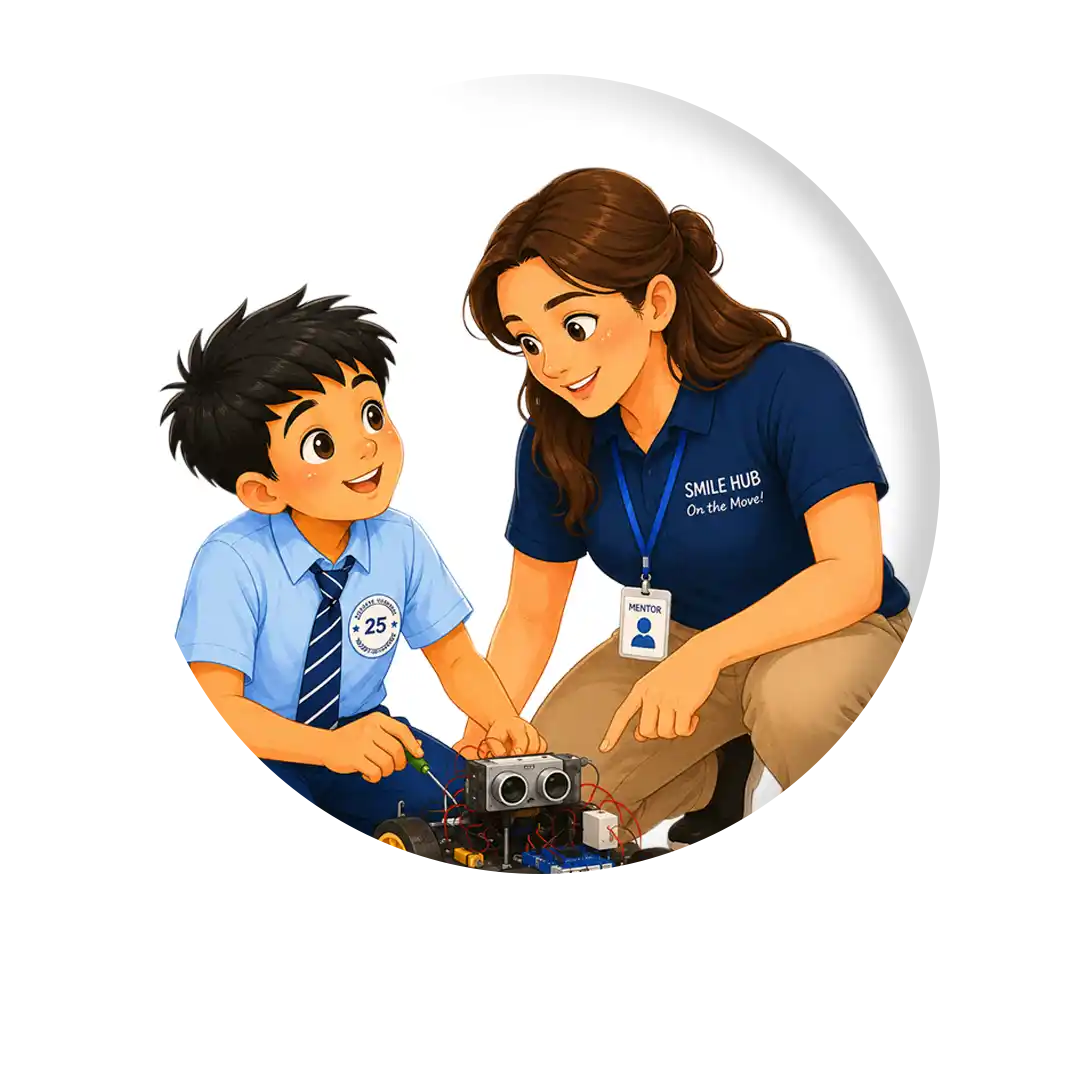
Structured Support
A dedicated on-site trainer runs daily student sessions and monthly teacher training, sustaining a culture of innovation long after the lab is installed.
TRUSTED BY INDIA’S LEADING PSU’S & MNC Partners


WHY PARTNER WITH US
Why India's Leading Companies ChooseSamabhavana for SMILE HUB
25 Years. Not 25 Months.
Samabhavana has been implementing stem and technology education CSR Programmes Since 2000. We Have seen every challenge, Built every Solution and know what actually work in government schools on the ground
End-to-End Delivery
We Handled everything - Installation, Trainer Deployment, Teacher Orientation, Quarterly Impact reporting and documentation. Your CSR team signs off; we execute.
Impact You Can Report
Every SMILE HUB generates quarterly impact reports with student reach, session hours, learning outcomes assessments, and teacher training data - fully aligned to Principal 8 and Schedule VII requirement
FREQUENTLY ASKED QUESTIONS
SMILE HUB CSR Programme — Common Questions
If you're Evaluating SMILE HUB for your company's CSR programme, these questions will help. Still have questions? Write to us directly.
SMILE HUB is eligible under Schedule VII, Item II (Clause ii) of the Companies Act 2013 — Promotion of Education. It is also aligned to NEP-2020 and qualifies as a reportable social initiative. Samabhavana provides all necessary documentation for your company's CSR-2 filing.
Schedule VII (ii) – improving education, vocational skills, and digital literacy in government schools.
Yes. The Department of Public Enterprises (Ministry of Finance) Circular Dated 18th June 2026 — F.No. 8/2/2018-Dir(CSR)-FTS(11223) — designates "Innovative Livelihood Enhancement" as one of three Common CSR themes for all Central Public Enterprises for FY 2026-27 and 2027-28. Under this Theme, the Circular Explicitly Mandates support for "Digital Learning Tools, Modern Workshops and Laboratories, Smart Classrooms and Digital Learning Infrastructure."
SMILE HUB's Programme is Built Precisely around these Components: Smart Digital Classrooms, Computer Literacy, and Technology-Focused Laboratories for Robotics, AI, IoT, and Coding. Each Module Maps Directly to the Circular's Mandated Categories, Making SMILE HUB one of the most Compliant Implementation Options Available to CPSEs for this Mandate.
A SMILE HUB CSR programme can be implemented in a single school or scaled across multiple schools in your CSR geography. Samabhavana has set up 500+ SMILE Hubs across India — we design each programme based on the partner company's budget, geography, and CSR objectives. We can provide a school-wise breakdown and cost estimate for any geography.
A standard SMILE HUB from MOU to installation takes 45–60 days, including procurement, logistics, installation, trainer deployment, and teacher orientation. For programmes covering multiple schools, timelines are phased. Samabhavana provides a detailed project timeline at the proposal stage.
Yes. While the full 9-module SMILE HUB is the most comprehensive option, Samabhavana can design a programme around specific modules — for example, STEM + Astronomy, or Robotics + Smart Digital Classroom — based on your budget and school needs. We recommend the full suite for maximum BRSR impact and educational outcome, but flexibility is built into every programme.
Samabhavana provides quarterly impact reports covering: student reach by grade and gender, total session hours delivered, learning outcome assessment scores, teacher training sessions completed, and equipment utilisation rates. All metrics are aligned to Principal 8 indicators and formatted for direct use in your Annual Report disclosures.
Yes, and we encourage it. Samabhavana facilitates site visits to active SMILE Hubs for prospective corporate partners — so your CSR team can see the programme in action, speak to the on-site trainer, and meet students and teachers. Contact us to arrange a visit in Mumbai or your preferred city.
Every SMILE HUB includes a dedicated on-site trainer for the programme duration, conducting daily student sessions and monthly teacher training. Samabhavana also provides equipment maintenance support, an annual programme assessment, and a full documentation package. We remain your implementation partner — not just your vendor.
Yes. Samabhavana is a registered CSR implementing agency with 80G, 12A, and CSR1 certifications, and is registered with Niti Aayog, Maharashtra Charity Commissioner, and IICA-MCA. We have long-standing partnerships with PSUs including GAIL, BSES Rajdhani, IRCON International, and others. We understand PSU CSR compliance requirements and can support your entire documentation and reporting process.
Ready to Bring SMILE HUB to Your CSR Geography?
Fill in your details and our SMILE HUB team will reach out within 1 working day.
Schedule VII - Item
NEP-2020 Aligned
(DPE) FY-2026-27 & 2027-28
Get Started
Ready To Make Your CSR Spend Count?
Tell us your mandate, your budget, and your states — we’ll show you exactly how 25 years of on-ground delivery turns into audit-ready impact.