Category: Corporate Social Responsibility

  • Why CSR Events India Are Becoming a Powerful Branding Tool

    Why CSR Events India Are Becoming a Powerful Branding Tool

    In a media environment where every corporate communication is viewed with some scepticism, where consumers are quick to identify performative virtue and slow to forgive it, authenticity has become the rarest and most valuable brand asset of all.

    CSR events India have quietly become one of the most potent tools for building exactly that โ€” not because they are communications exercises, but because, when done well, they are genuine expressions of a company’s commitment to the communities it operates in. The brand benefit follows from the authenticity, not the other way around.

    India’s mandatory CSR regime, established under Section 135 of the Companies Act 2013, has made social investment a permanent feature of the corporate calendar. But the move from grudging compliance to engaged, visible community action โ€” from writing cheques to showing up โ€” is a choice that companies are making for reasons that go well beyond regulatory obligation.

    The data on why is clear: 76% of companies globally recognise that CSR is an effective tool for reducing brand reputation risk, and 77% of consumers prefer buying from companies that actively engage in CSR. In India’s competitive consumer and talent markets, these numbers translate directly into business outcomes.

    What Makes CSR Events India Different from Other Brand Touchpoints?

    Most corporate brand communications are one-directional. An advertisement tells consumers what a company wants them to believe. An annual report tells investors what a company has achieved. A press release tells journalists what a company wants them to report.

    These are legitimate and necessary communications, but they are not experiences. They do not create memory, relationship, or trust in the way that a direct encounter does.

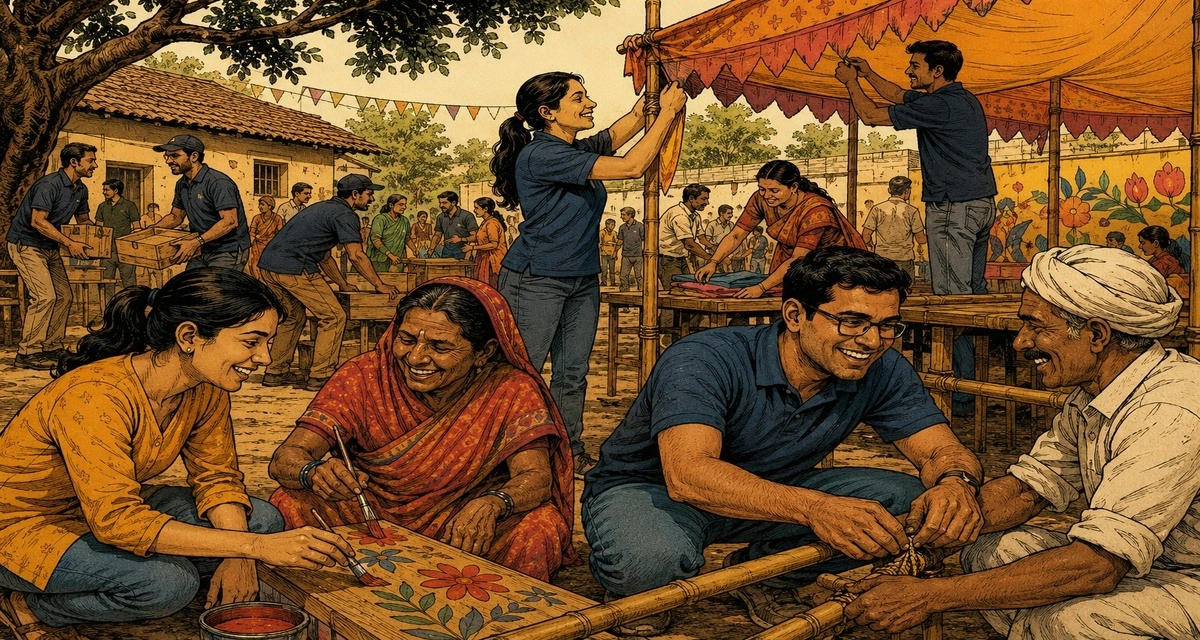
    CSR events India are fundamentally different because they are relational. When employees from a corporate team spend a day working alongside children in a school they helped renovate, they are not consuming a message โ€” they are having an experience that will stay with them.

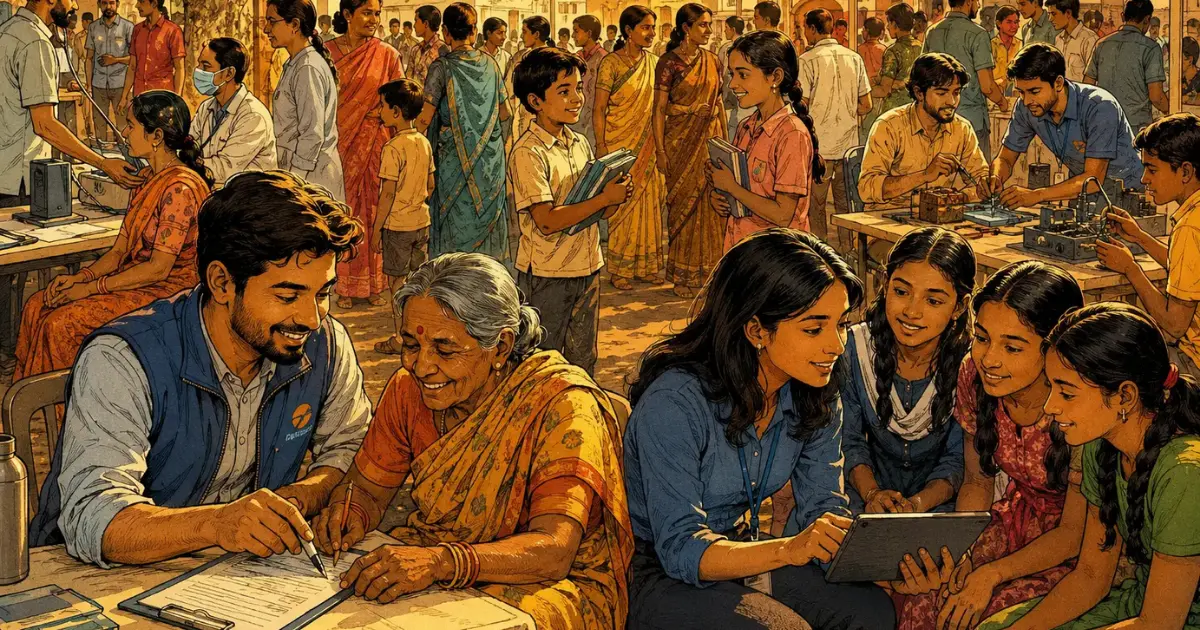
    When community members participate in a health camp or skill fair organised through a company’s CSR programme, they are encountering the company in a context of genuine service, not sales. When journalists and stakeholders attend a CSR event where they can see the programme in action and speak to beneficiaries, no amount of press release writing can produce the kind of authenticity that the visit itself generates.

    This experiential quality is what makes CSR events India a brand tool of a different order from conventional communications. The brand impression formed through a shared experience is more durable, more trusted, and more likely to be shared than anything a company can produce at its own desk.

    The Employee Engagement Dimension

    One of the most compelling and underestimated benefits of CSR events India is their impact on employees. Research consistently shows that employee participation in purpose-driven activities has significant effects on engagement, retention, and satisfaction. Employees who participate in purpose programmes are 52% less likely to leave their organisation.

    Companies with strong ESG engagement see employee satisfaction scores run 14% higher than bottom-quartile companies. In India, where millennials and Gen Z will make up 65% of the workforce by 2025, demand for purposeful work is not a soft preference โ€” it is a talent market reality.

    CSR events that invite employee participation โ€” whether in community outreach, skills training camps, environmental restoration, or school renovation drives โ€” transform employees from spectators of the company’s CSR work into protagonists of it. This shift has profound consequences for how employees relate to their employer.

    A marketing manager who has personally worked with school children in a community her company supports does not describe her company’s CSR programme as “we give some money to education.” She describes it as “something I’m part of.” That difference matters enormously for brand advocacy, for internal culture, and for retention.

    The most effective CSR events India plans for employee engagement combine meaningful activity (not photo-opportunity tree planting) with clear programme context (employees understand what the programme is trying to achieve and why) and follow-through (the event is part of a sustained programme, not a one-day exercise).

    Types of CSR Events India โ€” and What Makes Them Work

    The landscape of CSR events India spans a wide range, from large-scale community health camps to intimate skill development workshops, from school renovation drives to multi-stakeholder policy dialogues like those hosted through Samabhavana’s PRISM India platform. The formats that work best share certain design principles, regardless of scale.

    Community awareness and health camps are among the most common CSR events in India. When designed well โ€” with qualified medical professionals, referral pathways for follow-up care, locally appropriate health messaging, and genuine community mobilisation โ€” these events can reach thousands of people with services they could not otherwise access.

    When designed poorly โ€” as one-day visibility exercises without follow-up โ€” they create temporary engagement but no lasting health impact.

    Skill and livelihood fairs connect job-seekers with employers and training providers, often in communities where formal employment opportunities are limited and awareness of available training is low.

    These events, when organised with genuine market research (which skills are actually in demand in this geography?) and practical support (transportation, documentation assistance, childcare during the event), can be transformative for individual participants and for the community’s long-term economic trajectory.

    School and community infrastructure drives โ€” painting schools, building libraries, setting up computer labs โ€” are popular because they are visual, involving, and produce tangible results. The most effective versions of these events are part of multi-year school partnership programmes, not isolated improvement days.

    The school looks better after a paint drive, but children learn better after sustained curriculum support.

    Multi-stakeholder dialogues โ€” bringing together companies, government officials, NGOs, and community representatives to discuss shared challenges โ€” produce impact of a different kind. These conversations change how decisions are made, not just what resources are deployed.

    Samabhavana’s PRISM platform, described in more detail at samabhavana.in/prism.html, is India’s longest-running example of this format.

    The Line Between Impactful and Performative – CSR events India

    The Indian CSR events space has a problem that practitioners know well and discuss frankly: a significant proportion of events are designed primarily for visibility rather than impact. The tell-tale signs are familiar.

    A large banner prominently displaying the corporate sponsor’s logo at a community event that serves more as a photo backdrop than as context for genuine service.

    A health camp where beneficiaries are herded through cursory check-ups without referral pathways for those who need follow-up care. A school visit where children perform for visiting executives rather than receiving meaningful educational engagement.

    These events are, at best, wasted money. At worst, they create a community expectation of corporate engagement that is then disappointed by the absence of follow-through โ€” eroding trust rather than building it.

    The difference between impactful and performative CSR events lies in intent and design. Does the event serve a genuine community need, identified through consultation with the community?

    Is it part of a sustained programme rather than a one-off? Are outcomes tracked and reported honestly? Is the community’s experience of the event shaped by what they receive rather than what the sponsor needs for its communications?

    Companies that ask these questions consistently produce better events โ€” and better brand reputations. The CSR events India landscape is maturing, and audiences โ€” employees, communities, journalists, and investors โ€” are increasingly capable of distinguishing authentic engagement from brand theatre.

    Samabhavana’s Events Experience

    Samabhavana has been designing and delivering CSR events and programmes for 25 years. Our experience spans the full range of formats โ€” community health camps, education outreach, skill fairs, women’s empowerment workshops, and multi-stakeholder dialogues.

    We bring to every event the community relationships and field knowledge that make the difference between an event that lands and one that misses.

    We understand the communities our partners serve because we have been working in them for years โ€” sometimes decades. We know which health concerns are most pressing in which areas, which skill training formats produce employment, which school improvement approaches actually improve learning. This knowledge is not available from a desk; it is built through sustained field presence.

    For companies wanting to make their CSR events matter โ€” not just for brand communications but for genuine community impact โ€” our contact page is the right place to start. You can also explore our programme work in education, health, skill development, and women empowerment.


    FAQ

    Q1: What are CSR events India and how do they differ from traditional corporate events?

    CSR events India are community-serving activities organised or funded by companies as part of their CSR programme โ€” including health camps, skill fairs, school outreach drives, and multi-stakeholder dialogues. Unlike traditional corporate events, they are relational and community-focused, creating brand impressions through shared experience rather than one-directional communication.

    Q2: How do CSR events India build brand reputation?

    CSR events create authentic, experiential encounters between companies and communities. When communities receive genuine service through a well-designed CSR event, the brand impression formed is more durable and trusted than any advertisement. 76% of companies globally recognise CSR as an effective tool for managing brand reputation risk.

    Q3: What role do CSR events play in employee engagement?

    CSR events that involve employees directly in community service have significant engagement effects. Employees who participate in purpose-driven activities are 52% less likely to leave their organisation, and companies with strong ESG engagement see employee satisfaction scores run 14% higher. Purpose is a key driver for India’s millennial and Gen Z workforce.

    Q4: What types of CSR events work best in India?

    The most effective formats include community health camps with referral pathways, skill and livelihood fairs with genuine market linkages, school and community infrastructure drives embedded in sustained programmes, and multi-stakeholder dialogues. The unifying factor is design for genuine community impact rather than corporate visibility.

    Q5: How can companies tell whether a CSR event is impactful or performative?

    Key questions: Was the community consulted in designing the event? Is the event part of a sustained programme or a one-off? Are outcomes tracked? Does the event serve a genuine need the community identified? Impactful events serve communities first; performative ones serve the sponsor’s visibility first.

    Q6: How does Samabhavana help companies design high-impact CSR events?

    Samabhavana brings 25 years of community relationships, field knowledge, and programme design experience to CSR events. We design events that are embedded in sustained programmes, serve genuine community needs, and produce outcome evidence for BRSR reporting. Contact us to discuss your next CSR event.


    CONCLUSION – CSR events India

    The shift from compliance CSR to engaged, visible, community-connected CSR is one of the most important strategic moves a company can make in India’s current environment.

    CSR events India done right are among the most powerful brand investments available โ€” creating authentic relationships with communities, energising employees, generating compelling ESG evidence, and demonstrating the kind of corporate citizenship that India’s consumers, talent, and investors are increasingly rewarding.

    Contact Samabhavana to design CSR events and programmes that do more than look good โ€” that genuinely change what they set out to change.
  • 10 High-Impact CSR Activities for Companies in 2026

    10 High-Impact CSR Activities for Companies in 2026

    If your company is finalising its CSR programme for 2026, the starting point is not a list of causes that sound good โ€” it is a clear-eyed assessment of where your investment can create durable, measurable change that aligns with Schedule VII requirements and holds up under BRSR scrutiny.

    CSR activities India 2026 need to meet a higher bar than they did five years ago. Regulators expect outcome reporting. Investors expect ESG evidence. Employees expect authenticity. And communities deserve programmes that actually work.

    Choosing the right CSR activities India 2026 is a strategic decision โ€” one that requires understanding both the national development context and the specific capacity of your implementing partner to deliver. 

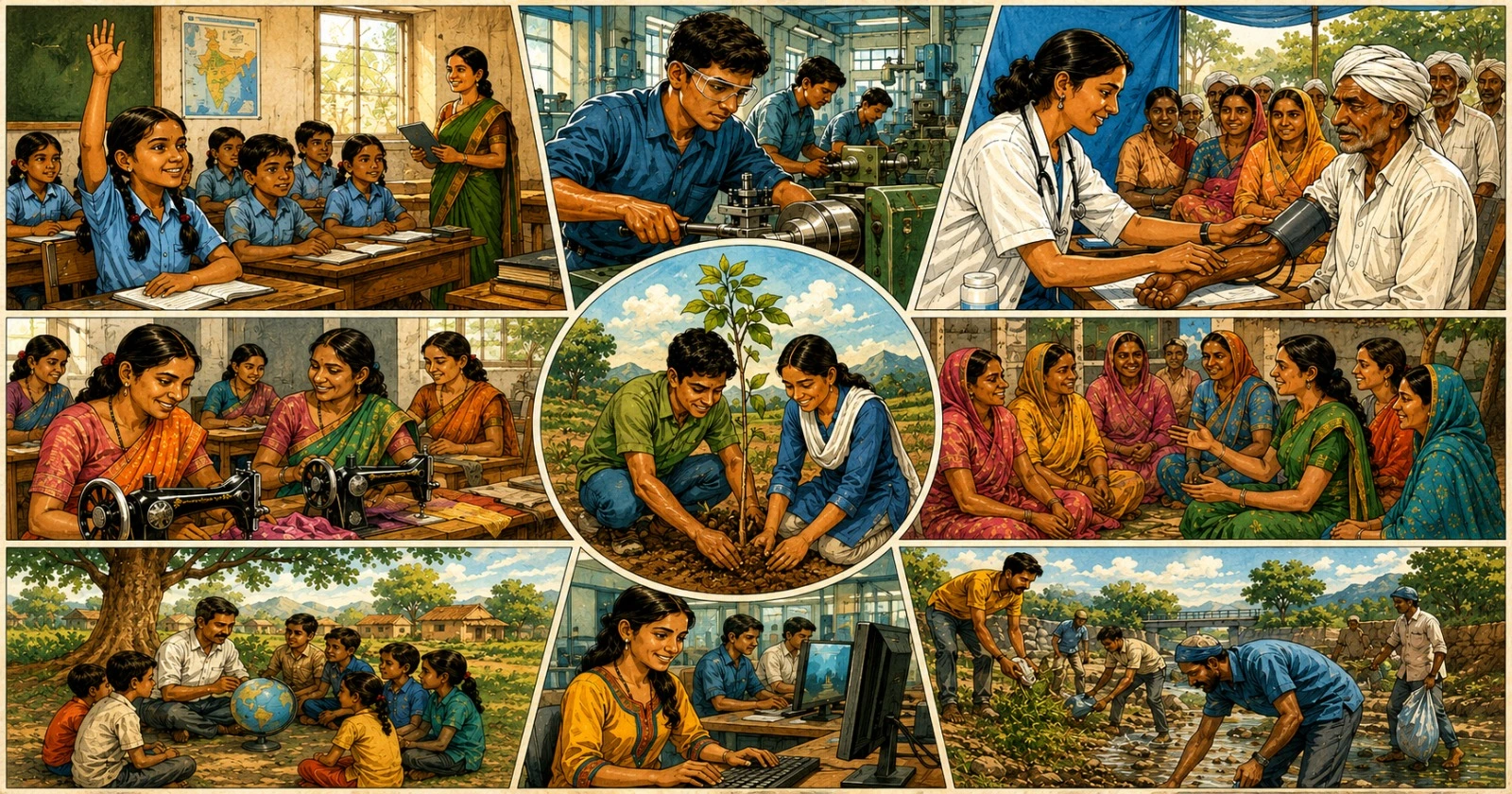
    This guide covers ten areas of proven high impact, with the data and design principles that make each one count.

    1. Education: Digital Classrooms and Teacher Training

    Education is India’s largest CSR category by spend, receiving approximately 37% of total CSR funds in FY 2023โ€“24.

    Under Schedule VII, Education and Vocational Skills Development are explicitly eligible activities. For 2026, the highest-impact education CSR is the combination of digital infrastructure with teacher capability development โ€” because hardware without training produces storage rooms, not learning.

    CSR programmes that mirror this integrated approach โ€” providing technology, training, and curriculum support as a package, not as separate line items โ€” produce the learning improvements that can be measured, reported, and built upon.

    For companies in manufacturing, technology, or financial services, education CSR in government schools serving first-generation learners offers both strong community impact and compelling BRSR evidence. 

    Explore Samabhavana’s education programmes here.

    2. Healthcare: Mobile Health Units and Community Health Workers

    Healthcare receives the second-largest share of CSR funds and is explicitly listed in Schedule VII.

    For 2026, the highest-impact Healthcare CSR combines reach (mobile health units that bring services to communities without facility access) with depth (training and supervising community health workers who provide ongoing care between visits).

    India has approximately 1.3 million Accredited Social Health Activists (ASHAs) who form the backbone of the public health system’s last mile. CSR programmes that strengthen this infrastructure โ€” through training, equipment, incentives, and supervision โ€” multiply the impact of government investment rather than duplicating it.

    Health camps are popular, but they are most effective when embedded in a programme that ensures follow-up care for the conditions diagnosed.

    Samabhavana’s Health Work is described on our health page.

    3. Skill Development and Vocational Training – CSR activities India 2026

    Schedule VII includes vocational skills and livelihood enhancement as eligible CSR categories.

    India trains approximately 10 million people per year through the Pradhan Mantri Kaushal Vikas Yojana (PMKVY) and related schemes โ€” but the quality and labour market alignment of this training varies enormously.ย 

    CSR-funded skill development programmes that identify genuine employer demand, design training accordingly, and support job placement create measurable economic outcomes: higher incomes, formal employment, and reduced vulnerability.

    The most effective skill development CSR programmes are sector-specific and geography-specific.

    • Training for solar technicians in states with high renewable energy deployment,
    • Training for healthcare support workers in areas with medical infrastructure gaps,
    • Training for logistics workers near growing e-commerce hubs โ€” these programmes align
    • Training supply with actual labour demand in ways that generic vocational courses cannot.ย 

    Explore Samabhavana’s skill development work here.

    4. Women’s Empowerment: Economic and Social

    Gender equality and women’s empowerment is a dedicated Schedule VII category, and 2026 CSR planning should treat it as a priority that cuts across other areas, not just a standalone programme.

    • Women’s economic empowerment through self-help group linkages, entrepreneurship development, and financial literacy can double household incomes.
    • Women’s social empowerment through education, health access, and safety programmes changes the life trajectories of the next generation, not just the current one.

    India has approximately 12 million self-help groups with over 14 crore members โ€” the world’s largest network of women’s microfinance and peer support.

    CSR programmes that strengthen these networks through skills training, market linkages, and financial inclusion create multiplier effects that far exceed the value of one-time cash transfers or awareness campaigns.ย 

    Samabhavana’s women empowerment page describes our programmes in detail.

    5. Environmental Sustainability

    Environmental sustainability is explicitly included in Schedule VII and is growing rapidly as a CSR priority, driven by both regulatory pressure (BRSR’s environmental disclosures) and genuine corporate awareness of climate risk. 

    High-impact environmental CSR in 2026 includes watershed development and water conservation in drought-prone districts, solid waste management in urban and peri-urban communities, clean energy transitions for rural households and institutions, and biodiversity conservation linked to the company’s operational footprint.

    The key design principle for environmental CSR is community integration: environmental interventions that are done with communities rather than to them produce better environmental outcomes and generate the social acceptance that allows programmes to sustain beyond the project period.

    6. Digital Literacy

    Among the CSR activities India 2026 that are fastest-growing, digital literacy stands out. India’s digital economy is expanding at remarkable speed, but access to the skills needed to participate is deeply unequal. Rural communities, women, older adults, and informal sector workers are disproportionately excluded from the economic benefits of digitisation.

    CSR-funded digital literacy programmes that teach practical skills โ€” using UPI for transactions, accessing government services online, using smartphones for business communications โ€” create lasting economic value.

    Programmes that go beyond teaching people to operate devices (basic use) to teaching them to use digital tools for economic activity (applied use) produce the income and empowerment gains that justify the investment.

    7. Mental Health

    Mental health is a Schedule VII-eligible healthcare CSR activity and one of the most underfunded areas in India’s social sector. With 197 million people living with mental health conditions and more than 80% receiving no treatment, the need is enormous.

    For 2026, high-impact mental health CSR combines community awareness (reducing stigma), frontline worker training (ASHAs, teachers, and community leaders who can identify distress and make referrals), and access support (counselling services in schools and community centres).

    Workplace mental health programmes that support employees are also Schedule VII-eligible as Healthcare CSR, and their business case is direct: better employee mental health produces higher productivity, lower absenteeism, and stronger retention.

    8. Rural Development – CSR Activities India 2026

    Rural development is a Schedule VII category that encompasses a wide range of activities: road connectivity, drinking water, sanitation, livelihood diversification, and community infrastructure. India’s 640,000+ villages remain highly varied in development status.

    CSR rural development programmes that identify genuine infrastructure and economic gaps in specific geographies and address them in co-ordination with panchayat and block-level government produce durable improvements.

    9. Sports and Physical Education

    Sports is a Schedule VII category that is frequently under-utilised by CSR planners who are not sure how to design a sports programme that creates genuine impact.

    High-impact sports CSR goes beyond building a football pitch โ€” it includes trained coaches, regular programming, tournament pathways, and connections to talent identification systems.

    Sports programmes in schools and communities that are sustained over years produce outcomes in physical health, mental wellbeing, teamwork, and leadership that are well-documented.

    India’s performance in recent international sports competitions has generated significant momentum for grassroots sports investment.

    CSR programmes that align with national sports federations or state sports authority schemes can access talent identification infrastructure that amplifies the impact of field-level investment.

    10. Diversity and Inclusion

    Diversity and inclusion as a CSR activity moves in two directions: internal (creating genuinely inclusive workplaces) and external (supporting marginalised communities through education, economic opportunity, and rights-based advocacy).

    Both are eligible under relevant Schedule VII categories, and both are increasingly important for BRSR reporting, which includes specific diversity and inclusion indicators.

    External D&I CSR includes programmes for people with disabilities, LGBTQ+ awareness and inclusion, tribal community development, and minority community empowerment.

    Internal D&I CSR โ€” training, policy reform, leadership commitment โ€” is not directly a CSR expenditure but creates the cultural context in which external community programmes are designed and delivered with genuine sensitivity.

    Samabhavana’s work on diversity and inclusivity spans both dimensions, and we are well-placed to support companies navigating this area thoughtfully.


    FAQ – CSR Activities India 2026

    Q1: What are the top CSR activities India 2026 for maximum impact?

    The ten highest-impact CSR activities for India in 2026 are: education (digital classrooms + teacher training), healthcare (mobile units + community health workers), skill development, women’s empowerment, environmental sustainability, digital literacy, mental health, rural development, sports, and diversity and inclusion.

    All are aligned with Schedule VII of the Companies Act 2013.

    Q2: How do I choose the right CSR activity for my company’s 2026 programme?

    Start with geography (where does your company operate?), sector alignment (what needs relate to your business?), and community consultation (what do the communities actually need?). Then assess your implementing partner’s capability to deliver in that area.

    The best CSR programmes align community need, business relevance, and implementation capacity.

    Q3: Which CSR activities qualify under Schedule VII?

    Schedule VII covers education, health, environmental sustainability, women’s empowerment, poverty eradication, national heritage, rural development, sports, armed forces welfare, and technology incubation.

    Most high-impact CSR activities can be mapped to one or more Schedule VII categories.

    Q4: Why does education receive the most CSR funding in India? Education accounts for approximately 37% of India’s total CSR spend because it is a clear Schedule VII priority, its need is universal and visible, and it produces outcomes that are meaningful to both communities and companies.

    Education CSR is also relatively easy to implement at scale through established NGO networks.

    Q5: How should CSR activities be measured for BRSR reporting?

    BRSR reporting requires both qualitative (programme descriptions, theory of change) and quantitative (beneficiary numbers, outcome indicators) disclosure.

    High-quality BRSR CSR reporting includes pre- and post-assessment data, third-party verification where possible, and honest reporting of what worked and what did not.

    Q6: How does Samabhavana help companies implement high-impact CSR activities?

    Samabhavana provides end-to-end CSR implementation across all ten activity areas โ€” from needs assessment and programme design to field delivery, outcome measurement, and BRSR-ready impact reporting.

    With 25 years of experience across Maharashtra and India, we are one of the country’s most credible CSR implementation partners. Contact us to plan your 2026 programme.


    CONCLUSION – CSR Activities India 2026

    These 10 CSR activities India 2026 represent the full range of Schedule VII opportunity โ€” from education and health to digital literacy, mental health, and diversity.

    Each one, when designed with rigour and implemented by the right partner, can produce outcomes that your company, your communities, and your investors will value.

    The companies that will look back on 2026 as a landmark year for their CSR impact are the ones that start planning now โ€” with the right partners, the right design, and the right commitment to outcomes over optics.

    Contact Samabhavana to begin planning your 2026 CSR programme with India’s most experienced and credible implementation partner.

  • Why Every Company Needs a Strong CSR Project in 2026

    Why Every Company Needs a Strong CSR Project in 2026

    CSR project India 2026 – The case for corporate social responsibility has always had a moral dimension. Companies benefit from the societies and ecosystems they operate in โ€” from the infrastructure built by governments, the talent developed by educational institutions, the consumer base sustained by public health.

    Giving back is, in this sense, simply part of the terms of operating. But the landscape of 2026 adds layers of urgency that go well beyond ethics.ย 

    A strong CSR project India 2026 is no longer a matter of goodwill or brand aspiration โ€” it is regulatory, reputational, strategic, and increasingly central to how companies attract capital, talent, and trust.

    This is the new reality, and companies that treat CSR as a compliance checkbox are leaving significant value on the table.

    Four forces are driving this shift: a tightening regulatory framework, growing ESG investor pressure, a talent market that rewards purpose, and a consumer and media environment that is increasingly capable of distinguishing genuine commitment from performance.

    Understanding each of these forces is essential for any company thinking seriously about its CSR strategy for 2026.

    The Regulatory Imperative: CSR Project India 2026 Is the Law

    Section 135 of the Companies Act 2013 requires companies meeting certain thresholds โ€” net worth of โ‚น500 crore or more, annual turnover of โ‚น1,000 crore or more, or net profit of โ‚น5 crore or more โ€” to spend at least 2% of their average net profit from the preceding three financial years on CSR activities listed in Schedule VII.

    This is not voluntary. Non-compliance must be explained, and unspent amounts must be transferred to government funds if not utilised within prescribed timelines.

    The Ministry of Corporate Affairs has progressively tightened the compliance framework. In 2025, new web-based CSR-1 registration rules replaced the previous system for implementing agencies, introducing stricter conditions for non-profit entities seeking to carry out CSR work on behalf of companies.

    These changes signal a continued regulatory trajectory toward greater accountability, transparency, and scrutiny of where and how CSR money is spent.

    India’s National CSR Portal maintains a publicly accessible database of all CSR activities reported by companies.

    This transparency is consequential:

    • A company whose CSR reporting shows inadequate spending,
    • Unspent carryovers, or activities that appear disconnected from genuine community benefit is visible โ€” to regulators,
    • To investors, to journalists, and to communities.
    • The era of quiet, low-scrutiny compliance is over.

    The BRSR Imperative: ESG Disclosure Is Now Mandatory

    The Business Responsibility and Sustainability Reporting (BRSR) framework, mandated by SEBI for India’s top 1,000 listed companies, has fundamentally changed what CSR reporting means. BRSR is not a CSR report in the old sense โ€” it is a comprehensive ESG disclosure framework that includes social, environmental, and governance indicators with both qualitative descriptions and quantitative metrics.

    Under BRSR, companies must disclose not just what they spent on CSR, but how CSR decisions are made, what outcomes were achieved, how programmes relate to national development goals, and how social impact is measured.

    From FY 2025โ€“26, reasonable assurance requirements extend to the top 500 listed companies. From FY 2026โ€“27, this extends to all 1,000. This is not a soft expectation โ€” it is a hard regulatory requirement with SEBI enforcement behind it.

    The implications are significant. A company with a well-designed CSR project India 2026 โ€” one that has clear objectives, experienced implementation partners, outcome measurement, and documented community impact โ€” has a strong BRSR story to tell. 

    A company with a compliance-only CSR programme, funded through cheques to multiple unrelated organisations, finds BRSR disclosure uncomfortable because there is no coherent impact narrative to construct.

    The ESG Investor Imperative

    India’s investment landscape in 2026 is shaped by ESG considerations to a degree that would have been unrecognisable five years ago. Globally, 73% of investors actively consider ESG factors when making investment decisions, and 78% consider CSR reports a key factor in company evaluation.

    India’s domestic institutional investors โ€” mutual funds, insurance companies, and pension funds โ€” are progressively incorporating ESG screens into their mandates, driven by both global best practice and SEBI guidance.

    For listed companies, exclusion from ESG indices or poor ESG ratings has direct consequences for share price, cost of capital, and access to long-term institutional investment. Companies with strong, documented CSR programmes are better positioned in ESG ratings because their social performance is substantiated rather than asserted.

    This creates a direct financial incentive for CSR quality โ€” not just quantity of spend, but quality of impact.

    The message to company boards and CSR committees is clear: CSR investment is not a cost that reduces shareholder value โ€” it is an investment that protects and enhances it, through stronger ESG ratings, lower cost of capital, and greater access to the patient institutional capital that rewards sustainable business practices.

    The Talent Imperative

    India’s workforce is changing. Millennials and Gen Z will comprise 65% of the Indian workforce by 2025, and their expectations of employers include a genuine commitment to social and environmental responsibility.

    Research shows that employees who participate in purpose-driven activities are 52% less likely to leave, and companies with strong ESG performance see employee satisfaction scores run 14% higher than bottom-quartile companies. In a talent market where attrition is a major cost and the competition for skilled employees is intense, these numbers matter.

    A strong CSR project India 2026 gives a company something that salary packages and perks cannot โ€” a sense of purpose that extends beyond the office. Employees who feel that their company genuinely contributes to the communities where they live and work bring a different quality of engagement to their roles. They become advocates for the brand โ€” inside and outside the organisation โ€” in ways that formal communications cannot engineer.

    For companies designing their CSR for talent impact, the format matters: CSR events that invite employee participation, programmes that employees can follow and feel connected to, and honest impact communications that build pride rather than scepticism.

    The Reputational Imperative

    India’s media environment has become faster, more diverse, and more scrutinising of corporate behaviour. Social media amplifies community voices. Investigative journalism tracks the gap between CSR claims and CSR reality.

    Consumers make purchasing decisions based on brand values in ways that were not the norm a decade ago. 77% of consumers prefer to buy from companies that actively engage in CSR, and 79% have changed their purchasing habits to support businesses that prioritise corporate responsibility.

    Companies that invest in genuine CSR โ€” programmes that produce real outcomes and can withstand honest scrutiny โ€” build reputational equity that has commercial value. Companies that invest in performative CSR โ€” visible but shallow โ€” create reputational risk, because when the gap between claim and reality is exposed, the damage is greater than if no claim had been made.

    The reputational case for a strong CSR project India 2026 is therefore also a risk management case: companies that are genuinely doing good are companies that can afford to communicate what they do, defend what they say, and build trust that survives scrutiny.

    Samabhavana: India’s Most Experienced CSR Implementation Partner

    For 25 years, Samabhavana has been implementing CSR programmes for India’s leading companies and PSUs โ€” in education, health, skill development, women empowerment, and diversity and inclusion.

    We bring to every partnership the community relationships, trained field staff, programme design rigour, and outcome measurement infrastructure that converts CSR budgets into genuine social impact.

    Our PRISM India platform โ€” India’s first public-private-civil society CSR dialogue, founded 2013 โ€” keeps us at the frontier of what India’s CSR ecosystem is learning and where it is heading.

    Our programme pages on education, health, skill development, women empowerment, and diversity and inclusion describe the depth and breadth of what we offer.

    Visit our PSU and donor partners page to understand the kind of partnerships we build โ€” long-term, impact-oriented, and built on mutual accountability.


    FAQ – CSR project India 2026

    Q1: Do all companies need a CSR project India 2026?

    Companies with net worth โ‰ฅโ‚น500 crore, annual turnover โ‰ฅโ‚น1,000 crore, or net profit โ‰ฅโ‚น5 crore must spend 2% of average net profit on CSR under Section 135 of the Companies Act 2013.

    Beyond legal obligation, all companies benefit strategically from genuine CSR investment โ€” through better ESG ratings, talent attraction, and brand reputation.

    Q2: What is BRSR and how does it affect CSR in 2026?

    BRSR (Business Responsibility and Sustainability Reporting) is mandatory for India’s top 1,000 listed companies and requires detailed ESG disclosures including social impact outcomes, not just CSR expenditure.

    From FY 2025โ€“26, assurance requirements apply to the top 500. A strong, documented CSR programme is essential for credible BRSR reporting.

    Q3: How does CSR affect ESG investor ratings?

    73% of investors globally consider ESG factors in investment decisions. Strong, documented CSR programmes improve a company’s social performance rating in ESG assessments, which affects inclusion in ESG indices, cost of capital, and access to long-term institutional investment.

    Q4: Why is CSR important for talent attraction and retention in 2026?

    Millennials and Gen Z โ€” who will comprise 65% of India’s workforce by 2025 โ€” expect employers to demonstrate genuine social commitment. Employees in purpose-driven organisations are 52% less likely to leave, and companies with strong ESG engagement see satisfaction scores 14% higher than average.

    Q5: What makes a CSR project “strong” rather than just compliant?

    A strong CSR project is designed through community consultation, delivered through capable implementing partners, committed to over multiple years, measured through outcome indicators (not just output counts), and reported with honesty in BRSR disclosures. It produces change that outlasts the project period.

    Q6: How does Samabhavana help companies build strong CSR projects?

    Samabhavana provides 25 years of CSR implementation experience across all major Schedule VII categories. We offer end-to-end services: needs assessment, programme design, field implementation, outcome measurement, and BRSR-ready impact reporting.

    Contact us to discuss your 2026 CSR strategy.


    CONCLUSION – CSR project India 2026

    The four imperatives โ€” regulatory, ESG, talent, and reputational โ€” create a compelling, multi-layered case for every company to invest in a strong CSR project India 2026. But beyond the business case, there is something simpler: Indian communities have real needs, Indian companies have real resources, and the connection between them โ€” when it is genuine, sustained, and professionally implemented โ€” makes both sides stronger.

    A strong CSR project India 2026 is not a cost โ€” it is a strategic investment in the communities where you operate, the talent you want to attract, the investors you want to engage, and the reputation you want to sustain.

    Contact Samabhavana to build a CSR programme for 2026 that meets every bar โ€” regulatory, ethical, strategic, and human.

  • From Token Gestures to Transformation: CSR Activities Results India Can Be Proud Of

    From Token Gestures to Transformation: CSR Activities Results India Can Be Proud Of

    India spends more than โ‚น34,900 crore per year on corporate social responsibility. That is a significant sum โ€” enough, in theory, to meaningfully accelerate progress on education, health, women’s empowerment, and dozens of other challenges that hold communities back.

    In practice, However, CSR activities results India actually sees are often far below what is possible. Not because of bad intentions, but because of bad design: short-term programmes that cannot produce lasting change, output-focused reporting that counts beneficiaries without measuring benefit, and implementing partnerships selected on convenience rather than capability.

    This gap between CSR spend and CSR impact is the central challenge facing India’s corporate responsibility ecosystem in 2026. And it is a gap that the right design, the right measurement approach, and the right NGO partner can close โ€” not completely, but significantly.

    Understanding what separates tokenistic CSR from transformative CSR is essential for any company serious about making its social investment count.

    What Tokenistic CSR Looks Like

    Tokenistic CSR is recognisable by its design signatures. It tends to be short in duration โ€” single events, annual donations, one-time infrastructure installations โ€” because short-term commitments are easier to plan, approve, and budget. It tends to focus on visible outputs โ€” number of beneficiaries, number of events, number of items donated โ€” because these are easy to count and easy to report. It tends to avoid communities with complex or sensitive needs โ€” the severely disadvantaged, the geographically remote, the socially marginalised โ€” because these require more effort and longer timelines.

    The irony of tokenistic CSR is that it often does not even serve its stated purpose of brand benefit. Sophisticated stakeholders โ€” ESG investors, BRSR reviewers, Informed Journalists, Community Members who have seen corporate teams arrive and disappear โ€” can identify the difference between genuine commitment and performance. BRSR’s mandatory outcome disclosures are making it progressively harder to package tokenistic activity as genuine impact.

    There is also an opportunity cost. Every rupee spent on a one-day health camp that treats 200 people and follows up with none of them is a rupee not spent on a sustained community health worker programme that changes the health trajectory of 500 households over three years. The difference in social return on investment between these two approaches is not incremental โ€” it is transformational.

    What CSR Activities Results India Really Looks Like

    The best CSR activities results India has documented share a common architecture. They are built on long-term community presence โ€” not parachuted in from outside but delivered by organisations with existing relationships in the community, understanding of its specific context, and trust built over years of consistent engagement. They are designed around clearly defined outcomes โ€” not “we will train 500 women” but “we will increase the income of 500 women by 30% over three years through skill development linked to specific market opportunities.

    ” They are measured honestly โ€” using pre- and post-assessment tools, third-party verification where appropriate, and willingness to report on what did not work as well as what did.

    Long-term results take time to appear โ€” which is why multi-year CSR commitments are not just nice to have, they are essential for producing the kind of change that BRSR now asks companies to document. A three-year education programme that consistently raises learning levels in a target set of schools is something a company can report with pride and evidence.

    A series of annual school donations that have no measurable effect on learning is something that looks increasingly thin under BRSR scrutiny.

    Education: Moving from Infrastructure to Outcomes

    In education CSR, the shift from tokenism to impact means moving from infrastructure donation to learning outcome improvement. India’s CSR ecosystem has funded thousands of school building renovations, computer lab installations, and library set-ups.

    Many of these have been genuinely useful. But the most impactful education CSR combines physical improvement with the human dimensions โ€” teacher training, curriculum support, student assessment, and the kind of sustained engagement that allows a school to keep improving after the project formally ends.

    Samabhavana’s approach to education CSR, detailed on our education page, prioritises learning outcomes from programme design through to reporting.

    Health: Moving from Access Events to Health System Strengthening

    In health CSR, the shift from tokenism to impact means moving from health camps โ€” which are access events, not health system interventions โ€” to health system strengthening that changes how communities receive and respond to health services over the long term.

    A well-designed health camp is a useful entry point: it brings people into contact with health services, diagnoses conditions that would otherwise go undetected, and โ€” if properly designed โ€” creates referral pathways for those who need ongoing care.

    But the health camp that sends 200 people home with a printout of their blood pressure reading and no follow-up pathway has done very little to improve their health. The health worker programme that supports 50 ASHAs over three years โ€” training them to identify, counsel, and refer patients with chronic conditions โ€” changes the health trajectory of thousands of people, continuously, without requiring a corporate team to show up annually for photographs.

    Schedule VII explicitly includes health and preventive healthcare as CSR categories. The most impactful health CSR in 2026 is health system strengthening: investing in the human and institutional infrastructure that makes community health work year-round, not just on event days. Learn more about Samabhavana’s health programmes here.

    Skill Development: Moving from Training to Employment

    In skill development CSR, the shift from tokenism to impact means moving from training completion to employment. India runs some of the world’s largest skill training programmes, and completion rates are reasonably high. Employment rates after training โ€” particularly in sectors and geographies where training does not match labour demand โ€” are much lower.

    A skill training programme that certifies 200 people but places 40 in jobs is not a success; it is an expensive output without meaningful outcome.

    High-impact skill development CSR is designed around employer demand, not just training supply. It starts with mapping actual job opportunities in the target geography, designs training accordingly, provides job readiness support (communication skills, workplace behaviour, documentation), and maintains placement tracking and support for three to six months after training ends.

    This design is more complex and more expensive per beneficiary than generic training โ€” but it produces employment, which is the only outcome that matters.

    Explore Samabhavana’s skill development work here.

    Choosing the Right NGO Partner for Outcome-Driven CSR

    The implementing partner is the single most important variable in CSR outcomes. The right NGO partner brings community relationships built over years, trained staff who understand the programme’s theory of change and can deliver it consistently, monitoring systems that capture the data needed for outcome reporting, and the intellectual honesty to tell a corporate partner when something is not working and needs to change.

    Questions every CSR committee should ask a prospective NGO partner:

    • How long have you worked in this community? What outcomes have your past programmes achieved, and how do you know?
    • What does your monitoring and evaluation system look like?
    • How have you adapted when a programme did not produce the expected results?
    • These questions separate experienced, outcome-oriented partners from organisations that are good at proposals but variable in delivery.

    Samabhavana has 25 years of programme delivery experience across Maharashtra and beyond โ€” in education, health, skill development, women empowerment, and diversity and inclusion. Our PSU and donor partners page reflects the kind of long-term, outcome-focused partnerships we build.


    FAQ – CSR Activities Results India

    Q1: Why do CSR activities results India often fall short of expectations?

     Most underperforming CSR programmes share common design flaws: short timeframes that cannot produce lasting change, output-focused measurement that counts beneficiaries without measuring benefit, lack of community consultation in design, and implementing partners selected for convenience rather than capability.

    Q2: What is the difference between output and outcome in CSR measurement?

    An output is what a programme does (trained 200 women, built 5 classrooms, ran 10 health camps). An outcome is what changes as a result (income increased by 25%, reading levels improved by one grade, maternal mortality reduced by 30%). BRSR reporting is increasingly focused on outcomes, not just outputs.

    Q3: How long should a CSR programme run to produce real impact?

    Most meaningful social change requires at least three years of sustained investment. Education programmes need multiple school years to show learning improvements. Health behaviour change takes 18โ€“24 months of sustained community engagement.

    Skill development with employment outcomes needs market linkage time. Multi-year commitments are the single best indicator of a serious CSR programme.

    Q4: How does Schedule VII relate to outcome-driven CSR?

    Schedule VII defines the eligible categories for CSR spending under the Companies Act 2013. Being Schedule VII-aligned is a necessary condition for CSR eligibility but not a sufficient condition for impact.

    Genuine impact requires good design, capable implementation, and honest measurement within the relevant Schedule VII category.

    Q5: What should a company look for in a CSR impact report from an NGO?

    Look for: pre- and post-assessment data; specific outcome indicators (not just beneficiary counts); honest discussion of what did not work; third-party verification; and documentation of how outcomes will be sustained after the project ends.

    A good impact report answers “so what?” not just “how much.”

    Q6: How does Samabhavana ensure CSR activities produce real results?

    Samabhavana builds outcome measurement into programme design from the start โ€” establishing baselines, defining target outcomes, and tracking progress throughout delivery. We work with corporate partners on multi-year programmes and provide BRSR-ready impact reports that document real change, not just activity.

    Contact us to discuss outcome-driven CSR.


    CONCLUSION – CSR activities results India

    India’s CSR ecosystem is mature enough to know the difference between tokenism and transformation. BRSR reporting is making that difference visible. Communities are expressing it through the trust (or lack of it) they extend to corporate partners. Employees are feeling it through their sense of pride (or embarrassment) in their employer’s social commitment.

    The standard for CSR activities results India deserves โ€” transformative, documented, sustained โ€” is not impossible to meet. It requires better design, longer commitments, and the right partners.

    Contact Samabhavana to build a CSR programme that produces the results India needs โ€” and that you can report with genuine pride.

  • Why Smart Companies Are Winning Big With Corporate Social Responsibility Activities India

    Why Smart Companies Are Winning Big With Corporate Social Responsibility Activities India

    India’s mandatory CSR regime has now been in operation for over a decade, and corporate social responsibility activities India has produced two distinct groups of companies: those that have treated CSR as a compliance obligation to be managed with minimum fuss, and those that have treated it as a strategic asset to be developed with ambition and rigour.

    The gap between these two groups is growing, and it is growing in every dimension that matters to a company’s long-term success โ€” ESG ratings, investor confidence, employee engagement, brand trust, and the quality of the communities where they operate.

    The companies in the second group โ€”

    • The ones winning big with CSR โ€” are not necessarily spending more money. They are spending it better.
    • They are choosing activities that align with their business strategy and community context.
    • They are selecting implementation partners with the capability to deliver outcomes rather than just activities.
    • They are measuring what actually changes, not just what they funded. And they are communicating their CSR story in ways that build credibility, not scepticism.

    This distinction โ€” between strategic CSR and compliance CSR โ€” is the most important story in India’s corporate responsibility landscape right now.

    Corporate Social Responsibility Activities India: The Strategic Shift

    The shift from compliance to strategy in corporate social responsibility activities India is driven by several converging forces. SEBI’s mandatory BRSR framework for India’s top 1,000 listed companies has changed the nature of CSR accountability: companies must now disclose not just expenditure but outcomes, processes, and alignment with ESG principles. This has elevated CSR from the philanthropy desk to the boardroom.

    ESG investor pressure is amplifying this. Globally, 73% of investors actively consider ESG factors in investment decisions. For India’s listed companies, exclusion from ESG indices or poor ESG ratings affects cost of capital and access to institutional investment in ways that are directly visible on a balance sheet.

    Companies with strong, documented CSR programmes have better ESG scores โ€” not because they are gaming the system, but because genuine social investment is exactly what ESG frameworks are designed to identify and reward.

    The talent dimension adds a third driver. India’s millennial and Gen Z workforce โ€” 65% of the working population by 2025 โ€” is drawn to employers with genuine social purpose. In high-skill sectors where attrition is expensive and competition for talent is intense, a company’s CSR reputation is a hiring advantage.

    Employees who feel their company genuinely contributes to society are 52% less likely to leave โ€” and are more likely to be strong advocates for the employer brand.

    What Smart Companies Do Differently

    Smart companies approach corporate social responsibility activities India differently from the start, beginning with strategy rather than catalogue selection. They do not choose CSR activities from a list of what sounds good or what is easy to approve.

    They start with a strategic question:

    • Where can our CSR investment create the greatest impact, given our geography, our sector, our stakeholder relationships, and our business values?
    • A manufacturing company with a significant rural operational footprint may find that rural skill development and health CSR creates both genuine community benefit and long-term talent pipeline development.
    • A technology company may find that digital literacy and STEM education CSR produces both social impact and recruitment brand benefit in the communities where it hires.
    • A financial services company may find that women’s financial literacy and SHG strengthening creates both community economic resilience and a future customer base.

    These connections between business strategy and CSR strategy are not cynical โ€” they are the basis of sustainable, mutually reinforcing investment.

    Smart companies also invest in the relationship with their implementing partner.

    • They do not treat NGO partners as vendors to be squeezed on cost โ€”
    • They treat them as knowledge partners whose field experience and community relationships are essential to programme success.
    • They make multi-year commitments that allow programmes to develop and deepen.
    • They share information about business strategy, operational geography, and stakeholder priorities that helps implementing partners design more relevant programmes.

    The Most Effective Corporate Social Responsibility Activities India’s Leading Companies Pursue

    The most effective corporate social responsibility activities India’s leading companies pursue are, almost without exception, multi-year, outcome-focused, and aligned with national development priorities โ€” particularly the government schemes and Schedule VII categories that give CSR investment its greatest leverage.

    In education, leading companies are funding school transformation programmes that combine infrastructure, teacher training, and learning outcome measurement โ€” and are committing three to five years to see the improvement through.

    Total CSR education spend crossed approximately 37% of India’s โ‚น34,900 crore total in FY 2023โ€“24, but the companies winning on education CSR are not necessarily the biggest spenders โ€” they are the ones with the most rigorous and sustained programmes.

    In health, leading companies are funding community health worker programmes, maternal and child health initiatives, and integrated health camps with referral pathways โ€” not one-day events that treat but do not track. They are aligning with Ayushman Bharat and the National Health Mission to multiply the impact of their investment through government co-investment.

    In skill development, leading companies are designing programmes around real employer demand in their geographies, ensuring placement outcomes, and tracking those outcomes for 12 months after training ends. They can report not just “trained 500 people” but “320 of them are in formal employment, earning an average of โ‚น18,000 per month.”

    In women’s empowerment, leading companies are supporting sustained self-help group programmes, market linkage for women entrepreneurs, and safety and awareness campaigns that build both capability and confidence. They are treating women’s empowerment as a strategic priority, not an add-on.

    The thread connecting all these approaches is a commitment to real outcomes over comfortable processes. This is the discipline that distinguishes strategic from compliance CSR.

    BRSR as a CSR Quality Signal

    BRSR has become a quality signal for CSR in India’s investment community. Companies that file detailed, outcome-rich BRSR disclosures โ€” with specific social impact metrics, documented methodology, and honest assessment of achievements and shortfalls โ€” demonstrate a CSR maturity that investors and regulators find credible.

    Companies that file thin, output-heavy BRSR disclosures are increasingly visible to analysts who know what genuine impact reporting looks like.

    From FY 2025โ€“26, reasonable assurance requirements for BRSR extend to the top 500 listed companies โ€” meaning that social impact claims will face external verification. Companies that have been reporting genuine outcomes have nothing to fear from this. Companies that have been reporting activity numbers without impact evidence face a significant credibility challenge.

    Smart companies are preparing for this now, working with implementing partners to establish outcome measurement baselines, build data collection infrastructure, and produce impact evidence that will hold up to third-party review.

    Samabhavana: The Strategic CSR Partner

    Samabhavana has been implementing corporate social responsibility activities across India for 25 years.

    Our partners include some of India’s leading PSUs and corporates โ€” organisations that have discovered that genuine impact requires genuine partnership. We bring to every engagement the community depth, programme rigour, and outcome measurement capability that strategic CSR demands.

    Our work spans education, health, skill development, women empowerment, and diversity and inclusion.

    Our PRISM India platform โ€” India’s first public-private-civil society CSR dialogue, founded in 2013 โ€” keeps us at the frontier of CSR thinking and policy, providing our partners with insight that goes beyond programme delivery to the broader strategic landscape.

    Learn more about PRISM at samabhavana.in/prism.html.

    We work with CSR committees to design programmes that meet every test: Schedule VII compliance, BRSR outcome reporting, ESG investor scrutiny, employee engagement, and genuine community impact.

    The companies that partner with us are not looking for a vendor โ€” they are looking for a collaborator.

    Find out more on our PSU and donor partners page.


    FAQ – Corporate Social Responsibility Activities India

    Q1: What are corporate social responsibility activities India and why do they matter strategically?

    Corporate social responsibility activities India are the social investment programmes that companies fund under Section 135 of the Companies Act 2013, covering Schedule VII categories including education, health, skill development, women’s empowerment, environment, and rural development.

    They matter strategically because they affect ESG ratings, investor confidence, talent attraction, and brand reputation โ€” all of which have measurable impact on long-term business performance.

    Q2: How do smart companies choose which CSR activities to pursue?

    Smart companies start with strategic alignment โ€” asking where their CSR investment can create the greatest impact given their geography, sector, and stakeholder relationships โ€” rather than selecting from a generic list.

    They then assess implementing partner capability in that area and commit to multi-year programmes that allow impact to develop.

    Q3: How does BRSR reward companies with strong CSR programmes?

    BRSR requires detailed ESG disclosures including social impact outcomes, not just expenditure. Companies with well-documented, outcome-focused CSR programmes have credible BRSR stories โ€” which improves ESG ratings, attracts institutional investors, and supports inclusion in ESG indices.

    From FY 2025โ€“26, assurance requirements for BRSR begin for the top 500 listed companies.

    Q4: What is the relationship between CSR and talent attraction?

    Companies with genuine CSR programmes attract and retain talent more effectively than those without. Employees in purpose-driven organisations are 52% less likely to leave, and satisfaction scores run 14% higher in strong ESG companies.

    With millennials and Gen Z making up 65% of India’s workforce, purpose is a competitive differentiator in the talent market.

    Q5: What makes a CSR programme genuinely strategic rather than just compliant?

    Strategic CSR starts with a needs and opportunity assessment, commits to multi-year programmes, selects implementing partners for capability rather than cost, measures outcomes rather than just outputs, aligns with national development priorities, and communicates honestly.

    Compliant CSR meets the 2% threshold and checks the reporting boxes, but produces limited sustained impact.

    Q6: Why is Samabhavana a strong partner for strategic CSR?

    Samabhavana brings 25 years of CSR implementation experience, deep community relationships across Maharashtra and India, professional programme design, and outcome measurement infrastructure. Our PRISM platform connects partners to the frontier of CSR policy and practice.

    We design programmes that work โ€” for communities and for BRSR reporting.

    Contact us to explore a partnership.


    CONCLUSION – Corporate Social Responsibility Activities India

    The companies that will look back on 2026 as a turning point in their CSR journey are not necessarily the ones that spent the most โ€” they are the ones that spent the most thoughtfully. Corporate social responsibility activities India done with ambition, rigour, and the right partners create value in every direction that a modern company cares about: for communities, for employees, for investors, and for the brand. That is what winning with CSR looks like. And it is available to any company ready to move from compliance to strategy.

    Contact Samabhavana to design a strategic CSR programme for 2026 that wins on every dimension.