Dignity in life
Dignity in life
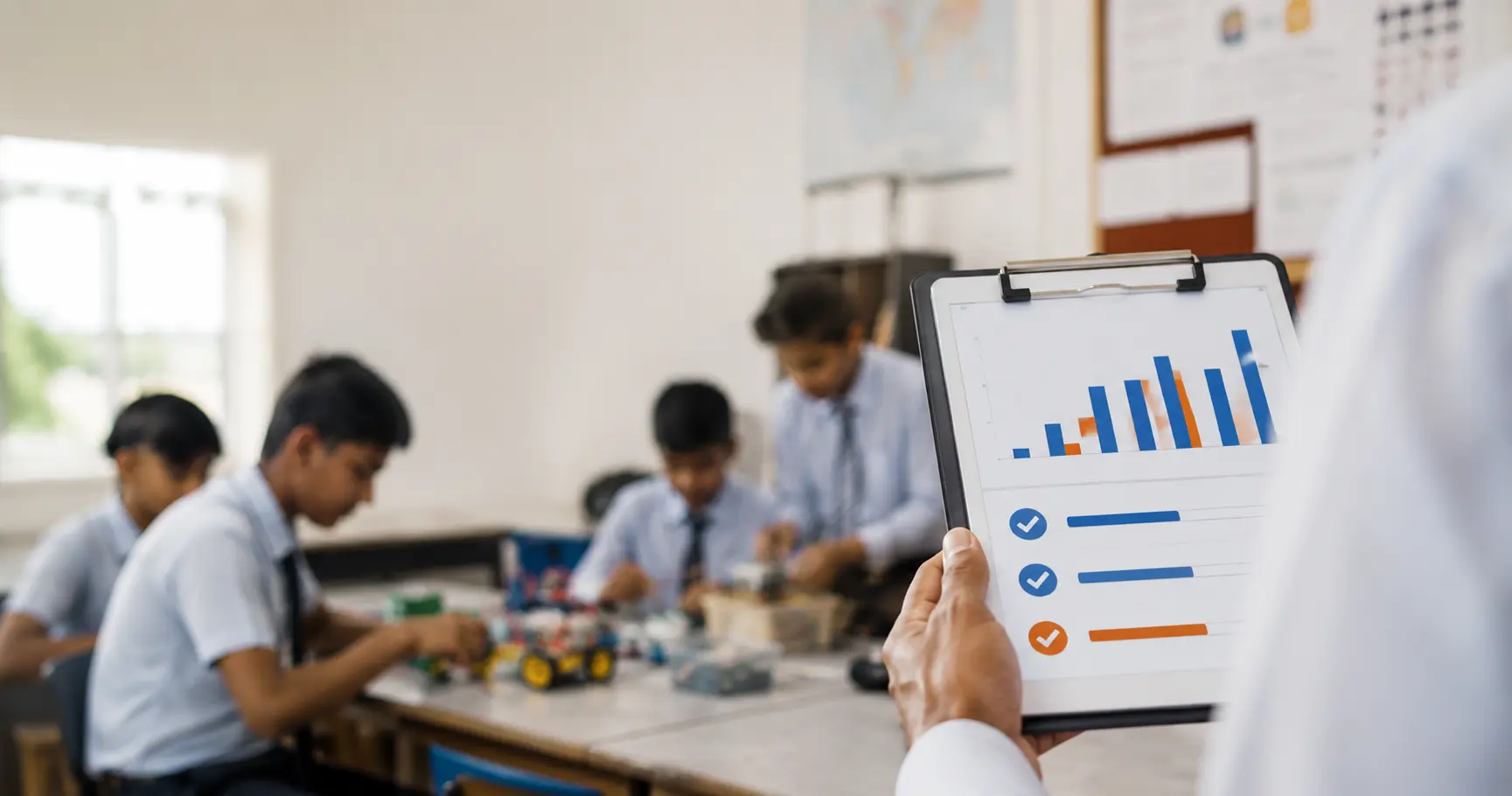
India’s Business Responsibility and Sustainability Reporting (BRSR) framework, mandated by SEBI for the top 1,000 listed companies, has fundamentally changed what CSR impact reporting must look like. Headcount numbers and inauguration photographs are no longer sufficient.
BRSR requires structured, indicator-based disclosure — and for education CSR programmes, this means learning outcome data, not just activities delivered.
This guide explains what STEM education CSR impact reporting under BRSR requires, how to set up measurement from the beginning, and what a credible impact report should contain.
Before BRSR, most companies’ CSR reporting on education programmes was narrative-based: we set up labs in X schools, we reached Y students, here are photographs. This approach no longer satisfies BRSR’s disclosure requirements — and for the companies subject to BRSR Core (mandatory for the top 150 listed entities from FY2023-24 onwards), it does not meet the reasonable assurance standard either.
BRSR Principal 8 (Inclusive Growth and Equitable Development) requires companies to disclose the details of their CSR social impact assessments — including the indicators used to measure impact, the methodology for data collection, and the outcomes achieved.
For STEM education programmes, this translates to a specific set of data points that must be collected during the programme, not reconstructed after it ends.
| The single most common BRSR compliance failure for education CSR: collecting activity data (sessions held, kits distributed) but no outcome data (what students actually learned). Activity data does not satisfy BRSR Principal 8. |
Outputs are the activities and resources delivered by the programme. They are necessary to report but insufficient on their own:
Outcomes are the changes in knowledge, skills, or behaviour that the programme produced. These are what BRSR requires:
For context on what strong outcome data looks like in practice, our post on AI and IoT Education CSR in India includes the outcome measurement framework Samabhavana uses across all technology education programmes.
Under BRSR’s Essential Indicators for Principal 8, companies must disclose:
Under the Leadership Indicators (voluntary but increasingly expected):
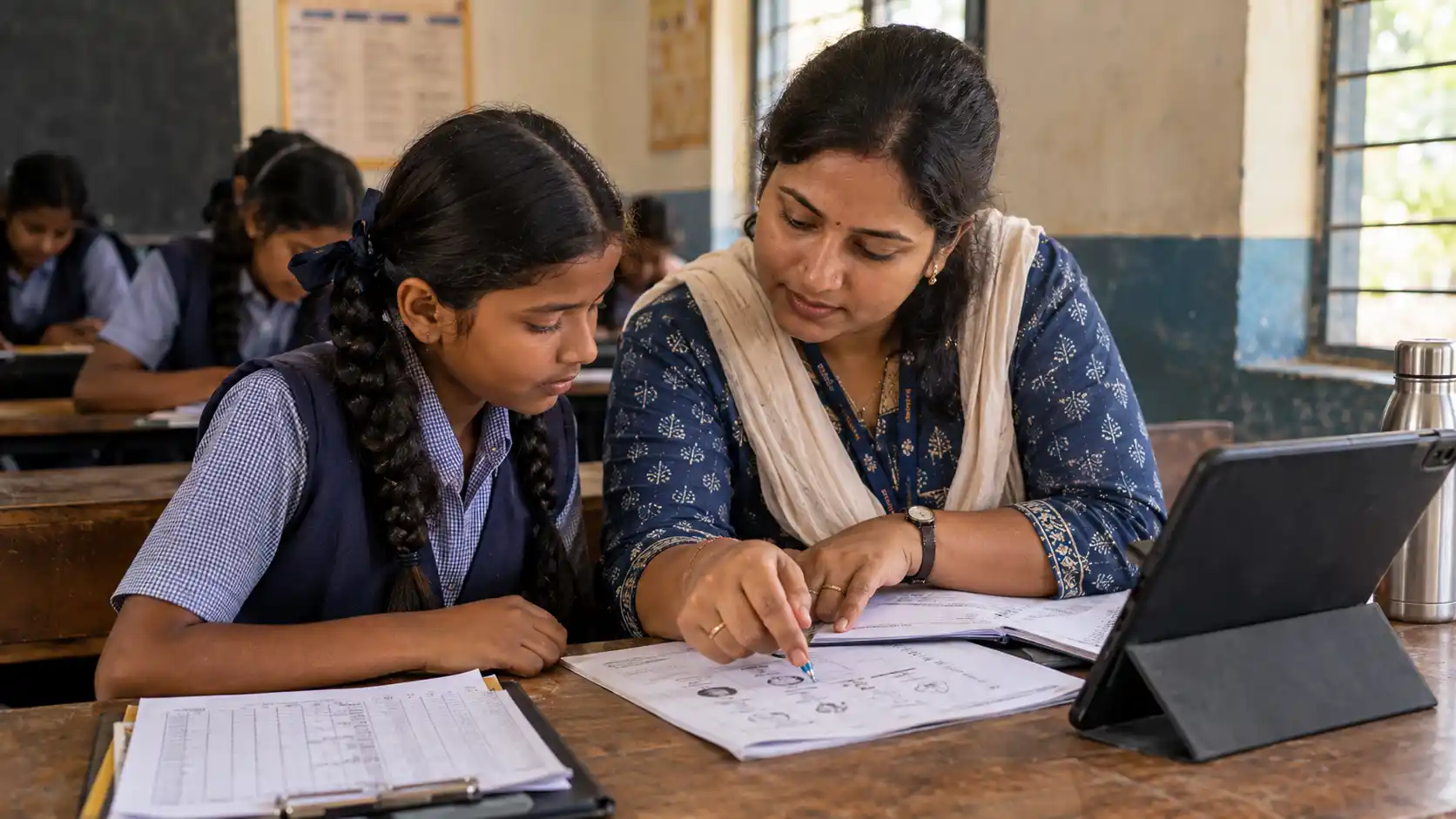
The most important rule in CSR impact measurement: set up your data collection framework before the programme begins, not after. Here is the minimum framework for a SMILE HUB or STEM education CSR programme:
Administer a simple pre-assessment to the students who will participate in the programme. Measure: current science/technology knowledge, current ability to perform relevant tasks (e.g., identify circuit components, understand what a robot does), and teacher’s current confidence in teaching STEM subjects. This becomes your baseline against which outcomes are measured.
Your implementing NGO should maintain a session-by-session log including: date, school, grade, number of students (male/female), topic covered, module used, and trainer name. This is your output documentation — required for CSR-2 filing and basic BRSR disclosure.
Every three months, compile: cumulative session hours, cumulative student reach by grade and gender, mid-point competency assessment scores, teacher training sessions completed, and any notable student project outcomes (robot built, coding project completed, astronomy observation recorded).
Re-administer the same assessment given at baseline. Document: improvement in student scores, percentage of students demonstrating defined competency, teacher confidence improvement, and student feedback on programme quality. This is the data that goes into your BRSR Principal 8 disclosure.
For companies working with PSU partners, our guide on CSR for PSU Companies in India outlines the additional documentation standards that apply CSR programmes.
Every SMILE HUB programme from Samabhavana includes a standardised impact reporting package:
For programmes above ₹1 crore, Samabhavana can arrange third-party Social Impact Assessment (SIA) support to meet mandatory SIA disclosure requirement.
For a deeper look at how teacher development integrates into the overall programme impact measurement framework, see our post on Teacher Training CSR: How a Programme Transforms Classrooms.
BRSR Core requires companies to obtain reasonable assurance on their BRSR disclosures — including CSR impact claims. For education CSR programmes, reasonable assurance means that an independent third party has reviewed your outcome data and confirmed that it was collected and reported accurately.
Samabhavana’s impact reporting framework is designed to support third-party verification — all assessment data is documented with school sign-off, and session logs are maintained in a format that an independent assessor can review.
| Want BRSR-ready impact reports built into your SMILE HUB programme? Every SMILE HUB programme from Samabhavana includes quarterly impact reports with student outcome data, teacher training records, and beneficiary demographics — structured for direct use in your Principal 8 disclosure and CSR-2 filing. Contact us: info@samabhavana.in Call: 022-45658306 | samabhavana.in/smile-hub.html |
Related Reading: CSR for PSU Companies India | AI and IoT Education CSR India | The Role of NGOs in CSR
Tell us your mandate, your budget, and your states — we’ll show you exactly how 25 years of on-ground delivery turns into audit-ready impact.